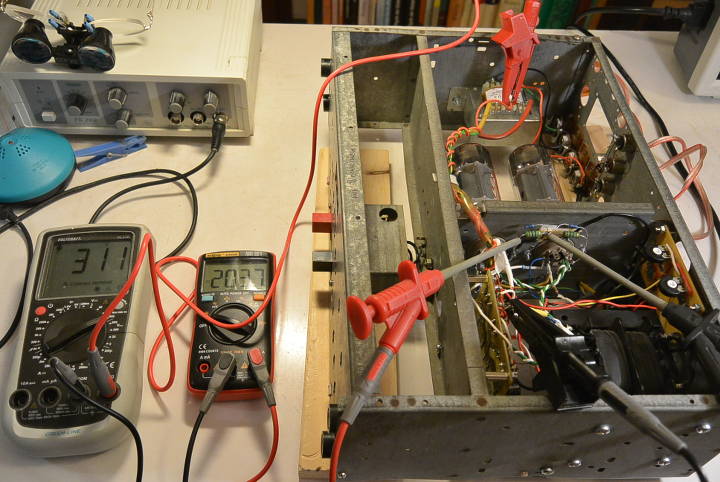
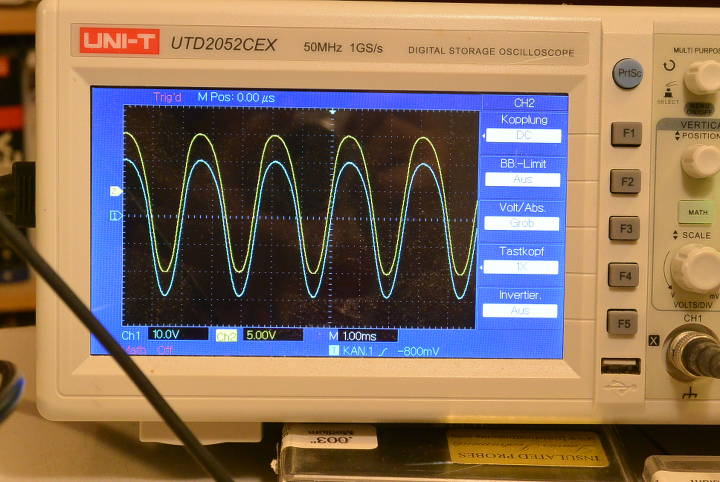
Bea, Thanks. Yes I know about the amount of equipment for what I needed. I certainly didn't acquire it all just to do my initial diagnosis. I mostly got some of it to be able to learn the equipment for future projects and also for other possible related uses like car diagnosing, HVAC repairs, and other electronics needs that may come my way.
For my start, I began with my 2 Identical Multimeters, Chopsticks, a home made discharge tool, a good lighted magnifying visor headset, and a tone generator made from a battery powered Radio Shack Mini Audio Amplifier
Also, since my amplifier was nearing 45 years old at the time, I felt that being able to test leakage of capacitors that weren't already replaced was vital, so I got an ESR tester.
So armed with basically those tools and help from our forum members and my own study, I was able to put the amp in a mostly 100% factory condition. I say mostly because as I later found out, I had things seemingly tip top shape and all seemed a go in making good sound in all 4 inputs of the amp. Then one day, the intermittent loss of signal cropped up again. This was when the simple chopstick did it's job. I tapped everywhere inside the amp and got no sound or changes. Then I proceeded to the back of the amp and was tapping things in the fuse holders, Ohms selector and voltage selector etc. This is when I thankfully discovered how to make the signal resume and cut out in a repeatable occurrence. Turns out the brass female ferrules inside the Ohms selector socket had weakened so the male plug in cap was wiggly and loose. The wiggling made it lose contact or resume contact if set just so. When I saw it lose sound, I deduced this was likely the original source of my whole reason for servicing the amp. To correct this, I disassembled the socket and ever so carefully squeezed the ferrules tight enough to permit a snug fit, then did the same for the voltage socket.
Thanks for also answering about the LTSpice. I will look into that.