Tube Amp Reliability

Also heard a few things about Budda amps, Jeff who builds them is local here in MD to me.

He sold Budda to Peavey a while back. They are made in Meridian, MS now. I've owned one, and it was every bit as good as the original, MD made ones. I didn't list them cos I wouldn't exactly call it a metal amp, but for lower gain stuff it's easily one of the best sounding amps I have played through. They do that "blooming note" thing that everyone loves so much but they have to be ridiculously loud to get the most out of them.

Anyway, if you are interested, Jeff's new company is called East Amplification and they are still made in MD:
East-amplification|Jeff Bober|Boutique Amps
 
I spent years living with an old JTM30, and it was always problematic.
Some amps are incorrectly constructed, especially regarding too large grid leak resistors of the control grid and screen grid resistors being too small (well, actually almost always..). The latter easily becomes problematic as soon as You overdrive the power tubes, because then the current on the screen grid will grow too large.
 
Some amps are incorrectly constructed, especially regarding too large grid leak resistors of the control grid and screen grid resistors being too small (well, actually almost always..). The latter easily becomes problematic as soon as You overdrive the power tubes, because then the current on the screen grid will grow too large.

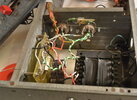
The problem with the JTM's was the power tubes were mounted horizontally and it caused overheating issues.

DSCF0017.jpg


Shame too, because they were f'ing glorious-sounding amps.
 
Last edited:
I am squarely in the same camp as 67plexi on this one, and I will only consider amps built in the US/England/Germany/Canada. The exception is for practice amps and accessories, where you have little choice but to go Asian, but for my main amplification needs I won't even consider am Asian-built amp.

And just off the top of my head, not trying to be comprehensive or anything, finding a US-made Metal amp is not all that hard:
  • Mesa/Boogie,
  • Bogner,
  • Soldano,
  • Friedman,
  • Rivera,
  • Wizard,
  • Mojave,
  • Splawn
all come immediately to mind, and there are plenty of others that escape me right now.

For lower gain stuff you got things like:
  • Dr. Z
  • Bad Cat
  • Victoria
and so many others I could never list them.

  • Engl and Diezel are German

  • A lot of Marshalls are still made in the UK. They also have Victory amps, Hayden, Cornford, etc.

Alls I'm saying is it's no problem to get your hands on a top-quality, US or Western-made amp. You may pay a little more up front but what you get in return makes them a huge bargain in comparison.

I used to be a UK Marshall SLP or die fan. I have also spent small fortunes on things like 2034 Cabinets to get vintage UK made Celestions, paying a premium for vintage USA made stuff and eventually, I discovered that I only had less money - but I didn't really sound any better.

Now I'm running two Line 6 Spider 2 HD-75 heads ($75/each floor demos) and 4 Jackson (USA Randall made) 4x12 cabinets with USA made Eminence speakers. I paid around $100/each for the cabinets and all they needed was cleanup and casters.

The SS heads run cool, quiet, have built in delay and reverb, so I eliminated my pedals, and its just a simple, easy setup that doesn't cost a lot.

I guess I got burned out on the expensive gear...
 
I used to be a UK Marshall SLP or die fan. I have also spent small fortunes on things like 2034 Cabinets to get vintage UK made Celestions, paying a premium for vintage USA made stuff and eventually, I discovered that I only had less money - but I didn't really sound any better.

Now I'm running two Line 6 Spider 2 HD-75 heads ($75/each floor demos) and 4 Jackson (USA Randall made) 4x12 cabinets with USA made Eminence speakers. I paid around $100/each for the cabinets and all they needed was cleanup and casters.

The SS heads run cool, quiet, have built in delay and reverb, so I eliminated my pedals, and its just a simple, easy setup that doesn't cost a lot.

I guess I got burned out on the expensive gear...

I've always been very much in the you get what you pay for camp. I spent a lot of money when I was younger trying to get good tone on the cheap and it was always one compromise or another. As with all things though, opinions and experiences vary.
 
He sold Budda to Peavey a while back. They are made in Meridian, MS now. I've owned one, and it was every bit as good as the original, MD made ones. I didn't list them cos I wouldn't exactly call it a metal amp, but for lower gain stuff it's easily one of the best sounding amps I have played through. They do that "blooming note" thing that everyone loves so much but they have to be ridiculously loud to get the most out of them.

Anyway, if you are interested, Jeff's new company is called East Amplification and they are still made in MD:
East-amplification|Jeff Bober|Boutique Amps

Thanks for adding that, gball.
I was typing fast before checkout of our room we rented in Nags Head this AM and didn't have time to elaborate. I've considered asking Jeff to service an amp or 2 of mine if they ever got too far above my electronics knowledge.
 
Last edited:
Some amps are incorrectly constructed, especially regarding too large grid leak resistors of the control grid and screen grid resistors being too small (well, actually almost always..). The latter easily becomes problematic as soon as You overdrive the power tubes, because then the current on the screen grid will grow too large.

Darn, it looks like Bea knows a little about electronics and amps too. A year or so ago, I was diving head first into learning amps, circuit design and terminology. Along the way, donp and ivanh got to talking about screen grid and ... So I'd scour the web to translate what they were saying and then I'd discuss my interpretation and they'd go over how I understood or not.
 
The problem with the JTM's was the power tubes were mounted horizontally and it caused overheating issues.
Indeed. Especially above the tubes there is not enough room for thermal convection to cool the tubes.

The 5881 and the 6L6 are among the tubes that can be used in any position.
 
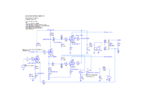
Mhmm, my current project - i am just preparing for the first tests with tubes installed. Note the relatively large screen resistors.

View attachment 19489

View attachment 19490

Bea, this is so cool. Back in 2017 I learned about screen grid resistors because I was posting pics and asking questions about my 1972 Marshall JMP that I was trying to fix an intermittent loss of signal and rectifying any issues left from previous owners. In so doing, a good fella from England named Nick told me I needed 2 screen grid resistors that were missing. If my memory serves me right, to have them in place helps with the longevity of tube life. Also, if my memory serves me right, I was told something like these amps often came with 6v6 (Edited here: Mullard xf2 NOT 6v6) which were a more sturdy tube than the EL34's often used in the US amps. So, for US marketed amps or UK ones brought overseas, it was often recommended to add the screen grid resistors to extend the life of the EL 34's.
 
Last edited:
That's crazy a KT66 needs to have a 3 1/2" space between the tube sockets center to center minimum
And the amp seems to be constructed for 5881. At least the schematics posted in schematics heaven shows it with 5881. Which also need more cooling space around them but not as much as a KT66 with its 50% larger heater dissipation.

@chilipeppermaniac yes, being true pentodes, the EL34 run with larger screen currents than the 6L6 (and even more the tiny 6V6) and therefore need larger screen resistors to stabilize. But screen resistors do in general appear a bit to small - the "de facto standards" are intended for normal operation, not for the case of driven into distortion at the anodes. (You can also overdrive the control grids which does not or at least hardly affect the anodes and the screens).
 
@chilipeppermaniac yes, being true pentodes, the EL34 run with larger screen currents than the 6L6 (and even more the tiny 6V6) and therefore need larger screen resistors to stabilize. But screen resistors do in general appear a bit to small - the "de facto standards" are intended for normal operation, not for the case of driven into distortion at the anodes. (You can also overdrive the control grids which does not or at least hardly affect the anodes and the screens).

Bea, I will re-check my messages from Ivan or DonP that explain why my amp may have come without screen grid resistors, so I can be accurate here.
 
OK Bea. It was late when I posted about the 6v6 vs EL34 for my original 1987 '72 Marshall JMP 50 watt lead head. I returned to my PM'ing sessions with Ivan and Don etc and found the posts regarding screen grid resistors. The correction I believe I should make to my statement you quoted above. It should read Mullard xf2's instead of 6v6. I edited it in the original post above.

Bea, this is from in my 2017 Private messages marathon session to DonP and Ivan etc. I added you to our conversations and where I am currently discussing is found on page 13 of that PM session. Also, Not to confuse you terribly. The first batch of pages 1-7+ were regarding a fix I had to do to a friend's Vintage Modern Marshall. I begin talking about my 1972 Marshall JMP 50 watt Model 1987 Lead on Page 8.


My JMP diagnosing starts with this post midway through page 8
"Well Fellas, I posted this in one forum Smitty posted. Here we go again.

Not sure when I will have time to examine the problem, but if y'all are patient, hopefully we can figure out what a supposedly well trained tech could not.

Smitty, I did an amp check last night. It was not a joyous experience.
My Marshall JMP ,which I speak of freely on here, has once again developed a bug.
The amp does not get a lot of use, yet it seems to keep breaking down. This time I was playing my Lester and the sound coming from the amp was immediate. Once i took if off stand by, it had awful mains moaning and some hiss in channel 1, same but not as loud in channel 2. After twiddling the knobs back and forth, I was able to quiet it down a good bit.
Played it awhile then got a weird little pop crackle noise like when you try inserting a guitar cord in the jack while it is on.
I'd strum again and get no noise, then a little while later it would get sound again. Eventually I swapped guitars and kept same cord and then even while playing the SG, it did the same thing. Sound,,,,,,,,,,,,,then silent this time. I shut it down and checked the fuses on back.

The .5 fuse is good. The 2 amp Mains fuse is cloudy inside .
This is the same behavior the amp ( head) exhibited the past 2 times I took it to a tech. The 1st time, he said it was the power transformer. I had him swap in a new Marstran and the bugger did not return my original 1972 one I could have had rewound.
The next time it failed, blowing fuses again, he told me my tubes were bad so I had him install new ones. He also re-capped the amp and installed pre amp tubes. Once again I did not play the amp for hours on end after getting it back supposedly fixed.

In hindsight, I should have played the shid out of it then took it back to him as I felt it was too noisy after the issues were supposedly sorted out.
Instead I'd plug it in once in awhile and jam for maybe 20-30 minutes and shut er down.

So, as I said, once again, the amp is DOA a bit.

Hopefully I can use my multimeter, acquire a tube tester, get good schematics and books to guide me along with the advice of our electronics educated brothers here, I can get it sorted out.

Too bad I could not trust that tech to get it fixed right the first time and to thoroughly test it before calling me to say it was ready to play x 2 visits.
Sorry for posts where IMG's no longer show as well. Stupid Photobucket.

-----Me
"I went to the Marshall forum as well, Neikeel over there mentioned some other items, I will post the link and also a summary of what he said."

Dating my JMP50

"Two things I would say about that amp. I would be very tempted to replace both bias caps (for 10uF @ 200v rating as they will be the right size, and remove the white wire off the diode block and use a new longer white wire from the bias feed 220k turret to one of the stand by switch lugs that is fed direct off the PT (or, if like the earlier 1202-118 Drake fitted amps) to the lug on the PT. That way the power tubes see bias current before you hit them with B+ voltage to the plates."


************* Later on page 13 here is where Neikeel addresses my lack of screen grid resistors******

"You are also missing 1k screen resistors which is fine if you are using NOS Mullard xf2s but otherwise they would be a good idea with current production EL34s."

If your amp is a daily player then getting some UF5408s and ditching the snubbers altogether would be a good idea.
Depends what you need from it."
 
Last edited:
Then later in the PM's I posted this other reply by Neikeil

Neikeel on the Marshall forum answered my question about some brown caps up by each power tube pot on the amp pictured from Marstran. He corrected me as I asked him if these were the 1k screen resistors,

He said, "
"No you are not those are brown Ohmite resistors.

What you need to do is desolder the yellow wires from pin 6 on your output tubes, clean the sockets of solder.

Move the yellow wires to cleaned up (ie deoxidised) pin 4 of each output socket (suggest use the lower holes for the wires) then take a 1k 5watt (or 3w will do) ceramic resistor (I tend to use the green barrel shaped Welwyns, as this is what Marshall started using in 71, but the white block type or Ohmite 5w will be ok, just as long as they are flame proof).

Ideally wrap the wire around the top hole of pin 4 and pin 6. Don't leave the wires too long. just long enough to span the gap with 1/4 above the socket is fine.

Pin 4 is empty in the valve itself you are just using that pin as a solid mounting point for the resistor.

You should not need swamp resistors on pin 5 on this amp, you only need those if the lead dress of your amp is poor or you have a modded preamp that is unstable.

I do not suggest you mod your amp along the tonelizard line, it is unnecessary in your amp and ruins its resale."
------------------------------------------------------------------------------------------------------------
Robert raised the question today of is my amp messed up. I let him know, I was merely posting these examples of how I learned about amps and more about what Bea was discussing earlier to illustrate how Ivan and DonP etc all helped me get a handle on circuit design, amp components and diagnosing issues like I had in the past. The amp mentioned is working fine today.
 
Last edited:
Back
Top