Slowly, as usual for me

It's not a personal disagreement. Please don't misunderstand what I am trying to say.
I don't know why I need protection diodes.
Tube amps (like McIntosh) ran for 80 years without any protection diodes....why do I need diodes :pound-hand: ?

What's the point of using a rectifier tube if I'm just putting diodes in series with it?
How did Fender amps run for 50 years without protection diodes ?

How often does a rectifier tube short circuit, and need to be protected?
Because the currently produced tube rectifiers are by far more inferior and less robust than the ones built in the 50s and 60s? And I'm assuming that the backup diodes don't interfere with the operation and characteristics of the tube rectifier unless the tube rec fails. Is there any data or info out there that states if modern tube recs are failing at a higher percentage compared to the old boyz?
 
Because the currently produced tube rectifiers are by far more inferior and less robust than the ones built in the 50s and 60s? And I'm assuming that the backup diodes don't interfere with the operation and characteristics of the tube rectifier unless the tube rec fails. Is there any data or info out there that states if modern tube recs are failing at a higher percentage compared to the old boyz?

It might be true that older tubes lasted longer. And there is new environmental regulations which apply to the materials.
Older tubes had lead, cadmium, mercury etc...
 
It's not a personal disagreement. Please don't misunderstand what I am trying to say.
I don't know why I need protection diodes.
Tube amps (like McIntosh) ran for 80 years without any protection diodes....why do I need diodes :pound-hand: ?

What's the point of using a rectifier tube if I'm just putting diodes in series with it?
How did Fender amps run for 50 years without protection diodes ?

How often does a rectifier tube short circuit, and need to be protected?
I agree with you regarding the protection diodes. If you look back through threads where I've shown my tube rectified builds, none of them have any protection diodes. I do use old production GZ34's though, I've had a few new production types fail, always at start-up. I think the whole "protection diode" thing grew out of people experiencing new production GZ34 failures. Then one person mounted the protection diodes on the socket, then the rest of the sheep followed. Hell, I've even seen disk caps in parallel with the diodes mounted on the socket, more bad practice.
How does a (new production) GZ34 fail (other new production types don't seem to)??? The GZ34 drops less voltage across it than other rectifier tubes as it has lower internal resistance. The reason for this is that the plates are very closely spaced to the cathodes. In old production types, to prevent cathode overheating (& arc over) due to filter in-rush current demands, the cathode material gets thicker down its length, being thickest at the base where it is tied to the pin. Destructive testing shows that new production types do not replicate this feature, nor is the cathode material as thick as old production types at the base of the cathode.
Considering that a JTM45/JTM50's calculated filter capacitor inrush current is in the order of 40A for a micro-second (calculated for me by Kevin O'Connor), we can see why new production GZ34's sometime arc over (plate/cathode) at power-up.
If we look at some old power supply's using GZ34's (Hammond organs for example) we sometimes see a small value resistance placed between the power transformer high voltage secondary leads & rectifier plate pins, say 47 ohm 5watt, or between pin 8 & the main filter (usually 10 watt). The purpose of these is to limit filter inrush current at power up. Of course, they will increase HT sag under demand a little too.
Sorry for the long rant. Cheers
 
Because the currently produced tube rectifiers are by far more inferior and less robust than the ones built in the 50s and 60s? And I'm assuming that the backup diodes don't interfere with the operation and characteristics of the tube rectifier unless the tube rec fails. Is there any data or info out there that states if modern tube recs are failing at a higher percentage compared to the old boyz?
Current production GZ34's are definitely inferior to old production. In my last post I spoke of the difference in the actual cathode construction, but with the proximity of the plates to cathodes in GZ34's alignment of is also of great importance. We all know how standards have slipped in tube manufacturing, so we can expect these are not so precisely aligned.
The protection diodes prevent the negative half cycles being applied to the rectifier's plates. Electron carry a negative charge so only the positive half cycles are needed to attract the electrons breaking free of the cathode.
If the tube does fail, high voltage AC is kept off the tubes, filter capacitors etc.
Again, if you are using a new production GZ34 & are worried about keeping AC off everything in the event of failure (the fuses will blow if the rectifier fails), a better idea is to use a 1000V 3A diode between pin 8 & the 1st filter. Cheers
 
Last edited:
Current production GZ34's are definitely inferior to old production. In my last post I spoke of the difference in the actual cathode construction, but with the proximity of the plates to cathodes in GZ34's alignment of is also of great importance. We all know how are standards have slipped in tube manufacturing, so we can expect these are not so precisely aligned.
The protection diodes prevent the negative half cycles being applied to the rectifier's plates. Electron carry a negative charge so only the positive half cycles are needed to attract the electrons breaking free of the cathode.
If the tube does fail, high voltage AC is kept off the tubes, filter capacitors etc.
Again, if you are using a new production GZ34 & are worried about keeping AC off everything in the event of failure (the fuses will blow if the rectifier fails), a better idea is to use a 1000V 3A diode between pin 8 & the 1st filter. Cheers
… SOLD!!!!

Seriously, Ivan... Since TTR started, you've been over here sharing with us an incredible amount of knowledge about amps, pedals, and guitars. And you do so with exceptional "Gentleman" standards. My hats off to you... :cheers:
 
… SOLD!!!!

Seriously, Ivan... Since TTR started, you've been over here sharing with us an incredible amount of knowledge about amps, pedals, and guitars. And you do so with exceptional "Gentleman" standards. My hats off to you... :cheers:
Gee, thanks Sysco, greatly appreciated.
I've also learned a great deal here at TTR from other members, & been assisted in various ways too, or had assistance offered. Folk here at TTR are the finest people. An old guy once told me that knowledge that is not shared is knowledge that will be lost. Kinda makes sense. Thanks again. Cheers
 
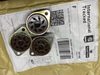
The McMurdo octal valve sockets arrived today. I think it will still be a couple of more weeks before I can commit to transformers. I think I have everything else, except for some KT-66 tubes.

E2B425DD-A855-4704-815D-28959100F09F.jpeg


I‘m not sweating it though. I have a ton of work to do here at the house. Almost all the Sheetrock, insulation/soundproofing, wiring and paint has been finished in the cellar. Hope to have new shelving in place this Weekend, then I can start on the benches. If I finish them before I get transformers, then I just go back to working on the three guitars that I‘m in the middle of.


D8892B9E-917F-48B4-8F7D-8CC5B27D8018.jpeg

211893AE-51D4-43DC-87C8-B4934F119E3E.jpeg
 
Last edited:
It's not a personal disagreement. Please don't misunderstand what I am trying to say.
I don't know why I need protection diodes.
Tube amps (like McIntosh) ran for 80 years without any protection diodes....why do I need diodes :pound-hand: ?

What's the point of using a rectifier tube if I'm just putting diodes in series with it?
How did Fender amps run for 50 years without protection diodes ?

How often does a rectifier tube short circuit, and need to be protected?
Probably along the same reasoning I used 1/2” thick steel plate for a hanging mount for a 90 lb bronze mission bell I got for the wife as a Christmas present. The machinist who made it for me from my design said “you know, you can hang 5000 pounds from this”.:dood:

I worked at a place the turned old school big lathes, etc into CNC controlled units. The owner overbuilt everything he designed - on purpose I guess - didn't want his stuff giving out I reckon - lol...
 
It's not a personal disagreement. Please don't misunderstand what I am trying to say.
I don't know why I need protection diodes.
Tube amps (like McIntosh) ran for 80 years without any protection diodes....why do I need diodes :pound-hand: ?

What's the point of using a rectifier tube if I'm just putting diodes in series with it?
How did Fender amps run for 50 years without protection diodes ?

How often does a rectifier tube short circuit, and need to be protected?

Very good point if you ask me, but, in my scratch builds I generally add protection diodes. But, I here what your saying...
 
The McMurdo octal valve sockets arrived today. I think it will still be a couple of more weeks before I can commit to transformers. I think I have everything else, except for some KT-66 tubes.

View attachment 42983


I‘m not sweating it though. I have s ton of work to do here at the house. Almost all the Sheetrock, insulation/soundproofing, wiring and paint has been finished in the cellar. Hope to have new shelving in place this Weekend, then I can start on the benches. If I finish them before I get transformers, then I just go back to working on the three guitars that I‘m in the middle of.


View attachment 42984

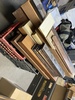
View attachment 42985

John, I can certainly relate! I had 4 Warmoth builds in the parts acquisition phase when we bought this new place. They are now in boxes that wont see daylight for another year.
 
The McMurdo octal valve sockets arrived today. I think it will still be a couple of more weeks before I can commit to transformers. I think I have everything else, except for some KT-66 tubes.

View attachment 42983


I‘m not sweating it though. I have s ton of work to do here at the house. Almost all the Sheetrock, insulation/soundproofing, wiring and paint has been finished in the cellar. Hope to have new shelving in place this Weekend, then I can start on the benches. If I finish them before I get transformers, then I just go back to working on the three guitars that I‘m in the middle of.


View attachment 42984

View attachment 42985

Nice stack of lumber sir.

I see LP's, SG's, Tele's......

I know nothing on the tech side of the amps, but I can butcher me some wood!

A lot of cool potential in that stack!
 
John, I can certainly relate! I had 4 Warmoth builds in the parts acquisition phase when we bought this new place. They are now in boxes that wont see daylight for another year.
Regarding humidity and off-gassing, any special attention in how your storing these parts?
 
Regarding humidity and off-gassing, any special attention in how your storing these parts?
The 4 bodies are wrapped in that silky styrofoam thin stuff and are stored in a 19 inch rack mount gig bag. The necks are in the same type of material and stored in the Warmoth shipping boxes. All are in the upstairs MB closet. It doesn’t get real dry up here.
 
Last edited:
I agree with you regarding the protection diodes. If you look back through threads where I've shown my tube rectified builds, none of them have any protection diodes. I do use old production GZ34's though, I've had a few new production types fail, always at start-up. I think the whole "protection diode" thing grew out of people experiencing new production GZ34 failures. Then one person mounted the protection diodes on the socket, then the rest of the sheep followed. Hell, I've even seen disk caps in parallel with the diodes mounted on the socket, more bad practice.
How does a (new production) GZ34 fail (other new production types don't seem to)??? The GZ34 drops less voltage across it than other rectifier tubes as it has lower internal resistance. The reason for this is that the plates are very closely spaced to the cathodes. In old production types, to prevent cathode overheating (& arc over) due to filter in-rush current demands, the cathode material gets thicker down its length, being thickest at the base where it is tied to the pin. Destructive testing shows that new production types do not replicate this feature, nor is the cathode material as thick as old production types at the base of the cathode.
Considering that a JTM45/JTM50's calculated filter capacitor inrush current is in the order of 40A for a micro-second (calculated for me by Kevin O'Connor), we can see why new production GZ34's sometime arc over (plate/cathode) at power-up.
If we look at some old power supply's using GZ34's (Hammond organs for example) we sometimes see a small value resistance placed between the power transformer high voltage secondary leads & rectifier plate pins, say 47 ohm 5watt, or between pin 8 & the main filter (usually 10 watt). The purpose of these is to limit filter inrush current at power up. Of course, they will increase HT sag under demand a little too.
Sorry for the long rant. Cheers

I think in my entire professional career (45 years), I have seen 2-3 rectifier tubes (without diodes) short out (at the most).
Rectifier tube failure in guitar amps is very rare.
Of course, most of those amps were Fender amps.
 
I think in my entire professional career (45 years), I have seen 2-3 rectifier tubes (without diodes) short out (at the most).
Rectifier tube failure in guitar amps is very rare.
Of course, most of those amps were Fender amps.
Since you have personally experienced 2 or 3 tube rectifier failures:
Where these modern constructed tubes?
Out of how many that never had a problem?
Did the failed rec tubes cause other amp damage?
 
Nice stack of lumber sir.

I see LP's, SG's, Tele's......

I know nothing on the tech side of the amps, but I can butcher me some wood!

A lot of cool potential in that stack!


There are definitely three Les Pauls and one SG in that stack.

I'm also planning on doing a Rickenbacker 331LS, and have a big slab of maple for that.

For some of the other lumber, I'm thinking maybe a Korina LP junior double cut, or Wilshire.

There will be a couple of body and neck blanks left over to decide what to do with.

In the half built pile that you can't really see in the photo are a non-reverse T-Bird bass, a Korina Explorer, and a Korina Flying V. I'm thinking of a natural finish Lonnie Mack style V. The almost finished fingerboard in the third photo is for the T-Bird.
 
Since you have personally experienced 2 or 3 tube rectifier failures:
Where these modern constructed tubes?
Out of how many that never had a problem?
Did the failed rec tubes cause other amp damage?
Well it's a lot of (enough) amps, but the fuse would blow if the rectifier rarely shorts.
I'm just wondering what the advantage is?
Are they saying AC is going to short through the rectifier to the output?
 
Back
Top