Slowly, as usual for me

SG John

Ambassador of Cool Guitars and Amps.
Country flag
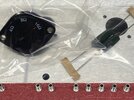
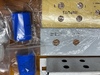
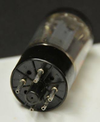
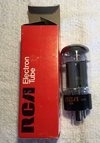
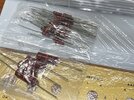
Slowly, but surely, I’m collecting stuff for my eventual JTM45 build. The chassis, panels, and a few other bits like can caps and 470 Ohm Welwyn resistors arrived today. A couple of weeks ago, the bag of Piher resistors that Plexi turned me on to arrived (thanks Steve). And I have some other stuff here.

Now, I’m putting together a list of other capacitors and little bits, so I can swing by Amp Club, and have Tim toss me a goodie bag from a safe distance.

I have to wait a couple more weeks, but then I can call Chris Merren back and order my transformers and choke. Money is tight right now for me.

In the meantime, I have plenty of other stuff going on to keep me busy.
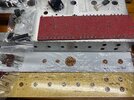
EDDDF665-AA75-4DDE-B735-0815E08C45F6.jpeg

DADA302C-89D3-4980-BA08-445B763F736E.jpeg

79C06023-691A-490A-863D-3622B3E29597.jpeg

279B67B2-C5DA-4A30-AF10-E81DB2C53081.jpeg
 
John, I would like to thank you for your contribution to my similar situation. I'm doing a later 50 watt build and am currently about $20 shy of ordering the chassis and face plates. Then I just need the input and output trannys and I will be good to go.


Glad to be of help. I was trying to figure out what I could use the other parts for, but I also need to be ordering transformers first.
 
Last edited:
Slowly, but surely, I’m collecting stuff for my eventual JTM45 build. The chassis, panels, and a few other bits like can caps and 470 Ohm Welwyn resistors arrived today. A couple of weeks ago, the bag of Piher resistors that Plexi turned me on to arrived (thanks Steve). And I have some other stuff here.

Now, I’m putting together a list of other capacitors and little bits, so I can swing by Amp Club, and have Tim toss me a goodie bag from a safe distance.

I have to wait a couple more weeks, but then I can call Chris Merren back and order my transformers and choke. Money is tight right now for me.

In the meantime, I have plenty of other stuff going on to keep me busy.
View attachment 41881

View attachment 41882

View attachment 41883

View attachment 41884

What the hack is "Amp Club?"
And how come you have a candy store in your town, :drive: and we don't?
 
What the hack is "Amp Club?"
And how come you have a candy store in your town, :drive: and we don't?


Amp Club is a bunch of guys who used to be in local bands, and all work at M.I.T. in Cambridge. They get together on Saturday mornings to drink way too much coffee while coming up with ideas for ridiculous amp builds. They also repair amps for poor musicians, and the friends of their own kids who are musicians. Since a couple of the guys have daughters, they are always finding amps in the trash, reworking them, and then donating them to "Girls Rock School." There are several in the Boston area that they give Champ style amps that used to be some solid state thing. They also take people like me under their wing, who want to learn how to service my old amps and try my hand at building a few amps. They are more than happy to share their knowledge.
 
Amp Club is a bunch of guys who used to be in local bands, and all work at M.I.T. in Cambridge. They get together on Saturday mornings to drink way too much coffee while coming up with ideas for ridiculous amp builds. They also repair amps for poor musicians, and the friends of their own kids who are musicians. Since a couple of the guys have daughters, they are always finding amps in the trash, reworking them, and then donating them to "Girls Rock School." There are several in the Boston area that they give Champ style amps that used to be some solid state thing. They also take people like me under their wing, who want to learn how to service my old amps and try my hand at building a few amps. They are more than happy to share their knowledge.

Now I wanna come to Boston and live in your garage.
 
What schematic and/or layout are you using as a guide?

Are going to use NOS glass?

You planning to install safety diodes at the amp's tube rectifier socket?


I'm using Mark Huss's schematic for KT66 valves. I also have the Metro Amp JTM45 Kit instruction manual and several layout diagrams.

As for glass, I have a few Westinghouse and RCA 12ax7s that I can use. I haven't bought any KT66s yet. I'll have to go with the best quality I can afford for now, as NOS GEC tubes are about $500.00 a pair these days. When I finally get the transformers, I'll be too fiscally challenged to sink a ton of cash into tubes.

I'm pretty sure that I am putting the safety diodes in, as I spec'd the list of parts I needed from Tim to include those.
 
I'm pretty sure that I am putting the safety diodes in, as I spec'd the list of parts I needed from Tim to include those.
I really don't like the commonly used "protection diodes" & I'll give an alternative, but let me start by saying if you are only going to spring for one NOS tube in a JTM45/JTM50 build, make it a Blackburn Mullard f32 GZ34 rectifier tube. I have not seen one fail, & I've seen one running a quad of EL34's at 465VDC (& three 12AX7's & four EF86's) almost all day every day for several years (in my Leak Stereo 60 amplifier, before it was stolen).
Now to the protection diodes. Common practice is to mount them on the rectifier tube's socket, between unused socket pins & the plate pins. Electrically this is IMHO, bad practice. The GZ34 was designed by Philips Mullard, so let's look at one of theirs
15872451110261223302557197623738.png
Note the pin spacing. This is done for voltage isolation purposes. Now the guys that designed this tube knew a thing or two about electricity & tubes, I think we could wisely follow their lead. To mount diodes on unused pins is to defy the very reason they spaced the pins like this in the first place. Old tube application manuals recommend not using a rectifier tube sockets unused pins as tie points.
The purpose of "protection diodes" (placed in series between the HT leads & the rectifier's plates) is to keep AC of the tubes (especially power tube plates), filters etc in the event of rectifier tube failure. The diodes could be used "without" tying them to the unused socket pins to mount them, but IMO a better alternative is to place a single 1,000V 3A UF5408 or 1N5408 diode between the rectifier & the main filter (cathode of diode towards filter cap +). This leaves the rectifier tube operating normally, DC flows normally (the diode will drop about 0.7VDC) & should the rectifier tube fail in any way the diode keeps AC voltage off the tubes, filters etc. Hope this helps. Cheers
 
The purpose of "protection diodes" (placed in series between the HT leads & the rectifier's plates) is to keep AC of the tubes (especially power tube plates), filters etc in the event of rectifier tube failure. The diodes could be used "without" tying them to the unused socket pins to mount them, but IMO a better alternative is to place a single 1,000V 3A UF5408 or 1N5408 diode between the rectifier & the main filter (cathode of diode towards filter cap +). This leaves the rectifier tube operating normally, DC flows normally (the diode will drop about 0.7VDC) & should the rectifier tube fail in any way the diode keeps AC voltage off the tubes, filters etc. Hope this helps.
This is very interesting. I have only one amp with a tube rectifier. I got the idea of backup diodes for the tube rectifier, from Rob Robinette's website. And it clearly shows the technique of tying the diode to an unused socket lug. He credits a lot of his knowledge to R.G. Keen. R.G. Keen's article never suggests to use and unused socket lug. All I see from Keen's article is a schematic showing two diodes in series with the tube rectifier. I have not done this mod to my tube rectifier yet.
 
I really don't like the commonly used "protection diodes" & I'll give an alternative, but let me start by saying if you are only going to spring for one NOS tube in a JTM45/JTM50 build, make it a Blackburn Mullard f32 GZ34 rectifier tube. I have not seen one fail, & I've seen one running a quad of EL34's at 465VDC (& three 12AX7's & four EF86's) almost all day every day for several years (in my Leak Stereo 60 amplifier, before it was stolen).
Now to the protection diodes. Common practice is to mount them on the rectifier tube's socket, between unused socket pins & the plate pins. Electrically this is IMHO, bad practice. The GZ34 was designed by Philips Mullard, so let's look at one of theirs
View attachment 42111
Note the pin spacing. This is done for voltage isolation purposes. Now the guys that designed this tube knew a thing or two about electricity & tubes, I think we could wisely follow their lead. To mount diodes on unused pins is to defy the very reason they spaced the pins like this in the first place. Old tube application manuals recommend not using a rectifier tube sockets unused pins as tie points.
The purpose of "protection diodes" (placed in series between the HT leads & the rectifier's plates) is to keep AC of the tubes (especially power tube plates), filters etc in the event of rectifier tube failure. The diodes could be used "without" tying them to the unused socket pins to mount them, but IMO a better alternative is to place a single 1,000V 3A UF5408 or 1N5408 diode between the rectifier & the main filter (cathode of diode towards filter cap +). This leaves the rectifier tube operating normally, DC flows normally (the diode will drop about 0.7VDC) & should the rectifier tube fail in any way the diode keeps AC voltage off the tubes, filters etc. Hope this helps. Cheers


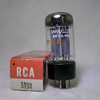
I was looking through my box of tubes. I do have a nice RCA GZ34 rectifier tube. I just missed out on some Mullards from an acquaintance. I think I know what you mean about wiring the diode as you mentioned. I would have to place it between pin 8 of the rectifier to the + of the can cap between the rectifier tube and V5.
 
I was looking through my box of tubes. I do have a nice RCA GZ34 rectifier tube. I just missed out on some Mullards from an acquaintance. I think I know what you mean about wiring the diode as you mentioned. I would have to place it between pin 8 of the rectifier to the + of the can cap between the rectifier tube and V5.
A USA made RCA 5AR4/GZ34 would be a very good rectifier. With new production tubes GZ34 & 5AR4 are the exact same thing, but in the old days a GZ34 was a British (&/or European) tube designation & a 5AR4 was it's USA made equivalent. Each could be substituted for the other, however the 5AR4 had slightly higher internal resistance than a GZ34 & would drop a few more volts across it (sag a smidge more under demand).
RCA did manufacture 5AR4's, however they also re-branded Mullard f32 GZ34's. Here is a USA made RCA 5AR4
15872659701921847299527030097960.png
known as a "fat bottle" 5AR4. Here is a "re-branded" Mullard made RCA 5AR4
15872643757937503837902302003496.png
Now there are a few variants of Mullard f32 GZ34's (smooth plates, 4 notch plates, 7 notch plates like the above), but the difference between a USA made RCA 5AR4 & a re-branded Mullard GZ34 are easily noticed. Which ever you have is well worth putting in your build.
Yes, you've got right with the diode, from pin 8 on the rectifier to + terminal of the main filter (in place of a wire connecting the two). The "band" end of the diode goes toward the main filter. Cheers
 
Last edited:
View attachment 42130
Now there are a few variants of Mullard f32 GZ34's (smooth plates, 4 notch plates, 7 notch plates like the above), but the difference between a USA made RCA 5AR4 & a re-branded Mullard GZ34 are easily noticed. Which ever you have is well worth putting in your build.
Yes, you've got right with the diode, from pin 8 on the rectifier to + terminal of the main filter (in place of a wire connecting the two). The "band" end of the diode goes toward the main filter. Cheers


The one I have is as exactly the one in the photo. I couldn't find it, panicked, and bought another. Then found it five minutes later. So, now I'll have an extra RCA branded Mullard. I also have a more recent JJ and a Chinese made "Electron Tube" 5AR4 in a box of spares. I forget which amp I took the Electron Tube out of. Maybe my JTM45? It's in a box that I wrote Mullard GZ34 on, so it definitely was something I pulled out of one of my amps, and replaced with a Mullard. It's usually what goes into all my amps for a rectifier tube.
 
I really don't like the commonly used "protection diodes" & I'll give an alternative, but let me start by saying if you are only going to spring for one NOS tube in a JTM45/JTM50 build, make it a Blackburn Mullard f32 GZ34 rectifier tube. I have not seen one fail, & I've seen one running a quad of EL34's at 465VDC (& three 12AX7's & four EF86's) almost all day every day for several years (in my Leak Stereo 60 amplifier, before it was stolen).
Now to the protection diodes. Common practice is to mount them on the rectifier tube's socket, between unused socket pins & the plate pins. Electrically this is IMHO, bad practice. The GZ34 was designed by Philips Mullard, so let's look at one of theirs
View attachment 42111
Note the pin spacing. This is done for voltage isolation purposes. Now the guys that designed this tube knew a thing or two about electricity & tubes, I think we could wisely follow their lead. To mount diodes on unused pins is to defy the very reason they spaced the pins like this in the first place. Old tube application manuals recommend not using a rectifier tube sockets unused pins as tie points.
The purpose of "protection diodes" (placed in series between the HT leads & the rectifier's plates) is to keep AC of the tubes (especially power tube plates), filters etc in the event of rectifier tube failure. The diodes could be used "without" tying them to the unused socket pins to mount them, but IMO a better alternative is to place a single 1,000V 3A UF5408 or 1N5408 diode between the rectifier & the main filter (cathode of diode towards filter cap +). This leaves the rectifier tube operating normally, DC flows normally (the diode will drop about 0.7VDC) & should the rectifier tube fail in any way the diode keeps AC voltage off the tubes, filters etc. Hope this helps. Cheers

It's not a personal disagreement. Please don't misunderstand what I am trying to say.
I don't know why I need protection diodes.
Tube amps (like McIntosh) ran for 80 years without any protection diodes....why do I need diodes :pound-hand: ?

What's the point of using a rectifier tube if I'm just putting diodes in series with it?
How did Fender amps run for 50 years without protection diodes ?

How often does a rectifier tube short circuit, and need to be protected?
 
It's not a personal disagreement. Please don't misunderstand what I am trying to say.
I don't know why I need protection diodes.
Tube amps (like McIntosh) ran for 80 years without any protection diodes....why do I need diodes :pound-hand: ?

What's the point of using a rectifier tube if I'm just putting diodes in series with it?
How did Fender amps run for 50 years without protection diodes ?

How often does a rectifier tube short circuit, and need to be protected?

Probably along the same reasoning I used 1/2” thick steel plate for a hanging mount for a 90 lb bronze mission bell I got for the wife as a Christmas present. The machinist who made it for me from my design said “you know, you can hang 5000 pounds from this”.:dood:
 
Back
Top