Let's Discuss Intonation:

Inspector #20

Ambassador of Tone
Fallen Star
Country flag
Ok, I want to present a few questions and open up a general discussion about this topic. I'm doing some real fine tuning on my Double Neck and I want to be sure I'm not missing anything.

Originally, I was using a standard ABR-1 style bridge. I recently switched to a roller bridge from Philadelphia Luthier Tools, a bridge I have used multiple times on other guitars. It comes pre-adjusted and this will usually get you in the ballpark on most guitars.

Here is the one that I installed on my Mom's Les Paul Custom Replica and it required no adjustment to be properly intonated: (sharp eyes will notice the 'A' sting is not in the roller groove in this photo)
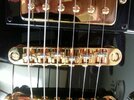
LPC Replica Roller Bridge.jpg

The one I installed on my doubleneck was set in about the same "lightning bolt" arrangement as shown below:
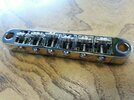
Roller Bridge.jpg

So I have now played through several sets of strings on this guitar. Each time I change strings, I make sure the floor of the nut is square, smooth & clean before restringing. The intonation was really close just by dropping the bridge on and only a minor adjustment was needed.

Recently, I felt like the guitar just wasn't correctly intonated, so I started checking it. I found that I had some slight intonation anomalies where the pitch was a little off at certain positions, even though if anyone else would have strobed the guitar, they would have called it good.

I could hear a pitch difference between the open and fretted notes that even my Korg Pitchblack (on the strobe setting) wasn't picking up.

So, I swapped strings (Sticking with EB .010's) and tuned everything up.

When I intonate, I look for the 12th fret harmonic (naturally) but I then check intonation on that string at 1st, 3rd, 5th, 7th and 9th frets to see where they are at. As one might expect, when the 12th was spot-on, there were some issues with the fretted note on the "lower frets" not being quite right, so I started making some adjustments.

When I was finished, I noticed I had moved the E/A/D saddles quite a bit from where they were originally, which surprised me, because I had been playing and recording with this guitar in that condition.

Here's what the bridge looks like now:
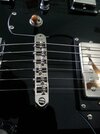
IMG_20180403_45854.jpg

Now, I am not trippin' out on the lateral arrangement of the saddles and neither do I expect every guitar to have identical saddle position, but rather I am trying to sort this out in my head.

Now, the intonation is improved everywhere along the neck. G/b/e are spot-on at every fret checked, even the 12th.

E/A/D are on the money at 1st, 3rd, 5th. 7th & 9th, with a slight variation at the 12th fret.

Barre chords are in tune all the way to the 14th fret. Open chords are in tune at all positions.

Good job, right???

Not exactly...

I keep fighting this "sitar-ish" jangle mostly on my D and G strings. It' seems to go away as the strings age, but it's downright irritating when you put on a new set.

So, I relaxed the strings and examined the nut slots. Everything looked good. No "Pinking" when tuning up or down. I even swiped the floor of each slot with my gauged welding tip cleaners just to be sure the floor was flat. The strings are also marking the nut all the way across the floor and 1st fret clearance is .015" to .020" respectively.

Here's where the questions begin:

This old gentleman Luthier I ran into up at The Ranch this weekend were discussing this, because I been fighting the "jangling" G string for a while on more than one guitar. He suggested this was an intonation anomaly!!!!

So I asked him to explain. He claimed that there are more then one point, in a bridge saddle's travel, where the open pitch 12th fret pitch will be similar, but only one "sweet spot" in the saddle's travel where it is precisely dead-on.

WTF???

So, I wrestled with this in my had most of the drive home last night and I just cannot accept this theory (as of yet) because to my mind, intonation is a product of mathematics and it can only be "correct" in one position in the saddle's range of movement.

So, I wanted to open this up to discussion and ask your opinions on the topic. To make things a little more focused, I would like to ask these questions specifically:

1. Is there more than one place in a bridge saddle's range of motion where intonation can be correct???

2. What is causing this jangling d/G string anomaly that I thought was cured by dressing the floor of the nut slots???


Thanks..... :)
 
Last edited:
Get your total guitar in tune is expected of you if you play with others. It can be a difficult job on certain guitars. Acoustic guitars it starts way back when it was made and now 16 years later you have to make things right, ok I'm on that. Now in the real world you got little screws that are nearly impossible to reach and can get the head twisted off or stripped in a blink. You don't go thru the pain you will never know what your guitar really sounds like. It takes me 20 minutes and the next time 2 hours. Make the strings longer or shorter? I have several instruments on stage with my Les Paul from the land of the Rising Sun or the Strat from the Golden State. They are two very weird places, complete tuning is east meets west. Harmony can be the perfect place.
 
Ok, I want to present a few questions and open up a general discussion about this topic. I'm doing some real fine tuning on my Double Neck and I want to be sure I'm not missing anything.

Originally, I was using a standard ABR-1 style bridge. I recently switched to a roller bridge from Philadelphia Luthier Tools, a bridge I have used multiple times on other guitars. It comes pre-adjusted and this will usually get you in the ballpark on most guitars.

Here is the one that I installed on my Mom's Les Paul Custom Replica and it required no adjustment to be properly intonated: (sharp eyes will notice the 'A' sting is not in the roller groove in this photo)

View attachment 13445

The one I installed on my doubleneck was set in about the same "lightning bolt" arrangement as shown below:

View attachment 13446

So I have now played through several sets of strings on this guitar. Each time I change strings, I make sure the floor of the nut is square, smooth & clean before restringing. The intonation was really close just by dropping the bridge on and only a minor adjustment was needed.

Recently, I felt like the guitar just wasn't correctly intonated, so I started checking it. I found that I had some slight intonation anomalies where the pitch was a little off at certain positions, even though if anyone else would have strobed the guitar, they would have called it good.

I could hear a pitch difference between the open and fretted notes that even my Korg Pitchblack (on the strobe setting) wasn't picking up.

So, I swapped strings (Sticking with EB .010's) and tuned everything up.

When I intonate, I look for the 12th fret harmonic (naturally) but I then check intonation on that string at 1st, 3rd, 5th, 7th and 9th frets to see where they are at. As one might expect, when the 12th was spot-on, there were some issues with the fretted note on the "lower frets" not being quite right, so I started making some adjustments.

When I was finished, I noticed I had moved the E/A/D saddles quite a bit from where they were originally, which surprised me, because I had been playing and recording with this guitar in that condition.

Here's what the bridge looks like now:

View attachment 13447

Now, I am not trippin' out on the lateral arrangement of the saddles and neither do I expect every guitar to have identical saddle position, but rather I am trying to sort this out in my head.

Now, the intonation is improved everywhere along the neck. G/b/e are spot-on at every fret checked, even the 12th.

E/A/D are on the money at 1st, 3rd, 5th. 7th & 9th, with a slight variation at the 12th fret.

Barre chords are in tune all the way to the 14th fret. Open chords are in tune at all positions.

Good job, right???

Not exactly...

I keep fighting this "sitar-ish" jangle mostly on my D and G strings. It' seems to go away as the strings age, but it's downright irritating when you put on a new set.

So, I relaxed the strings and examined the nut slots. Everything looked good. No "Pinking" when tuning up or down. I even swiped the floor of each slot with my gauged welding tip cleaners just to be sure the floor was flat. The strings are also marking the nut all the way across the floor and 1st fret clearance is .015" to .020" respectively.

Here's where the questions begin:

This old gentleman Luthier I ran into up at The Ranch this weekend were discussing this, because I been fighting the "jangling" G string for a while on more than one guitar. He suggested this was an intonation anomaly!!!!

So I asked him to explain. He claimed that there are more then one point, in a bridge saddle's travel, where the open pitch 12th fret pitch will be similar, but only one "sweet spot" in the saddle's travel where it is precisely dead-on.

WTF???

So, I wrestled with this in my had most of the drive home last night and I just cannot accept this theory (as of yet) because to my mind, intonation is a product of mathematics and it can only be "correct" in one position in the saddle's range of movement.

So, I wanted to open this up to discussion and ask your opinions on the topic. To make things a little more focused, I would like to ask these questions specifically:

1. Is there more than one place in a bridge saddle's range of motion where intonation can be correct???

2. What is causing this jangling d/G string anomaly that I thought was cured by dressing the floor of the nut slots???

Thanks..... :)

Robert those roller bridges are great and adjustments are a needle in both eyes. They give you a leg up on intonation. I have said it a lot here, there and everywhere the less contact with the strings the better. Not friction is no music. A middle ground is hard to hit but bone nuts and roller bridges are the best. I have a few roller nuts on Strats and install is ugly. Brass nuts are very very good but cutting them in bloody murder. I have several on my work guitars the others are a some day thing.
Good topic buddy and I hope to learn more as it grows.
 
The strings are also marking the nut all the way across the floor and 1st fret clearance is .015" to .020" respectively.
How are you measuring this? For example: I'll fret each string between the 2nd and 3rd, and look and feel for any clearance at the 1st fret. I shoot for the smallest gap possible before the string comes in contact with the first fret. The gap is definitely less than .010... it's probably .005 or even less.

Sitar effect: Have you tried dampening the strings between the nut and tuners? Especially the D & G strings? If the sitar effect stops after dampening those strings, then it's those nut slots again.

Are you sure the bridge's thumb wheel adjusters are not vibrating loosely?
 
How are you measuring this? For example: I'll fret each string between the 2nd and 3rd, and look and feel for any clearance at the 1st fret. I shoot for the smallest gap possible before the string comes in contact with the first fret. The gap is definitely less than .010... it's probably .005 or even less.

Sitar effect: Have you tried dampening the strings between the nut and tuners? Especially the D & G strings? If the sitar effect stops after dampening those strings, then it's those nut slots again.

Are you sure the bridge's thumb wheel adjusters are not vibrating loosely?

Hey, Man!!!!

I check both free (unfretted height) at the 1st and also between the 2nd and 3rd as you have posted. Unfretted height is .015" to .020" respectively. Fretted at the 3rd it's around .010" or so, maybe a little less, but definitely far enough away that it's not causing me trouble.

Damping between nut and tuners makes no difference, BUT, the "sitar effect" was gone this morning after sitting strung up to pitch overnight...(my 2016 Gibsn SG does the same thing)

Thumbwheels are TIGHT. When I installed the nickel roller bridge, I installed the nickel posts and thumbwheels as a unit.
 
Damping between nut and tuners makes no difference, BUT, the "sitar effect" was gone this morning after sitting strung up to pitch overnight...(my 2016 Gibsn SG does the same thing)
Then, only play your guitars in the morning... :celebrate2:

Thumbwheels are TIGHT. When I installed the nickel roller bridge, I installed the nickel posts and thumbwheels as a unit.
Loose thumbwheels has happened to me twice. Both times with a locking style bridge (Tonepros). After adjusting the bridge height, tightening the set screws for locking, tuning up, and then playing for some time, I began to hear a little rattle. It was one of the thumbwheels. The bridge must have moved a bit when tightening the set screws. It took enough torque off one of the adjusters, and vibrated loose. Another time, I heard the rattle again. This time the adjusters were tight, but one of the set screws vibrated loose. Go figure... I try to be cautious about not over tightening the hardware... :BH:
 
From what I have read, intonation is a compromise.
The nut slot height is obviously important.
Similarly, fret height and how the string is fretted (whether pushing it down to the board or simply touching it to the fret) will change how that spot's tuning appears.
You guys all know more about it than I do I suppose.

I do know Robert is a stickler for details so this is going to drive him close to OCD madness.
I think the only way to get it "right" is to design the fret placement and shape - to match at every position on the fretboard.
The guitar is in its limits as conceived and designed, not a precise instrument.
I am pretty anal about things too, but things must be viewed in perspective.

A hammer can be made a very good hammer, but was not intended a scalpel.
I like big hammers.
Like F'in Thor hammers.

But when I fenced in college, i preferred the touch and precision of epee instead of the mad-slashing sabre...
(and the foil guys were just pretentious arrogant pricks)
So wtf do I know, since I didnt finish college?

I say intonate any particular guitar so the compromise suits what or how you play on that guitar.
Sometimes good enough actually is good enough.
 
From what I have read, intonation is a compromise.
The nut slot height is obviously important.
Similarly, fret height and how the string is fretted (whether pushing it down to the board or simply touching it to the fret) will change how that spot's tuning appears.
You guys all know more about it than I do I suppose.

I do know Robert is a stickler for details so this is going to drive him close to OCD madness.
I think the only way to get it "right" is to design the fret placement and shape - to match at every position on the fretboard.
The guitar is in its limits as conceived and designed, not a precise instrument.
I am pretty anal about things too, but things must be viewed in perspective.

A hammer can be made a very good hammer, but was not intended a scalpel.
I like big hammers.
Like F'in Thor hammers.

But when I fenced in college, i preferred the touch and precision of epee instead of the mad-slashing sabre...
(and the foil guys were just pretentious arrogant pricks)
So wtf do I know, since I didnt finish college?

I say intonate any particular guitar so the compromise suits what or how you play on that guitar.
Sometimes good enough actually is good enough.

Good points...and you are correct, in that intonation is indeed a comprise of sorts, but intonation, per-se, is not my problem.

My double neck intonates everywhere across the fretboard, even more closely than my 2016 Gibson SG does. Keep in mind that the necks were made by B. Hefner in Whittier, CA., and their attention to detail is phenomenal.

Also, I keep my sting heights very low and consistent at the nut, so a capo can be used without pulling the guitar sharp.
 
Then, only play your guitars in the morning... :celebrate2:


Loose thumbwheels has happened to me twice. Both times with a locking style bridge (Tonepros). After adjusting the bridge height, tightening the set screws for locking, tuning up, and then playing for some time, I began to hear a little rattle. It was one of the thumbwheels. The bridge must have moved a bit when tightening the set screws. It took enough torque off one of the adjusters, and vibrated loose. Another time, I heard the rattle again. This time the adjusters were tight, but one of the set screws vibrated loose. Go figure... I try to be cautious about not over tightening the hardware... :BH:

Strange anomaly, isn't it???
 
OH COME ON
lotf-ttah-jpg.13457


I cant hit a straight fret half the time now I gotta adjust my fingering different for every fret/string postion......

I say PISS OFF "True Temperment"
 
That's not the issue I am having....
i dont know about the jangle; resonance making something else vibrate maybe.
Since you checked over everything else.

The output jack on one of mine was loose and only spoke up at certain times.
I found it right away so I dont recall the specifics.

unplugged only or do you hear it through the amp?
I have a little of that on the g at some frets on my Yamaha Cheapy,.
Dont hear it plugged in and I dont fret over it, pun intended.
 
What a coincidence!

I restrung my Jackson yesterday, too.

But, my Jackson didn’t sound like a sitar. It sounded more like a raging bull of sonic crunch.

Weird, huh?

It's a strange anomaly - both my 2016 Gibson SG and my VH Doubleneck both do it....????
 
i dont know about the jangle; resonance making something else vibrate maybe.
Since you checked over everything else.

The output jack on one of mine was loose and only spoke up at certain times.
I found it right away so I dont recall the specifics.

unplugged only or do you hear it through the amp?
I have a little of that on the g at some frets on my Yamaha Cheapy,.
Dont hear it plugged in and I dont fret over it, pun intended.


It's present plugged in and unplugged on both guitars...
 
Back
Top