OP

RVA
Ambassador
Thank you. I was getting cold standing out here in my un-powered spaghetti shame all alone!dont get frustrated you are far from alone.

Thank you. I was getting cold standing out here in my un-powered spaghetti shame all alone!dont get frustrated you are far from alone.


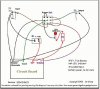
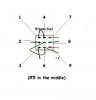
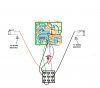
Can't hurt. Will do tonightAt least, lets try to eliminate the wiring of the footswitch as an issue. Try rewiring the footswitch like in the diagram. Reminder: Keep the lugs horizontally parallel. And refer to the lugs with the designated numbers of the second pic:
View attachment 16736
View attachment 16738

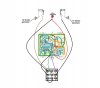
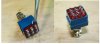
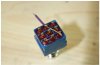

Did that once--- never been back to OhioI was getting cold standing out here in my un-powered spaghetti shame all alone!
Thank you!I copied the same wire color scheme from the instructional pdf you provided. Try your wiring like this:
View attachment 16752
Do your jumpers first and try to create your jumpers like these examples:
View attachment 16749
View attachment 16750
Calculate a rough estimate on how long your leads need to be on the generous side. This is also called "flying leads". Then preinstall them either at the switch, or the jacks and board. Then cut to fit.


Correct.Sorry I'm late here, time differences are a pain. I sent RVA the chip diagram but for others, the "dot" on the chip denotes pin 1, which is the upper left pin on the socket while the cutout is on the upermost edge. Now, if I have this right, we have no 9V DC power to the board. Is this correct?
Thank you SyscoSorry RVA... I thought you had a pedal with top mounted jacks. This is more appropriate:
View attachment 16758
Ok. Will do right nowOk, can you check continuity, both positive & negative leads, from the DC socket to the board, no DC power present.
But I am getting power to the board when I test the solder joints on the back, with both positive and negative leads coming directly from the jack. Doesn't that mean that the lines from the jack to the board are true?Ok, the wire leads are "solid core" types, not stranded, yes??? If so, we may have an internal break in a wire (inside insulation). I have used solid core & had to CHASE down an internal break. We could also be looking for an intermittent solder join, but either way, it is somewhere between the DC socket & board.
Yep, and the ground seems solid. The breif green light was likely the result of me touching something with my voltage tester.Oh, ok, so the power IS present at the board all the time?
Ok, with the chip removed from the socket, can we check for 9V+ at pin 8, & also for ground at pin 4?Yep, and the ground seems solid. The breif green light was likely the result of me touching something with my voltage tester.