Would anyone like to know more about…?

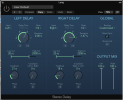
Next up is a long delay. Unfortunately, the on/off for this one was just off the screen, but you can hear it clearly enough. Long delays like this tend to work best at the end of phrases, and can jumble the sound if left on all the time. In a future post, I'll explain how to get the long echoes only when someone has finished playing/singing.

Long Delay.png
 
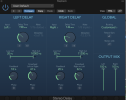
The slapback echo wasn't very effective at all on this number, and I should have halted the video and adjusted the settings. I've changed them to the ones below, and I'll give you a chance to hear that in a future video.

Slapback.png
 
Last edited:
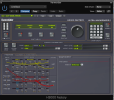
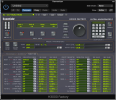
Eventide Harmonizers were in many ways the vocal sound of the 1980. Whether you were David Bowie, Hall & Oates, or Peter Gabriel, the chances were the Harmonizer was a bit feature. Although the plug-in I used is the H3000, the patch is taken from the earlier 910, and it's seminal stuff.

H3000 Program.png
 
The Eventide H3000 Factory ain't cheap, which I why I attempted to recreate the sound using two standard pitch shifters (of which more later). Typically, it sells for $199/£179, which makes it a serious purchase for most users. On the plus side, it's not an emulation so much as the original ported over to plug-in form. As an original hardware unit will set you back about $2000, the software seems a bit of a bargain!

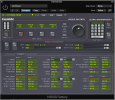
Also, the plug-in version offers three different views of the configuration of the various processor stages, which the original could never do.

H3000 Expert.pngH3000 Function.png
 
Last edited:
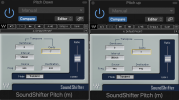
My attempt to get near to the Eventide sound using two instances of the pitch sifter that comes with Logic Pro was worse than lame! The plug-in I'd normally use for the job is the Waves SoundShifter, which sounds vastly better, as I'll demonstrate in a forthcoming video. Discount price of the SoundShifter is about £25, but the price of Waves plug-ins seems to fluctuate by the day, so it's worth keeping your eye out for a bargain.

Waves SoundShifter.png
 
So you don't think I'm all mouth and no ears, here's a short burst of my improved effects. OK, the echo is a bit long for 'slapback', but it suits the song better than a tight, John Lennon-type slapback IMO.

 
I'm mindful of the fact that we're already up to eight pages, and there's a lot to take in. My suggestion is that you take it one step at a time. If you find something that's new to you, it will stick in your mind a lot better if you go to your own DAW and try it out for yourself. When you've got that under your belt, you can come back to this thread to find something else you can try out.

I know this because I started exactly where everyone starts: I knew nothing about DAWs, except for a notion that this was a better way to go than multitrack tape. Even setting up a DAW so that it worked with an audio interface and had minimum latency (unwanted audio delay through the system) was a big challenge

The only way I was able to progress from my position of near-ignorance was to start with the things I had to know – like how to get my guitar actually showing some sgnal on the screen, how to put it into Record etc – then learn a bit more as I went along.

That was about 25 years ago, so if I seem to know a lot about DAW-based recording, it's because I've put a lot of hours in. Some of those hours have been very frustrating, but most of it has been a lot of fun.
 
I'm mindful of the fact that we're already up to eight pages, and there's a lot to take in. My suggestion is that you take it one step at a time. If you find something that's new to you, it will stick in your mind a lot better if you go to your own DAW and try it out for yourself. When you've got that under your belt, you can come back to this thread to find something else you can try out.

I know this because I started exactly where everyone starts: I knew nothing about DAWs, except for a notion that this was a better way to go than multitrack tape. Even setting up a DAW so that it worked with an audio interface and had minimum latency (unwanted audio delay through the system) was a big challenge

The only way I was able to progress from my position of near-ignorance was to start with the things I had to know – like how to get my guitar actually showing some sgnal on the screen, how to put it into Record etc – then learn a bit more as I went along.

That was about 25 years ago, so if I seem to know a lot about DAW-based recording, it's because I've put a lot of hours in. Some of those hours have been very frustrating, but most of it has been a lot of fun.
Well Simon you just described my starting adventure. I bought the equipment and built a studio a couple of years ago. I have a 12th gen Intel PC with 64GB RAM, 8GB disk space, two 43 inch monitors and a RME Fireface UFX+ 12 channel interface. I also have a 500 series chassis with a few cards. I hadn’t used it much at all until a few months ago, I’m now in a 4 piece band that practices here every week (we’ve done 2 gigs so far). Just last month I did my first 8 track recording in Reaper, mapping the RME interface into Reaper (that took a while to figure out). So I just hit record and record the entire 2 to 3 hour practice session in one big file for now. The first recording was surprisingly well balanced with the drums, bass and lead guitar all DI into the interface. The vocals and rhythm guitar (amp was using a e609) were really low as I didn’t use one of the 4 mic pre inputs. Duh in hind sight. So, I used my first plugin, a reverb to add a little verb and gain to the vocals. I thought I was styling figuring THAT out !

I was able to extract about 8 songs from from that recording. I have not done any mixing improvements as that is a next hill to climb. I’m stoked to just get decent recordings we can listen too and critique. So I’m following along but about 7 pages behind in skills. But, that’s the fun part, learning new sh#t !
 
Last edited:
Well Simon you just described my starting adventure. I bought the equipment and built a studio a couple of years ago. I have a 12th gen Intel PC with 64GB RAM, 8GB disk space, two 43 inch monitors and a RME Fireface UFX+ 12 channel interface. I also have a 500 series chassis with a few cards. I hadn’t used it much at all until a few months ago, I’m now in a 4 piece band that practices here every week (we’ve done 2 gigs so far). Just last month I did my first 8 track recording in Reaper, mapping the RME interface into Reaper (that took a while to figure out). So I just hit record and record the entire 2 to 3 hour practice session in one big file for now. The first recording was surprising well balanced with the drums, bass and lead guitar all DI into the interface. The vocals and rhythm guitar (amp was using a e609) were really low as I,didn’t use one of the 4 mic pre inputs. Duh in hind sight. So, I used my first plugin, a reverb to add a little verb and gain to the vocals. I thought I was styling figuring THAT out !

I was able to extract about 8 songs from from that recording. I have not done any mixing improvements as that is a next hill to climb. I’m stoked to just get decent recordings we can listen too and critique. So I’m following along but about 7 pages behind in skills. But, that’s the fun part, learning new sh#t !
That's the whole deal, right there. You get the set-up working, you make music and you record. When you play back, you figure out what you could have done better. After going round that loop a few times, the results are more about the musicianship than the technology.

Once you get to that stage, anything else you learn about music production is a bonus. Take your time, have fun, and never be afraid to ask questions!
 
I'm working on a final mix of SMOTW. Although I'm aiming for a sound that it as close to a studio recording as possible, I've decided to add a little of the recording from the back of the venue at the start and end, just to show it was recorded live. In between, I don't want that 'ambient' recording in the mix, but when you know it's a live recording, most of us accept it's 'warts and all'.

There will be some techniques and processes and techniques I haven't used up to now. The most important of these was taught to me by mix engineer Pete Hammond https://www.discogs.com/artist/34067-Pete-Hammond.

Among the many things I learned from Pete was the benefit of changing the way you treated each part in different sections of the song. To give a simple example, if there's a section where the mix strips down and it's only drums, you can put huge amounts of reverb on the snare, and even the kick drum. As soon as the other parts kick in, those reverbs need to be muted, because they will muddy the mix otherwise.

Interestingly, the listener seldom picks up on this slight-of-hand. Just like the conjurer who convinces you the three-of-Diamonds is still in her hand, when it's actually in your jacket pocket, a skilled mix engineer can convince you the drum sound is still huge even after it's been shrunk down to fit in with the rest of the mix.
 
For those of you wondering: "So where's this mix?", the answer is: "On a hard drive, in a computer that is currently non-functional." I believe the culprit is the GPU (Graphics Processor Unit), which I installed a few years ago. There is another machine on its way, so I hope to be up and running again next week.
 
Just a bit of an update: I picked up a replacement 2012 Mac Pro for £45 (about US $60), which a trader was selling cheap because there was no system drive, so he couldn't verify if it worked. It took me a while, but I've got it running, so I've sent my previous machine off for repair.

Having had time to think, I've taken the mix project in a new direction and I'm creating a mix of SOTW based only on Reaper, and either the plugins that come with it, or ones you can download for free!

I should be able to share the results in a few days…
 
I stick to LUFS -14 when I render my tracks in ReaperDAW, but when I listen to others' clips they seem much louder.

How are they getting around the LUFS -14 limitation ?

I that even a real thing ?
 
I stick to LUFS -14 when I render my tracks in ReaperDAW, but when I listen to others' clips they seem much louder.

How are they getting around the LUFS -14 limitation ?

I that even a real thing ?
Its an art. I finally started loading my 300 songs up this summer & 77 are on the the platforms now. Have learned so much about mixing & mastering for platforms. I tried the -14 thing..way too low, Literally use no plugins anymore & luckily have always focused on the capture or all these lost songs non mixed in 3 different DAWS just sitting there never would of been able do them if they wernt mic'd & captured correctly. . I use all amps & no digi. Have learned ..if it sounds good it is good but -14 lufs is total crap tho. Youtube squashes more than spotify & soundcloud doesnt squash at all,

Constantly fighting the volume vs dynamics..get real frustrated when the the streamers squash... so learning to hit -14 & still be loud without losing dynamics is the whole ball game..

They are basically hard limiting at -14 it seems.... my observation,,look at the loudest part of song close & then the low parts wont come up as much if you are working that range & their limiters seem to squash less
 
Its an art. I finally started loading my 300 songs up this summer & 77 are on the the platforms now. Have learned so much about mixing & mastering for platforms. I tried the -14 thing..way too low, Literally use no plugins anymore & luckily have always focused on the capture or all these lost songs non mixed in 3 different DAWS just sitting there never would of been able do them if they wernt mic'd & captured correctly. . I use all amps & no digi. Have learned ..if it sounds good it is good but -14 lufs is total crap tho. Youtube squashes more than spotify & soundcloud doesnt squash at all,

Constantly fighting the volume vs dynamics..get real frustrated when the the streamers squash... so learning to hit -14 & still be loud without losing dynamics is the whole ball game..

They are basically hard limiting at -14 it seems.... my observation,,look at the loudest part of song close & then the low parts wont come up as much if you are working that range & their limiters seem to squash less
I've read where people doing home recording are mastering at LUFS -10

I think I might go into a recent track I did and try that.. slap it up on teh YouTube and see what's what.

:unsure:
 
I've read where people doing home recording are mastering at LUFS -10

I think I might go into a recent track I did and try that.. slap it up on teh YouTube and see what's what.

:unsure:
Bingo...watch your RMS also ..dont kill your dynamics with too much constant. -10 seems to be a good compromise i am learning with careful attention to peaks
 
  • Like
Reactions: PLX
Bingo...watch your RMS also ..dont kill your dynamics with too much constant. -10 seems to be a good compromise i am learning with careful attention to peaks
Well, I tried it and I do not detect any YouTube tomfoolery with compression.

It came out at around -12.5 LUFS without clipping any peaks.

 
Back
Top