What SAY you? All you SOUND/AMP/TECHIE Tube vs SS guru's

If you play the amp properly (7 or higher) then you don't want to take out the bright cap.
The bright cap is what supplies the crispy crunch.
But this only works if the amp is pushed hard into power amp distortion. (as God herself intended)

If you play the amp on low volume settings: then you will never get the true sound.
You will always complain about the amp being too bright.
This is a common complaint when people try to play Marshall at low volume settings.

A lot of people don't realize that the true Marshall sound comes from power amp distortion.
Therefore, the amp will be extremely loud.
If you turn the volume down, you lose the sound, and the amp never sounds the way it should.

That's when you try to take out the bright cap to compensate for the lack of power amp distortion.
But basically, you are playing the amp the wrong way.
These type of Marshalls don't sound very good when played at low volume. They were not made for low volume.
Yes but because one usually cannot and I am a higher gainer, the gain on 10 makes the bright cap irrelevant. It is only an issue below that on the preamp volume.
 
If you play the amp properly (7 or higher) then you don't want to take out the bright cap.
The bright cap is what supplies the crispy crunch.
But this only works if the amp is pushed hard into power amp distortion. (as God herself intended)

If you play the amp on low volume settings: then you will never get the true sound.
You will always complain about the amp being too bright.
This is a common complaint when people try to play Marshall at low volume settings.

A lot of people don't realize that the true Marshall sound comes from power amp distortion.
Therefore, the amp will be extremely loud.
If you turn the volume down, you lose the sound, and the amp never sounds the way it should.

That's when you try to take out the bright cap to compensate for the lack of power amp distortion.
But basically, you are playing the amp the wrong way.
These type of Marshalls don't sound very good when played at low volume. They were not made for low volume.

We are making capacitors out of Capn' Crunch Crunchberries.
 
Yes but because one usually cannot and I am a higher gainer, the gain on 10 makes the bright cap irrelevant. It is only an issue below that on the preamp volume.
Yes, at 10 on the dial the bright cap is out of the circuit. Even so, with the master down low the amp will sound thin.
Perhaps changing the pre-PI master to a post-PI master (PPIMV) may be something for you, as it allows the PI to be driven hard while limiting drive to the power tubes. This thickens/fattens the tone somewhat, not quite as much as if the power tubes were also being driven hard, but noticeably.
There are several different PPIMV types or "designs" & users of all have their preferences, however, as with all things, there's no free lunch so to speak. PPIMV's come at a cost. Above about 7 on the dial everything about the power amp works as normally. Below this, no matter which design PPIMV, they start to decrease the amount of NFB (negative feedback) taken, so the presence & if fitted, the resonance controls progressively work less as it's turned down, until they show no effect at all. Still, many people do use these type master volumes. You'd have to try one to know if they are for you. Hope this is helpful. Cheers
 
Yes that's the reality - the lower that the master volume is set, the more tone is sucked away from the sound.

And perhaps that's what leads to other methods being used (methods besides master volume) to control the loudness.
Iso Cabinet / microphone
Load box / re amp
Speaker attenuator
Flux tone speaker
 
Yes, at 10 on the dial the bright cap is out of the circuit. Even so, with the master down low the amp will sound thin.
Perhaps changing the pre-PI master to a post-PI master (PPIMV) may be something for you, as it allows the PI to be driven hard while limiting drive to the power tubes. This thickens/fattens the tone somewhat, not quite as much as if the power tubes were also being driven hard, but noticeably.
There are several different PPIMV types or "designs" & users of all have their preferences, however, as with all things, there's no free lunch so to speak. PPIMV's come at a cost. Above about 7 on the dial everything about the power amp works as normally. Below this, no matter which design PPIMV, they start to decrease the amount of NFB (negative feedback) taken, so the presence & if fitted, the resonance controls progressively work less as it's turned down, until they show no effect at all. Still, many people do use these type master volumes. You'd have to try one to know if they are for you. Hope this is helpful. Cheers
Thanks for the explanation!
It does not sound thin at all at any level with the Lynch mod which is what I use. Only thins out when gain goes to like 7 and then I have to fuss with EQ between songs. Boo.
Thins out as in thinner than it was.
Simple to give it a snip job.
Or I suppose activate a graphic whenever gain is lower. Just another link in the chain.
 
Made it simpler still. Just played with it. For the odd time I need cleanish, I turned gain down to 4 and while it thins a little, it is more high endy which is OK for cleanish. When songs kick in, I just turn on an OD up front. Gives me enough grind for that song and then I put gain up to full again.
For solos I will use an EQ in loop of SC20 amd kick OD in as required. Beats reaching in back to change level on Lynch Mod.
Also, for cleanish stuff, I have a patch on my G3 effects pedal with any or all acoustic sim, chorus and reverb and that patch I have turned up to 150%. So that means I can turn my guitar down and still have a decent volume amd it is cleaner obviously with guitar down

Playing around as I haven't gigged the SC20 yet and wantto use it for a show April 23. My other option is to use a Godin with synth and run the synth through loop. Then clean is clean, acoustic sounds 12 string etc. Sweet. Switches between regular pickup amd synth right on guitar.

 
Thanks for the explanation!
It does not sound thin at all at any level with the Lynch mod which is what I use. Only thins out when gain goes to like 7 and then I have to fuss with EQ between songs. Boo.
Thins out as in thinner than it was.
Simple to give it a snip job.
Or I suppose activate a graphic whenever gain is lower. Just another link in the chain.
It's hard to say, with a modification installed. We have no idea what the modification is...
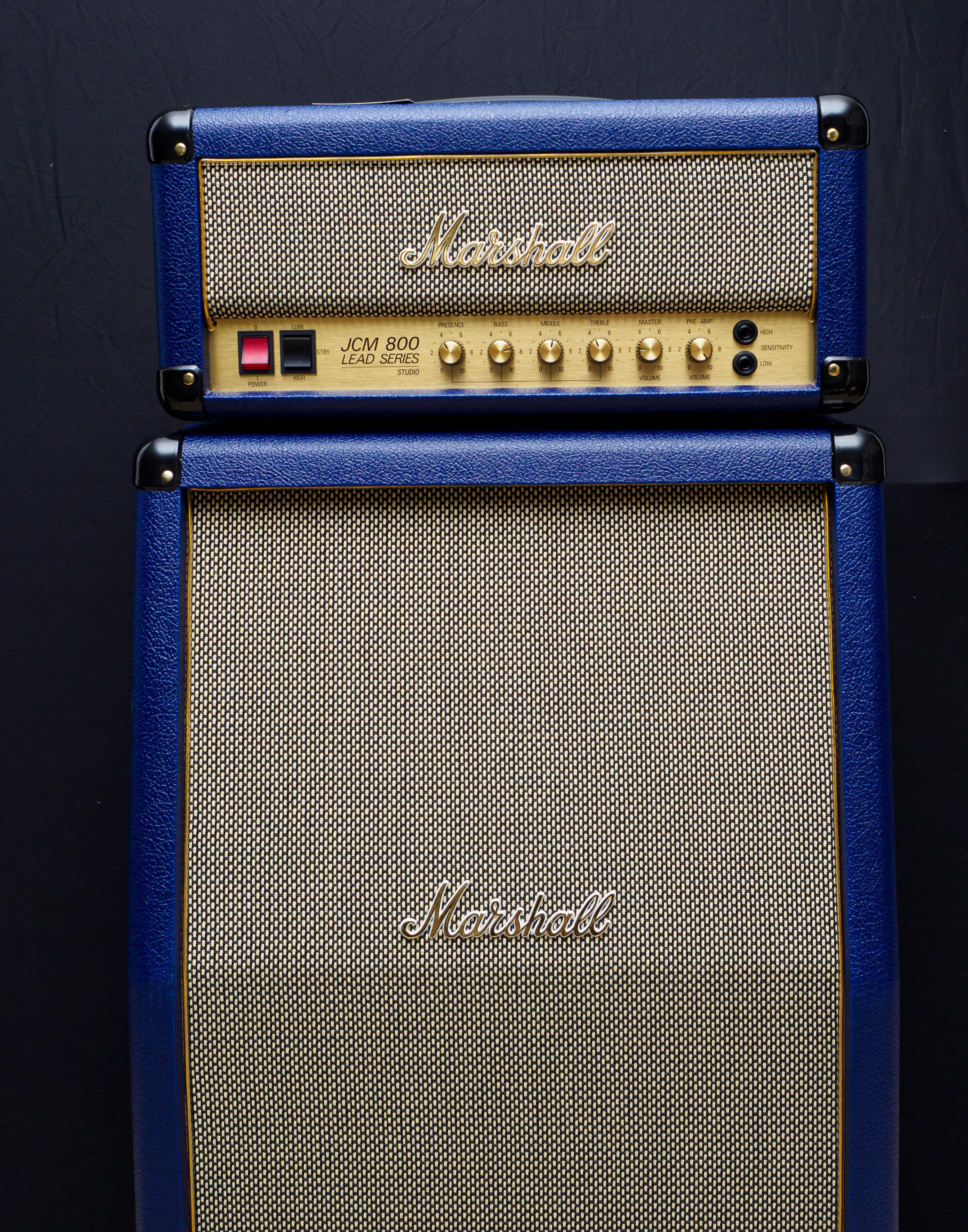
But generally for JCM 800:
The "High" input is preamp distortion with master volume.
The Low input is clean.
You can't use both inputs at the same time. Can only use 1 of the inputs.

It's better to turn the master all the way up, and let the power amp distort.
The lower the master is, the less power amp distortion.

The amp always sounds better (more beefier) if the master is wide open.

If you want to lower the loudness:
It might be better to use a pro speaker attenuator - as opposed to the master volume.
You can maintain more sound quality by running the amp master on 10.
 
Last edited:
It's hard to say, with a modification installed. We have no idea what the modification is...
But generally for JCM 800:
The "High" input is preamp distortion with master volume.
The Low input is clean.
You can't use both inputs at the same time. Can only use 1 of the inputs.

It's better to turn the master all the way up, and let the power amp distort.
The lower the master is, the less power amp distortion.

The amp always sounds better (more beefier) if the master is wide open.

If you want to lower the loudness:
It might be better to use a pro speaker attenuator - as opposed to the master volume.
You can maintain more sound quality by running the amp master on 10.
The mod replaces V2 and adds an extra tube gain stage. While I am familiar with the 800s since 1983 and master volumes and have an attenuator, I like this method. It works fine for what I do and again, I may not need to lower the gain at all if I use guitar synth.
I may try the Dr Z Airbrake or Bad Cat but with the extra gain stage it sounds awesome.
 
And this is why I made this thread. SO I can learn and add to my learning on the nuances possible given the circuitry and how these amps were designed.

Thanks, sysco, ivan etc
The clue is the layout.

Adding extra gain stages is not really the best way, because you wind up with a lot more noise.
More hiss, more buzz, more low frequency hum.
Noise is amplified just like the guitar is amplified.
Then according to how it's built you 'may' see high frequency oscillations also. The oscillation may be audio frequency, or high frequency beyond human hearing, or both.
What I personally hear is overloaded audio that (to me) sounds muddy or farty...that is subjective.

What you are really trying to do: is increase the sensitivity of the guitar, amp or both.
Adding extra gain stages is not the only way of achieving that.
Over driving the power amp, with a cleaner preamp, may produce a better result compared to the extra preamp gain stages.
 
The clue is the layout.

Adding extra gain stages is not really the best way, because you wind up with a lot more noise.
More hiss, more buzz, more low frequency hum.
Noise is amplified just like the guitar is amplified.
Then according to how it's built you 'may' see high frequency oscillations also. The oscillation may be audio frequency, or high frequency beyond human hearing, or both.
What I personally hear is overloaded audio that (to me) sounds muddy or farty...that is subjective.

What you are really trying to do: is increase the sensitivity of the guitar, amp or both.
Adding extra gain stages is not the only way of achieving that.
Over driving the power amp, with a cleaner preamp, may produce a better result compared to the extra preamp gain stages.

Our extra gain stage in the Origin was actually quieter than stock, based on listening to recordings before and after.

It's also quieter than the academy's Origin 50 Combo.

I have slightly more transformer hum (that does not come through the speakers) but much less "hiss," probably due to Greg and Ivan's circuit modifications...
 
The clue is the layout.

Adding extra gain stages is not really the best way, because you wind up with a lot more noise.
More hiss, more buzz, more low frequency hum.
Noise is amplified just like the guitar is amplified.
Then according to how it's built you 'may' see high frequency oscillations also. The oscillation may be audio frequency, or high frequency beyond human hearing, or both.
What I personally hear is overloaded audio that (to me) sounds muddy or farty...that is subjective.

What you are really trying to do: is increase the sensitivity of the guitar, amp or both.
Adding extra gain stages is not the only way of achieving that.
Over driving the power amp, with a cleaner preamp, may produce a better result compared to the extra preamp gain stages.

Ampmad, Robert, Ivan, sysco, bdon, '67, smitty etc.

I am following you AM. I also will let you know in a nut shell what my amp selections are. Almost all are what one might say skew to the 4 holer side of the equation more than the MV or HIGH GAIN type amps.

My Princeton Chorus we obviously can ignore as far as the topic at hand.

So, then come the Valve amps: '72 Marshall 1987 JMP 50 watt 4 holer, Fender Red Knob THE TWIN 100 watt/25 watt, then '78 Marshall SuperLead
( Orange Tolex). And finally, an 8 KNOB Laney AOR Pro Tube Lead 50 head.

As Bastarddon knows, I have been really really excited at knowing I am looking at a good possibility of getting a really cool sounding and fully functioning Laney AOR as soon as I get my brain in a calm place where I can fully concentrate on being as careful as it requires to solder in new wires to replace the few plus a coupling cap that a mouse chewed. The new wires plus all new filter caps ought to get me into dirt heaven when I finish.

So, After all that, I must say that in the past 6-7 years since I got a wonderful push from Relic61 from his confidence I could learn to fix my own amps, I have come a long way in my understanding of schematics and circuitry. Although it is still basic knowledge and I need to refresh my memories during lapses in repair sessions. My biggest hurdle which all you tech savvy guys have helped me with has been learning schematics, symbols for the various components, what each component's role is in circuits, and how to spot visually and through testing, out of spec or failed components and even poorly modded situations etc.

I can now truly look at a circuit board ( my best understood ones are Hand wired- But, now I also can visualize PCB traces and components to get a grasp on where the signals are going what is happening within the circuits as the amps are designed. MY methods of learning have been greatly aided by Ivan and DonP, Niekeil in the Marshall AMP forum, and AMP Mad, 67 Bdon etc. I pore over schematics, youtube electronics and amp presentations, and then stare at the actual amps I own to see is I can follow and compare the HARD PARTS to how they are shown on the Schematics. Then I ask you guys if I am understanding correctly and then review your explanations of the situation.

I can still remember back to some of my first big questions to IVAN and DonP re: my Marshall JMP 50 watt. Snubber caps. The ones in my amp were swollen, so we addressed that. Then I began to learn about Bridge Rectifiers, Screen Grid resistors, Phase Inverters, Output and Power transformers, chokes, and then the ins and outs of the EQ, Presence, and of course Biasing.

So, like I said in the first post of the thread, nuances via altering specs of cap values etc are now clearer for me to understand and it fascinates me how subtle changes can have noticeable effects. Thank guys for all you do to help me understand the hows and whys of amp design and function.

I really do get a charge out of learning new details like was presented in the video.
 
Last edited:
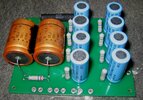
Where people miss the boat is the filter supply this works for me.
B+1 110uf B+2 16.5uf B+3 16.5uf B+4 16.5uf B+5 16.5uf
If you ever cranked a 1966 JTM45/100 you would understand.

View attachment 81549


Thanks for adding this reply and pic, '67....
---------------------------------------------------------------------------------------------------
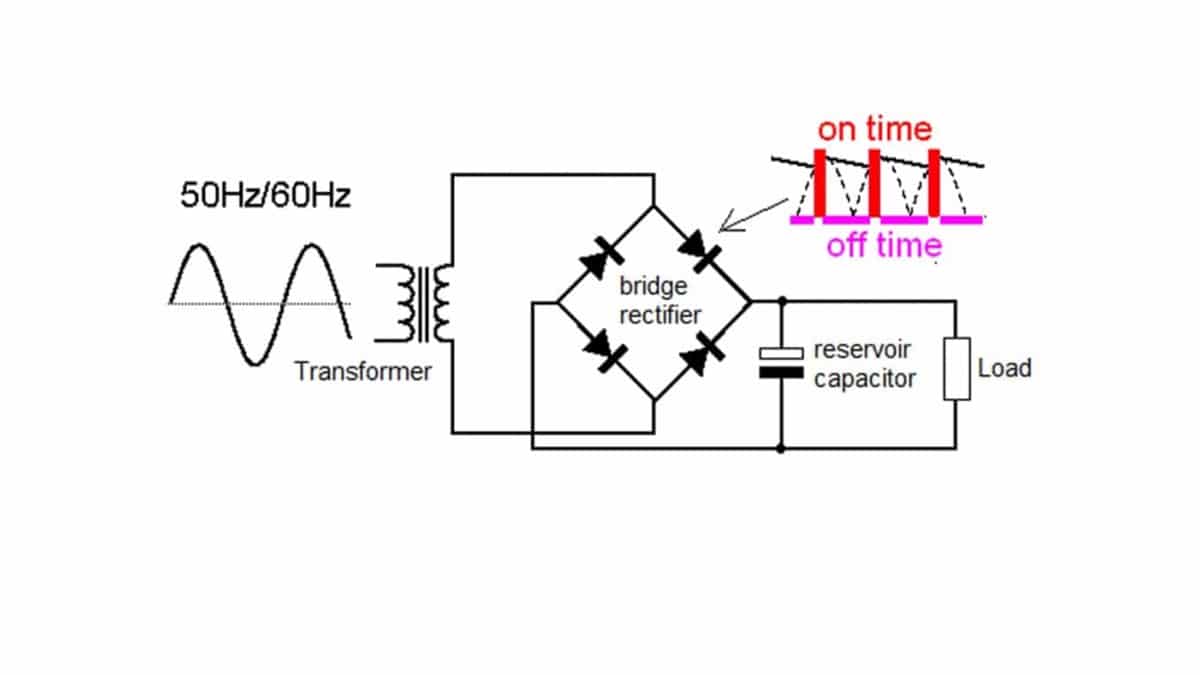
I little something I found upon googling Snubber... today for review.

 
Last edited:
The clue is the layout.

Adding extra gain stages is not really the best way, because you wind up with a lot more noise.
More hiss, more buzz, more low frequency hum.
Noise is amplified just like the guitar is amplified.
Then according to how it's built you 'may' see high frequency oscillations also. The oscillation may be audio frequency, or high frequency beyond human hearing, or both.
What I personally hear is overloaded audio that (to me) sounds muddy or farty...that is subjective.

What you are really trying to do: is increase the sensitivity of the guitar, amp or both.
Adding extra gain stages is not the only way of achieving that.
Over driving the power amp, with a cleaner preamp, may produce a better result compared to the extra preamp gain stages.
Well any added gain adds a touch of noise, sure.
Quieter though than boosting the front with an SD1 which has been done since the 80s.
This is a mod originally designed for George Lynch.
I like it. Good enough for him good enough for me.
I prefer this to chloking a full up amp with an attenuator
 
Back
Top