chilipeppermaniac
Ambassador of Decibels

Another thing,. How did you determine that all 4 neck bolts are torqued ideally? Is it possible that the tension and even alignment on the neck within the pocket might be affecting your tuning?


Another thing,. How did you determine that all 4 neck bolts are torqued ideally? Is it possible that the tension and even alignment on the neck within the pocket might be affecting your tuning?
You do have to file quite a steep angle into the nut slot for the E and A strings, a bit less with the D. The unwound strings less so. I've been doing it for so many years, I don't even think about it.
Here is another thought, Rob. Have you tried adjusting the saddle on your E string ever so slightly higher by tightening the allen screws, then also using the string length screw, run it in the direction to shorten the scale a smidge. I think this is the right way to make tuning Flatter a smidge. Then retune to pitch? I know, you will say intonation will be off then, but just kiss the screw like 1/16 turn at a time and see if it alters things.


The Graphtech Tusq nut on my old ST54 is years old, never had any problems with itIn looking at this more closely, the Graph Tech Tusq XL nut is really incredibly soft. With long-post tuners, I don't think that would be an issue, but with short, vintage tuners, it seems to be.
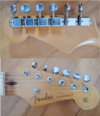
I know you said you put 5 springs on. I can't see the your pushing behind the nut would flex the bridge forward into pitch from 3 cents off at resting fully slack. Plus the other strings are in spec. How deep is your slot? I know you said it is wider than the .o46. Are you swapping in a different string or brand string each time you dress the slot and still getting the issue? Maybe try a E from a set of 11's and see if it tunes up better?
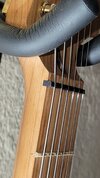
The Graphtech Tusq nut on my old ST54 is years old, never had any problems with it
View attachment 60861
The Graphtech Tusq nut on my old ST54 is years old, never had any problems with it
View attachment 60861

The sharpness is dramatic. I couldn't compensate for it.
I could probably figure this out eventually, but I just don't have the time to keep investing in it right now.
When I was actively playing my 1987 Fender Squirecaster, I used the stock tremolo so much that I would wear out a nut in about 2 months. Keep in mind this was playing in the studio and gigging almost every day.
View attachment 60863
The E/A/D would cut their nut slots deep enough that the strings would fret out on the first fret and a new nut was needed.
Bone seemed to last the longest and brass lasted longer than bone.
Here's my Isolated tracks from a studio recording if you want to hear an example of how I used the stock, Fender 6 screw tremolo on the 1987 Squire shown above.
This is a tremolo dive to zero tension, with the strings rattling on the bridge pickup, then a return to pitch with 15 rapid undulations.
Listen to Perfect Strangers - Tremolo Dive - Isolated Tracks by Von Herndon on #SoundCloud
SoundCloud - Hear the world’s sounds
Explore the largest community of artists, bands, podcasters and creators of music & audiosoundcloud.app.goo.gl
Never had any trouble with the Squire returning to pitch and it had 38 year old, stock 'F' tuners on it and Stamped steel saddles...
The Graphtech Tusq nut on my old ST54 is years old, never had any problems with it
View attachment 60861
Beag, I bet you do not dive bomb like operating a chain saw like Robert apparently does. I trust my Bone nut in my Epi LP will last forever as it never gets much if any back and forth unless it is during string changes.
 The bone nut I put in my CSL has been there since the 1990s.
I feel like if the stock tremolo on my 1987 MIK Squire would do this - and I played it since brand new, from 1988 until I traded it to @Sp8ctre in 2020 - then its not unreasonable to expect this yellow guitar, with far better parts, would do the same.