The Settings Remain The Same:

Live, I sometimes use clean or cleanish which is usually a different channel. How that sounds will be volume dependent therefore venue dependent. I change up the gain slightly for a couple different things and some amps with different modes like the JVM or 6101 I will change modes which means a gain and sometimes bass adjustment.
I do NOT try n chase whoevers tone at all, I just feel sometimes slightly less grunge works for some stuff better.
Volume changes obviously by venue.
 
@chilipeppermaniac - Keep in mind that I often use a gentle vibrato to make chords "shimmer," but I also routinely drop my low 'E' down 11 semitones to D#, and I do this on several songs that we play.

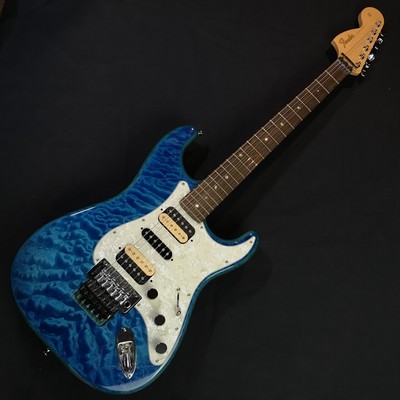
My bridge is 3/32" from the body (Factory Fender spec) and I can pull the open 'G' string up to b flat.

I experimented with more and fewer winds on the string posts, different brand and gauge of strings, polished nut slots, fall-aways, polished brass saddles, 5 springs and decking the trem, but nothing helps...Low E is still hanging 5 cents sharp.
that sucks- Just a quick question, have you tried some graphite in the nut slots?
 
I used to chase tone like an insane person when what I needed to do was just play. I forced myself to play through a Pignose amp for a long time to see if I could get more from me and stop relying on the gear, it did make a big difference. I still sounded like crap, but I digress :rolleyes:
 
Here's how I do it: I set my amp (including any pedals) for my preferred overdrive tone on the neck pickup. That's it. When I switch to the bridge pickup, I roll off the tone knob a bit if it's too bright. My clean sound is the same setting with the volume knob rolled back.

Every time I do a sound check, I'll be playing a nice crunchy rhythm sound, and when the sound guy asks for my clean sound, I just say "this is my clean sound". :pound-hand:

If I change guitars, I just turn the knobs on the amp to get basically the same kind of tone, which usually takes all of 10 seconds.

This is how I like to do it, YMMV.
 
On my Dsl40c’s I wrote down my settings when I got it to sound good to me, , they haven’t moved much since, with the exception of lowering the gain.
That was six years ago ..
What I have done with the Origins is basically quit using the amps boost function, they are the same as what I first started with and I still think they rock and work for what I am after.
Cheers
Mitch
 
You can pushover down behind the nut and it returns to pitch.
This seems a bit odd....pushing down on the string from behind the nut would pull the string further sharp. I suppose the resultant release could tip the string binding balance, and cause a return to pitch. Likely it would return to pitch by bending the next played note too...or just a quick fret and bend action(not played out loud). That is what I had to do with my Stetsbar equipped guitars before I got the nuts sorted for similarly binding D strings...they would hang at about 3 cents sharp, but return to pitch after the next fretting action.
 
This seems a bit odd....pushing down on the string from behind the nut would pull the string further sharp. I suppose the resultant release could tip the string binding balance, and cause a return to pitch. Likely it would return to pitch by bending the next played note too...or just a quick fret and bend action(not played out loud). That is what I had to do with my Stetsbar equipped guitars before I got the nuts sorted for similarly binding D strings...they would hang at about 3 cents sharp, but return to pitch after the next fretting action.

I'm stumped to be certain. I'm asking a friend to examine it before I go batty.
 
This seems a bit odd....pushing down on the string from behind the nut would pull the string further sharp. I suppose the resultant release could tip the string binding balance, and cause a return to pitch. Likely it would return to pitch by bending the next played note too...or just a quick fret and bend action(not played out loud). That is what I had to do with my Stetsbar equipped guitars before I got the nuts sorted for similarly binding D strings...they would hang at about 3 cents sharp, but return to pitch after the next fretting action.

You make a good point...it must be at the bridge then.
 
This seems a bit odd....pushing down on the string from behind the nut would pull the string further sharp. I suppose the resultant release could tip the string binding balance, and cause a return to pitch. Likely it would return to pitch by bending the next played note too...or just a quick fret and bend action(not played out loud). That is what I had to do with my Stetsbar equipped guitars before I got the nuts sorted for similarly binding D strings...they would hang at about 3 cents sharp, but return to pitch after the next fretting action.

You make a good point...it must be at the bridge then.

The six tremolo screws are genuine Fender with no grooving. The saddles are a brass alloy and very hard.

So, for the bridge to be the cause, the bridge would have to move away from the tuning keys.
 
You make a good point...it must be at the bridge then.
It would seem logical. There is no string movement over the bridge with a Stetsbar. The whole bridge and stop tail assembly moves in unison. This is not the case with a Stratocaster style fulcrum. Perhaps you should try to lubricate that bridge piece with some graphite....perhaps try dressing the breakpoints.
 
Back
Top