Show us your current "MAIN" -Amp & Guitar

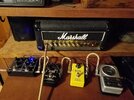
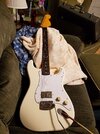
Lately it’s been the Dsl40c’s and my MIM Strat View attachment 51034
And a little bit of help from this baby View attachment 51036
Very nice! I love that Strat with the pickup selection. It reminds me a LOT of the Iron Maiden Strat model from back in the early 2000s with its pickup choices. I bet you could cop a real good NWOBHM tone from it!

And i love the white Marshalls!

Heres a picture of the Maiden strat ( not mine but i wish!)fender-stratocaster-iron-maiden-1795969.jpg
 
SLX would be a JCM900, no?
Yeah the SLX is a part of the JCM900 family but its a bit of a strange bird. The 800 family of heads are separated by basically two amps: the 2203/2204 and then the 2205/2210.

The 2203/2203 were carry overs of the first Master Volume series JMPs and were single channel, valve amps with few electronic components. The 2205/2210 were split channels that contained a bit more electronic components like diode clipping namely and added reverb.

The 900s were first broken into two amps ( MkIII Hi Gain master volume and Dual Reverb) , which the dual reverb had probably the most solidstate technology in a valve amp from Marshall at that time and is pretty much its own circuit design. The MK3 was sort of a continuation of the 2205/2210 in its circuit but went to a single channel and removed reverb.

The SLX replaced the 900 MKIII a few years after the series began, but removed a good bit of the electronic components, namely the diode clipping and added an extra preamp tube for gain. Its circuit is somewhat closer to the 2203/2204 but certainly updated and what i guess many consider, as a factory modded version of the famous 2203/2204
 
Things have been evolving with regard to my equipment.

Recently, I switched away from my pair of 57 pound DSL40C's because loading them (sideways and flat) into the trunk of my car (sometimes 4 times a day between studio job and rehearsals) was really causing me physical discomfort.

Taking a hard look at my equipment, I decided to not only lighten things up, but also simplify things too.

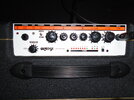
I bought a new Marshall Origin 50 Head, fitted it with Genelex B759 Gold Lions, but left it otherwise stock.

I had a gent build me a lightweight 2x12 cabinet, from finger-joint marine grade mahogany, then fitted it with lightweight Jensen Neodymium speakers. The cabinet is only 2" longer than a DSL40C and weighs only 34 pounds.

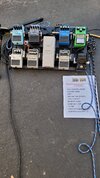
My pedalboard never changed very much. However, I did recently decide to add a reverb pedal in place of my chorus.

Guitars are another story.

I love the feel and tone of a Les Paul, but I have grown weary of their tuning instability during outdoor events, especially in direct sunlight. For a long time, I justified this "love/hate" relationship with my Les Paul's (both genuine and replicas) until I started looking around me.

All the bands I was listening to locally - that had Gibson's - were always either out of tune or out on intonation. I am telling you it was so far out you could hear it. I would watch their guitar players on the tuner between every song, sometimes delaying the start of the next song to try and tune.

I just got tired of being that guy.

I decided to just quit trying to justify the tuning problems. Some guys will cry "setup," but the reality is, I see this problem on guitars that I know (from my interactions) we're setup by personally by Dan Erlewine and some other top notch, So-Cal luthiers.

After a long chat with Gibson's custom shop, I finally got the answer that I had suspected all along. While I will honor my source's request to not have his name appear on websites, I was relieved to get a solid answer.

The issue with tuning stability on Gibson's is so widespread and well documented on the Internet that one only has to perform a basic search, to get thousands of hits on the subject.

There are endless articles where guys top wrap the tailpiece and/or wind the string posts from bottom to top, and devices like the String Butler have been created, all to try and address the issues.

According to my source, that's not the problem. "Sure. If the string binds in the nut, you can have a tuning issue, but that's really only a very small percentage of these problems. The real issue is the construction methodology. Mahogany is not at all very stable from a thermal standpoint and the tenon is far too short for adequate high temperature and high humidity stability. But, our customers demand we build guitars the "old way" and nearly every modern innovation and improvement are shunned. It's kinda like people who put up with oil leaks to enjoy a Harley. Its just how it is..."

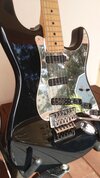
I switched away from all the Les Paul's and went back to my Schecter Hellraiser C1FR and Jackson San Dimas FR. The increase in string tension was pretty dramatic, and that took quite a bit of getting used too, but the tradeoff in tuning stability was well worth it.

My Floyd equipped guitars will stay in tune for not only a 4 hour show (some of it in direct sunlight) with furious whammyization, but for weeks, sometimes months (I am not kidding or exaggerating)
without requiring adjustments.

Ask @Metal89, who can get up to 6 months of playing and tremolo use before returning is needed.

Saturday, we contracted for a 4 hour (micro brewery) show, which we stretched to 6 because of the chants of "encore" from the crowd. Out of my bad habits, I kept switching on my tuner, but everything was always in spec.

Not only did I enjoy myself more, I played more aggressively and really did a bunch of string-flapping harmonic dives during this performance.

I also try to never perform with brand new strings. In general, I try to have at least 2-3 rehearsals on them before we play out somewhere.

I'm also using the Jackson San Dimas FR more than the Schecter. I find that I am able to leave my amp running wide open and actually "tone things down" by switching to the middle/neck single coils. The lower output gives me a "tamer" tone for some songs and even though they are hum canceling, the neck/middle still give the Stratocaster "quack" that is appropriate on some country songs, like "Fast As You," and "Boot Scootin Boogie," despite my personal dislike for the "quack."

So, that's the thought process behind my recent changes...
20201018_134142.jpg

20201024_155945.jpg
20201024_164738.jpg

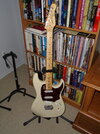
Screenshot_20201026-073109_Facebook.jpg
 
Here is another question, Robert and anyone else with sensitive enough ears to tell if a guitar has 1-6 strings out of tune out of intonation, out of making 1 or more songs sound in pitch during a set/ recording etc.

How do you guys deal with let's say tuning the guitar perfectly by your tuner, and then just by luck or voodoo or fairy pixie dust, as you press your fingers to the frets for single not runs or chords of numerous fingerings, every note and string stays in tune while doing so?

I know I will sound like I am the suckiest guitar player on the forum by my next comment, but let me just say it has been my experience that if I leave my tuner on and play some scales, invariably some of the notes either pull sharp or go flat when 2 seconds earlier every string was in tune and intonated just fine?

I cannot say this would ever go away no matter if I did it on a Peavey, a Gib, Fender, Godin, Schecter,ESP etc. Even if every one was perfectly designed and had Floyd Roses.

Likely I think the only answer as a solution for me would be to play BASS. those heavier strings likely would not get as easily tweaked out of tune.
 
Robert,

This San Dimas Jackson you refer to, is that the Adrian "Adrian Smith" guitar? I forget if you said you changed some stuff on it too, Like a complete or partial mod to the Trem/Nut etc.

The San Dimas is an Iron Maiden Adrian Smith. The trem system is stock Floyd Rose. All I changed on the trem was the bridge posts...I always use the titanium versions. The nut is stock along with the bridge shims, and the 3 trem springs are stock too.

The pickgurad is a custom made Black/Red/Black. The bridge is a 2002 GFS 14k Double Slug. The middle and neck are (at the time an experimental pre-release) GFS stacked single coils (later called Tru-Coils) that were given to me to try and review. They are 10k middle and 7k neck.
 
Here is another question, Robert and anyone else with sensitive enough ears to tell if a guitar has 1-6 strings out of tune out of intonation, out of making 1 or more songs sound in pitch during a set/ recording etc.

How do you guys deal with let's say tuning the guitar perfectly by your tuner, and then just by luck or voodoo or fairy pixie dust, as you press your fingers to the frets for single not runs or chords of numerous fingerings, every note and string stays in tune while doing so?

I know I will sound like I am the suckiest guitar player on the forum by my next comment, but let me just say it has been my experience that if I leave my tuner on and play some scales, invariably some of the notes either pull sharp or go flat when 2 seconds earlier every string was in tune and intonated just fine?

I cannot say this would ever go away no matter if I did it on a Peavey, a Gib, Fender, Godin, Schecter,ESP etc. Even if every one was perfectly designed and had Floyd Roses.

Likely I think the only answer as a solution for me would be to play BASS. those heavier strings likely would not get as easily tweaked out of tune.

I use only my Korg Pitchblack for performances.

PM me about tempered intonation...
 
The San Dimas is an Iron Maiden Adrian Smith. The trem system is stock Floyd Rose. All I changed on the trem was the bridge posts...I always use the titanium versions. The nut is stock along with the bridge shims, and the 3 trem springs are stock too.

The pickgurad is a custom made Black/Red/Black. The bridge is a 2002 GFS 14k Double Slug. The middle and neck are (at the time an experimental pre-release) GFS stacked single coils (later called Tru-Coils) that were given to me to try and review. They are 10k middle and 7k neck.

Ahhh Yes, I caught the reference to the bridge pins, That is what I remembered. I kind of thought the pickguard/electronics were now different than stock as well.
Thanks.
 
One of the biggest issues ive heard from others on Gibson tuning issues, is directly related to the shape of the classic headstock's width, its angle and the way the strings go up and out of the nut. I myself never had much of an issue on an SG but ive heard it pretty commonly for other people. I can see where it would be a problem, especially on the 6th and 1st strings being cocked at a sharp degree and somewhat on the 5th and 2nd. The 4th and 3rd have the straightest path to the tuners in that configuration. But ironically, its the 4th and 3rd strings that detune the worst, due to an extreme pitch from the angle of the headstock and those being the furthest two from the nut. The other 4 seem to be relatively stable on most guitars.

On the Explorer, Firebirds namely however, you dont hear much complaints and id say that plays a role in the design of the headstocks from the hockeystick and upside down Fenderesque patterns, respectively.
 
Last edited:
Mike, I believe your logic and experience is likely backed up by others here and elsewhere with the Other type Gibs you mention with the different heads.

Another thing some will also possibly mention as having some effect is break angle on the head stocks. If I remember right, an Epi LP or Epi SG has a different angle than the Gibson cousins do.
 
Mike, I believe your logic and experience is likely backed up by others here and elsewhere with the Other type Gibs you mention with the different heads.

Another thing some will also possibly mention as having some effect is break angle on the head stocks. If I remember right, an Epi LP or Epi SG has a different angle than the Gibson cousins do.

You are precisely correct! The Epiphones use a 14 degree or less angle while the Gibsons use at least a 17 degree. That little shift makes a world of difference on the furthest two strings from the nut. Im surprised they havent lowered the angle pitch over time to compensate that but like Robert said, people like the classic design
 
One of the biggest issues ive heard from others on Gibson tuning issues, is directly related to the shape of the classic headstock's width, its angle and the way the strings go up and out of the nut. I myself never had much of an issue on an SG but ive heard it pretty commonly for other people. I can see where it would be a problem, especially on the 6th and 1st strings being cocked at a sharp degree and somewhat on the 5th and 2nd. The 4th and 3rd have the straightest path to the tuners in that configuration. But ironically, its the 4th and 3rd strings that detune the worst, due to an extreme pitch from the angle of the headstock and those being the furthest two from the nut. The other 4 seem to be relatively stable on most guitars.

On the Explorer, Firebirds namely however, you dont hear much complaints and id say that plays a role in the design of the headstocks from the hockeystick and upside down Fenderesque patterns, respectively.

Lots has been mentioned all over the web, forums etc about tuning issues with various guitars and particular to Gib here.
Many folks think tuners are causing their instability and a swap is needed. Many of them are surprised when they are advised to inspect and correct any bad nut slots and lube them properly as well as the bridge saddles and this fixes their problems.

Also, correct stringing technique plays a part, ( pretty sure most of our pro players here know how to re-string the stable way.)

I have experience with, Teles and Strats, PRS's and Epiphones, no experience with Schecter 6 string guitars ( only basses), ESP/LTD, Jackson, Ibanez, Godin, Dean, Peavey.

PRS are well known for staying in tune, good Trems and locking tuners. Robert tells us his Jackson and Schecter are uber reliable. These all have basically strings that pass virtually straight up from nut to tuners. Design aids in good tuning.

BUT then how do guys like Schenker and Dimebag or other Dean players experience their tuning with the super wide inverted V head stocks?
Do these Dean guitars have stable or inconsistent tuning results?
 
Lots has been mentioned all over the web, forums etc about tuning issues with various guitars and particular to Gib here.
Many folks think tuners are causing their instability and a swap is needed. Many of them are surprised when they are advised to inspect and correct any bad nut slots and lube them properly as well as the bridge saddles and this fixes their problems.

Also, correct stringing technique plays a part, ( pretty sure most of our pro players here know how to re-string the stable way.)

I have experience with, Teles and Strats, PRS's and Epiphones, no experience with Schecter 6 string guitars ( only basses), ESP/LTD, Jackson, Ibanez, Godin, Dean, Peavey.

PRS are well known for staying in tune, good Trems and locking tuners. Robert tells us his Jackson and Schecter are uber reliable. These all have basically strings that pass virtually straight up from nut to tuners. Design aids in good tuning.

BUT then how do guys like Schenker and Dimebag or other Dean players experience their tuning with the super wide inverted V head stocks?
Do these Dean guitars have stable or inconsistent tuning results?

The biggest issue is
stretch - retune
stretch - retune
until the string stops slipping.
If people did this they wouldn't have all the string slip issues.
It's a surprising number of players who don't realize this.
You must do this regardless of locking tuners, locking nut.....
 
The biggest issue is
stretch - retune
stretch - retune
until the string stops slipping.
If people did this they wouldn't have all the string slip issues.
It's a surprising number of players who don't realize this.
You must do this regardless of locking tuners, locking nut.....
Totally agree. I will tune the guitar up and wiggle and snap the strings individually, which instantly detunes them. Retune, snap again until basically it quits dropping drastically. At that point, it largely holds its tune. That and i have stringed it over one wrap, under on the rest of wraps to kinda lock the string. Works ok but will snap from tension if you are bending really hard, so thats something i normally only do on something id play rhythm only on.
 
Lots has been mentioned all over the web, forums etc about tuning issues with various guitars and particular to Gib here.
Many folks think tuners are causing their instability and a swap is needed. Many of them are surprised when they are advised to inspect and correct any bad nut slots and lube them properly as well as the bridge saddles and this fixes their problems.

Also, correct stringing technique plays a part, ( pretty sure most of our pro players here know how to re-string the stable way.)

I have experience with, Teles and Strats, PRS's and Epiphones, no experience with Schecter 6 string guitars ( only basses), ESP/LTD, Jackson, Ibanez, Godin, Dean, Peavey.

PRS are well known for staying in tune, good Trems and locking tuners. Robert tells us his Jackson and Schecter are uber reliable. These all have basically strings that pass virtually straight up from nut to tuners. Design aids in good tuning.

BUT then how do guys like Schenker and Dimebag or other Dean players experience their tuning with the super wide inverted V head stocks?
Do these Dean guitars have stable or inconsistent tuning results?
Good question. Honestly dont have much experience with Deans. But id say Dimebag using a Floyd mitigated much of his issues but Schenker on the other hand? No clue. Ive heard dean's have an even higher angle and width so that makes my argument moot lol
 
Back
Top