Project Carvin V-16: Morphing from PCB to Point To Point Turret Board

Since your using 100k plate resistors the rule of thumb is 100k/1K5/25uf
If you want to play with the gain Vox AC15 used 150K/2K2/25uf
Fender Brown face Deluxe 220K/3K3/25uf high gain.
Pin 3 & 8 Cathode bias your 909R is basically a 1K low current draw
Thanks, 67.

Currently, V1b: 220K/909R/1.5uF. Which is extremely close to original Carvin specs.

V1a: 100K/1.5K/1uF. I dropped the Carvin speced 220k plate to 100K.

Nothing here is written in stone, and I'm free to experiment with different values. Thanks for posting the AC15 & the Fender Brownface Deluxe specs, which I'm going to try.

First step is to voltage chart your amp then adjust the dropping string to get the desired voltages
View attachment 37616
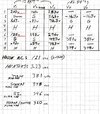
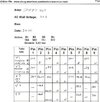
I'll also complete a voltage chart for ya'll to see. I honestly don't know what the desired voltages should be. One thing I do know is that the voltage difference between the PI plates is right at 7vdc... I think this is really good, right?
 
Unfortunately I'm not confident that I understand this completely... Shorting the resistor?

Here's a couple of my illustrations on the layout of a 2-in-1 cathode bypass cap switch:
1:
View attachment 37605
EDIT: THE TUBE'S CATHODE PIN SHOULD BE #8. I MISTAKENLY WROTE A 7.


2:
View attachment 37606

I'm favoring #2.

Is there a better method?
I don't have time to draw up diagrams at the moment so we'll use the ones you posted.
If we use the 1st one, we could simply put a reasonably large value resistance between the negative lead of the 22uf capacitor & ground, or the two terminals of the switch that these (cap negative lead & the "ground" connection) are attached to. Then the switch can "short" the resistor, connecting the cap straight to ground.
In the 2nd diagram you could again put the resistance across the switch terminals. When the switch is "closed" it "shorts" the resistor, essentially taking it out of the circuit.
This is only to prevent popping when switching the cap in. If the popping doesn't bother you it's not needed. Cheers
 
I don't have time to draw up diagrams at the moment so we'll use the ones you posted.
If we use the 1st one, we could simply put a reasonably large value resistance between the negative lead of the 22uf capacitor & ground, or the two terminals of the switch that these (cap negative lead & the "ground" connection) are attached to. Then the switch can "short" the resistor, connecting the cap straight to ground.
In the 2nd diagram you could again put the resistance across the switch terminals. When the switch is "closed" it "shorts" the resistor, essentially taking it out of the circuit.
This is only to prevent popping when switching the cap in. If the popping doesn't bother you it's not needed. Cheers
Frickn' cool! Thanks, Ivan... :cheers:

A 100k resistor should be adequate?
 
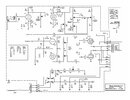
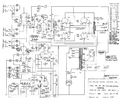
Is this correct https://el34world.com/charts/Schematics/files/Carvin/Carvin_vintage16.pdf

Dropping string R36 350R 10 watt. R35 4K7 1 watt. R34 4K7 1 watt.

R36 voltage in 360VDC R36 voltage out 355VDC
R35 voltage in 355VDC R35 voltage out 335SDC B node
R34 voltage in 335VDC R34 voltage out 325VDC C node
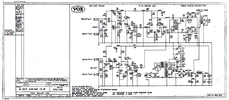
That schematic is the original Carvin Vintage 16. Years ago, I modded the circuit based on the Hasse mods, and there is a schematic for that, too. Then a while after that, I replaced the original PT with a Mercury Magnetics replacement. The MM PT puts out 20vdc more at the B+.

The new amp is still using the same dropping string values.
 
What I see is V-1A 47K x2 = 94K or 100K
Around 50 volts high on the PI
Try a 1K 10watt for starters R-36

I would like to see 185VDC to 200VDC on V-1 & V2 pin 1 & 6 you may need to change the 4K7 to 2K2 on the dropping string

It sucks no voltages listed on the modified V16
 
What I see is V-1A 47K x2 = 94K or 100K
Yup, I'm still using a 100K there. Stock Carvin is 2x 100K's for a total of 200K.

Around 50 volts high on the PI
Try a 1K 10watt for starters R-36
All right. I'll need to order this. I'm preparing a small parts order with Mouser for a couple other projects. I'll try to get 2 or 3 different values.

I would like to see 185VDC to 200VDC on V-1 & V2 pin 1 & 6 you may need to change the 4K7 to 2K2 on the dropping string
Mouser to the rescue again.

It sucks no voltages listed on the modified V16
The guy responsible for the mods and schematic probably didn't see a need for posting his voltages at the time. Did you notice the resistor values of the modded PI circuit? They're straight from the old Vox AC's!
 
I used 1M on my cathode bypass switching like Ivan suggests.
Mine goes 25µf -none(1.5k Ω only) - 0.47µf.
Sometimes it pops 1 time and then not again.
 
Frickn' cool! Thanks, Ivan... :cheers:

A 100k resistor should be adequate?
The only way to really be sure of the minimum value that will work is to temporarily clip different values in, increasing value until you can't here the effect of the 22uf cap (sounds the same "with" resistor & cap not switched in as "with no" resistor & cap not switched in).
The resistor prevents a charge developing on the cap, which causes the "pop" when switching it in. Same as using pulldown resistors on the input & output of FX pedals. A high value like 1 meg or 2.2 meg just makes it easy. Cheers
 
Last edited:
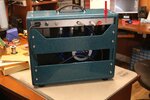
This is where me and Spiffy are right now...

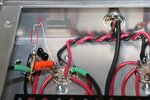
Parts from Mouser arrived in two days. Parts from AES, not yet. One of the parts I'm waiting on AES for, is the SPDT mini toggle switch that I'll be installing at the back of the chassis to switch in more lower frequencies at V1b. But meanwhile, I'm temporarily using a DPDT (ON-ON) switch for testing.

Anyways, trying 67plexi's suggested Fender Brownface Deluxe specs of its V1b circuit is a game changer. Changing the Spiffy's V1b (biasing) cathode resistor from 909 ohms to a 3.3k thickened up the tone a little bit, but more importantly to me, it also removed most of the slight shrill and fizzies the amp was producing. I also noticed that the plate voltage of V1b increased from 125v to about 198v.

Once I permanently install the switch for the two different cathode bypass values of V1b, I'll then try to adjust and fine tune the plate voltages where needed.
 
Yes, the switch will be fine there. That really is a good looking amp, you've done a great job. Adjusting the HT node voltages will pay off. It's commonly thought that the cathode resistor & bypass cap bias pre-amp stages, but in reality the HT node voltage & plate resistor are also playing a part in how the stage biases. The HT node voltage also affects clean headroom/overdrive characteristics of the stage.
To illustrate why the mod schematic really should have included voltages of various stages, compare the PI plate voltages from am AC30/6 schematic


15803369550817996547251298331411.png
& an AC50/4 schematic15803381354411849338074580338628.png
Both PI's are schematically the same. The AC30 schematic shows 230V on the PI plates while the AC50 shows 310V on the PI plates. These two PI's will act differently in clean headroom, compression & overdrive characteristics.
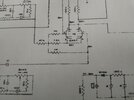
You asked earlier about the PI plate differential voltage, here's a partial schematic of an AC50/4 (PI only) that shows 310V on the 1st (inverting) triode's plate & 305V on the 2nd (non inverting) triode's plate. IMG_20200130_095324.jpg
Cheers
 
Last edited:
Both PI's are schematically the same. The AC30 schematic shows 230V on the PI plates while the AC50 shows 310V on the PI plates. These two PI's will act differently in clean headroom, compression & overdrive characteristics.
You asked earlier about the PI plate differential voltage, here's a partial schematic of an AC50/4 (PI only) that shows 310V on the 1st (inverting) triode's plate & 305V on the 2nd (non inverting) triode's plate.
What could be expected by dropping the PI's plate voltages, but maintaining the current preamp and reverb plate voltages?

As of today:
SPIFFY XVI Voltage Chart 2-3-20.jpg
 
Blimey, compared to you fellas, I am an utter dunce... :(

I will spend the afternoon making myself a conical hat then sitting in the corner.
 
Blimey, compared to you fellas, I am an utter dunce... :(

I will spend the afternoon making myself a conical hat then sitting in the corner.
Ha ha, Grumpy... I don't even know how to make a conical hat... :giggle:

I think your fine the voltages posted. Bottom line are you happy with the sound now ??
Yes Sir... I'm extremely happy with the amp's sound. The amp has Mojo. I can easily get into a very creative vibe when I'm noodling around with this amp. Don't matter if the amp is set to clean or dirty, there is some glorious tones just smacking me all over.

Plus... The amp is practically dead quiet. Only until you crank the preamp volume past 3 o'clock with the master volume dimed can you faintly hear some boiling tube juice! The trannies never get past the level of warm. The dropping voltage resistors barely get to the level of luke-warm. All 12AX7's get a little warm. The only thing that gets hot, but not insanely hot, are the two EL84's.

The next question now is... : Would a $200 to $275 alnico speaker be worth it?
 
Back
Top