Name that Power Tube!

I have the same GEC KT77's , excellent tube's that are in my Burman Amps. A 50 and a Hundred if your into Burman amps. The reproductions have a weak vacuum and the pins are musk lest robust than the newer reproductions. I think they have their own sound from EL34's. But I'm only going by the Burmans. I got one in Frankford, Germany, the other in Glasgow, Scotland. A 50 and a 100. Partridge tranny iron and the same build quality as Hiwatts. The only reason I went after them is when we asked Ken Fisher what was the best unknown amp he's ever worked on he said Burmans!
Burman 50 watt chassis .... BurmanCircuit.jpg
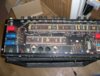
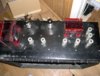
Burman50watt501trannys.jpg
Notice that iron above! Seech ... That's obsessive
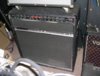
Burmanpro2000.jpg

Greg Burman made his own speakers too!
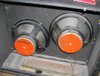
BurmanSpeakers.jpg
 
I have a few of these Svetlanas, I really like them. I believe the numbers at the bottom are the date? O3 of 06? Makes sense with the set I have.
I was thinking that might be what those numbers are. I'm looking forward to trying these out soon. I don't remember if I pulled them out of my 1990 2100 or the 2003 TSL100. I retubed and biased both of them when I picked them up. Never actually gave them a listen. Since I have a quad I might try them in my 2203 clone. It sounds pretty righteous with current production Mullards, so this could be a good test.
 
I was thinking that might be what those numbers are. I'm looking forward to trying these out soon. I don't remember if I pulled them out of my 1990 2100 or the 2003 TSL100. I retubed and biased both of them when I picked them up. Never actually gave them a listen. Since I have a quad I might try them in my 2203 clone. It sounds pretty righteous with current production Mullards, so this could be a good test.
Maybe it's year 03 and month 06? I believe mine came with my TSL as well.
 
I like double D getters and double D's just fine

 
I like double D getters and double D's just fine

Yes, these are fine tubes, as are the Amperex Bugle Boy 12AX7/ECC83.
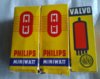
Amperex was also part of the Philips/Mullard parent company, as was Valvo, Miniwatt etc, so they would, I imagine be made on Mullard tooling. Philips/Mullard set up manufacturing plants in several countries including India, Japan & Australia. Philips/Mullard would supply the raw stock necessary for valve manufacture, though the all important cathodes were sent already made from the Mullard Blackburn plant. Cheers
Edit:- Philips/Mullard also set capacitor manufacturing plants in other countries. Bianchi mustard caps from Italy or Miniwatt mustard caps from here in Oz were all rolled on Mullard machines with Philips/Mullard supplied raw stock, with only the encapsuling "mustard" compound reacted locally. Cheers
 
Last edited:
$399.95
Price is for a single tube with standard testing.
QTY: 1


24-Hour Burn-In (add $1.50 each)
Matching will become available after entering 2 or more tubes.
Add To Cart
 
Yes, these are fine tubes, as are the Amperex Bugle Boy 12AX7/ECC83.
Amperex was also part of the Philips/Mullard parent company, as was Valvo, Miniwatt etc, so they would, I imagine be made on Mullard tooling. Philips/Mullard set up manufacturing plants in several countries including India, Japan & Australia. Philips/Mullard would supply the raw stock necessary for valve manufacture, though the all important cathodes were sent already made from the Mullard Blackburn plant. Cheers
Edit:- Philips/Mullard also set capacitor manufacturing plants in other countries. Bianchi mustard caps from Italy or Miniwatt mustard caps from here in Oz were all rolled on Mullard machines with Philips/Mullard supplied raw stock, with only the encapsuling "mustard" compound reacted locally. Cheers
I did not know this. I have some Philips miniwatt and Amperex.
 
I did not know this. I have some Philips miniwatt and Amperex.
Check the date codes on the Philips Miniwatt tubes to maybe ascertain where they were manufactured. In my Black Flag JTM50 build I have a matching date code, Philips Miniwatt branded duet of xf2 EL34's & a Valvo branded f32 GZ34. Date codes show all were manufactured in the Blackburn Mullard plant.IMG_20200224_074543.jpg
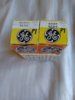
My JMP50 build has a duet of GE branded xf2 EL34's, also manufactured in the Blackburn Mullard plantIMG_20190108_073614.jpg
Rebranding was very commonly done. I have RTC branded 163 series Blackburn Mullard ECC83's in a few amps.
Back on the "Miniwatt" theme, here's a very early Miniwatt Australia 12AX7, manufactured at the Philips plant in Hendon, South Australia15824179411603916023352120557453.png
Pic taken from Radio Museum Australia.
Like Philips/Mullard, RCA also set up manufacturing plants in other countries. The very first valve manufacturing plant here in Oz (Radiotron plant, Sydney NSW) was set up by RCA. As well as manufacturing RCA designed valves, the Radiotron plant also designed several types. F Langford Smith authored the very excellent "Radiotron Designers Handbook", considered the "Tube Bible" the world over. The fourth edition is the most comprehensive, but any edition is excellent. Cheers
 
I put the Winged C's in the 2203 clone this morning. They are certainly not a matched set, but they do seem to sound good.

If you have identical voltage at all four of the valves, but the measured milliamps at the valves are different is there a way to check resistance on the valve pins to determine which ones are higher/lower?
 
Dont care what you say -- that particular Power Tube will be hence forth known to me as Nigel........period -- done end of story
 
If your idle bias is +or- 2mA it's OK. If the 1K grid resistors are not matched or the 5K6 then mismatched winding on the output transformer.
If it bothers you on the mismatch add a extra bias pot. My friend David Root would have a bias pot for each power tube x 4
 
If you have identical voltage at all four of the valves, but the measured milliamps at the valves are different is there a way to check resistance on the valve pins to determine which ones are higher/lower?
There is a couple of ways to determine each individual tube of a quad's plate current. The most accurate way is to "break" the plate circuit & insert a Milliamp meter (between the valve & it's OT primary lead). I use one of these for this purposeIMG_20200224_094857.jpg
It is simply an octal plug & socket that is inserted between the valve socket & valve. All pins are connected between the plug & socket, except the plate pins (pin 3), which have the one of the two leads connected to each of the pins 3, thus breaking the circuit. Connected to a mA meter, this gives a direct & very accurate reading of that tubes plate current. Note, you "must" have the Milliamp meter connected when you power the amp up, otherwise the plate won't conduct as it won't have the B+ voltage on it, but the screen grid will conduct & maybe over-dissipate (red-screen or even achieve meltdown).
Another way is to insert 1 ohm (use minimum 1 watt) resistors between each power tube cathode & ground. They need to be 1% tolerance or better for accuracy. Reading the millivolt drop across these will give each tubes "total" current draw (combined plate & screen current). 1 Mv voltage drop = 1 Ma current. As it's giving the tubes total current draw you will need to calculate the screen current & subtract it from the total current draw to get the plate current. To calculate screen current, first measure & note the actual resistance of the tubes screen grid resistor (amp not powered up), then, with the amp powered up & stabilised, read the voltage drop across the screen grid resistor. Now divide the voltage drop figure by the resistance of the resistor to get the screen current.
Once you know all tubes plate current you can work out which tubes to pair up to get the best side to side plate current balance. Hope this helps. Cheers

Edit:- Some people actually prefer somewhat mis-matched power tubes as they say it gives better harmonic content. Cheers
 
Last edited:
Back
Top