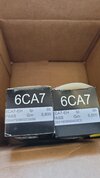
OP


EHX 6CA7's ordered up (along with a ECC823 for a DSL40C I'm turning into a head with a cabinet from Mission Engineering



Do you know which ones you're going to get?Ok!@@@!
Last item needed are the corner protectors!!!!
Do you know which ones you're going to get?

Just an observation:

The formula for transconductance or Gm of a vacuum tube is as follows. Gm=delta Ia ÷ delta Vg. This is the difference in plate current divided by the difference in grid voltage that produced it. So in simpler terms it would be plate current divided by grid voltage. These terms are for RMS plate current & RMS grid voltage. Not DC values. Basically, a 1V signal that causes a 1 milliamp change in plate current is said to be a Gm of 1000
What I found was the plate current of the EH fake 6CA7 is looking much higher than a normal real 6CA7.Thanks!!!!!
What I found was the plate current of the EH fake 6CA7 is looking much higher than a normal real 6CA7.
Therefore the bias may need to be changed to accommodate this...
The white paper doesn't really tell you what you need to know.White Paper on the EHX 6CA7.
The white paper doesn't really tell you what you need to know.
But installing it and measuring the current will tell.


@ivan H - What do all the numbers mean???
Thankyou @67plexi for correctly answering the question.The formula for transconductance or Gm of a vacuum tube is as follows. Gm=delta Ia ÷ delta Vg. This is the difference in plate current divided by the difference in grid voltage that produced it. So in simpler terms it would be plate current divided by grid voltage. These terms are for RMS plate current & RMS grid voltage. Not DC values. Basically, a 1V signal that causes a 1 milliamp change in plate current is said to be a Gm of 1000
Please stop referring to the EHX 6CA7 as a "fake" 6CA7. We have been through this twice before, where I went into detail explaining to you that the fat bottle 6CA7 (beam tetrode) was originally designed by Sylvania to be a suitable EL34 (pentode) substitute, while avoiding paying Philips "pentode" royalties,,,, as such, the EHX 6CA7 is the only current production 6CA7 that is a "true" big bottle beam tetrode 6CA7, as "originally designed" by Sylvania.What I found was the plate current of the EH fake 6CA7 is looking much higher than a normal real 6CA7.
Therefore the bias may need to be changed to accommodate this...
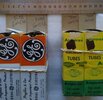 GE branded tubes;
Some "maximum operating voltages" that you'll see on datasheets are rated very conservatively. Dont let those numbers scare you, but it's always good to ask around for real experiences.I was interested in design limit voltage info.
Some "maximum operating voltages" that you'll see on datasheets are rated very conservatively. Dont let those numbers scare you, but it's always good to ask around for real experiences.