Amplifier service

The plastic stem broke while I was removing it. It probably weakened due to heat]
That would be the locator pin. A lot of times when these pins break off, the tubes function is not compromised. But in your case, because of the bias miscue, those power tubes probably got cooked to "well done".

Electro Harmonics EL84
Hope you meant EL34s!

and a small screwdriver]
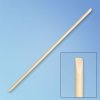
An insulated screwdriver? Another option is a wooden "orange stick" like this:
8d56d43f-dbbb-4ca2-944f-7ebd9436f4d0_1.f317a1d57b8c262e50bd7e9d6352b1d9.jpeg
 
That would be the locator pin. A lot of times when these pins break off, the tubes function is not compromised. But in your case, because of the bias miscue, those power tubes probably got cooked to "well done".


Hope you meant EL34s!


An insulated screwdriver? Another option is a wooden "orange stick" like this:
View attachment 23098
A chopstick would not fit it the slot. It is very small and requires jeweler's tools
 
Not a chopstick, but a cuticle pushing orange stick. The ends are flat like a screwdriver. Might have to reshape them if they are too wide, but it's what I use most of the times to turn the bias trimpots.

The orange sticks are also very useful for tapping and poking around the components on a live amp. Or.... flicking boogers out your nose... :cautious:
 
More Drama. The bias was NOT causing the cut out. I thought this was weird since the bias had been hot for over a year without cut out. I guess it just took longer to kick in with a lower bias.

Next step was to attack the pre-amp tubes. I think I got lucky because I started with V5 (phase splitter) and it has been solid for an hour
 
Blimey, this amp palava is loads of work... Be careful RVA, those high voltages kept in the capacitors even when the machine is switched off can be lethal. Obviously you know this, but going back and forwards with this problem, it's easy to cut corners, forget one time...
 
Next step was to attack the pre-amp tubes. I think I got lucky because I started with V5 (phase splitter) and it has been solid for an hour
The phase inverter/splitter tube takes a lot of abuse, too. It's really part of the power circuit of the amp, and not part of the preamp circuit. Maintenance for a happy amp requires changing that tube at the same time you're replacing the worn power tubes. However, if you have a way to test the tubes properly, you can safely keep operating that tube with no problem.
 
The phase inverter/splitter tube takes a lot of abuse, too. It's really part of the power circuit of the amp, and not part of the preamp circuit. Maintenance for a happy amp requires changing that tube at the same time you're replacing the worn power tubes. However, if you have a way to test the tubes properly, you can safely keep operating that tube with no problem.
Thanks. Good to know. It seems to have solved the issue
 
Last edited:
Blimey, this amp palava is loads of work... Be careful RVA, those high voltages kept in the capacitors even when the machine is switched off can be lethal. Obviously you know this, but going back and forwards with this problem, it's easy to cut corners, forget one time...
Thanks brother. I cannot be told too many times!
 
Last edited:
Not a chopstick, but a cuticle pushing orange stick. The ends are flat like a screwdriver. Might have to reshape them if they are too wide, but it's what I use most of the times to turn the bias trimpots.

The orange sticks are also very useful for tapping and poking around the components on a live amp. Or.... flicking boogers out your nose... :cautious:

I use these too!
I also use them to shave off splinters to stuff stripped screw holes since that is what is on the bench, lol.

Good luck Ray, I would try tube swapping and repeatedly pulling and re-seating each tube to help clean the pins and sockets.
check / re-seat any ribbon cables, etc.

But after that, I think it may be Tech time.
 
I use these too!
I also use them to shave off splinters to stuff stripped screw holes since that is what is on the bench, lol.

Good luck Ray, I would try tube swapping and repeatedly pulling and re-seating each tube to help clean the pins and sockets.
check / re-seat any ribbon cables, etc.

But after that, I think it may be Tech time.
Actually, the V5 swap did the trick. I played it for hours last night without any issues
 
PS RAY, I almost forgot another smart AMP member here, Bea.

I know if I ever have amp issues, there are at least 6 smart members I already mentioned. Never again do I want to pay someone to "fix" my amps and then still have to fix them myself anyway like this one tech I went to that a friend recommended.
 
I thought I did. More cut out tonight. I changed V4. This is plain old silly for a home player who uses pedals for dirt. I almost certainly will be selling my tube amps
:cry:Just the PITA multi-channel ones please....that Marshall looks to be a pain for diagnosing intermittent issues.
The little Peavey...Nooooooooo....don’t ditch that.
If I had anything else to add, I would/will.
 
I thought I did. More cut out tonight. I changed V4. This is plain old silly for a home player who uses pedals for dirt. I almost certainly will be selling my tube amps
This is starting to sound like a cold solder joint...
When the amp starts to act up, try wiggling the guitar's cable plug at the jack. Do the same for the speaker cable jack.

In a dark room, observe if all the tubes are glowing. There are some (very few) tubes, due to their construction, the glow of heating filaments is barely visible. Gently try to move the tubes around and listen for funny noises and look for a consistent glow.

Remember the wooden sticks? Orange sticks, chopsticks, skewers... Use one of these to poke around in the live amp. Start tapping with firm pressure every single wire connection... every resistor's, cap's, diode's, potentiometer's solder joint.
 
Back
Top