Very good points indeed. The end user will always adjust to taste as you say.
I have built several guitars for friends from all Warmoth parts...starting back in 2009....literally from the ground up. I usually let the instrument sit for a while...at least a week, to afford the wood time to relax and adjust climatically before doing final setup...which I always do the same way.
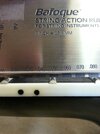
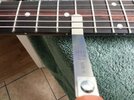
On my own guitars, I always start with a measured .010"/.012" neck relief. This setting seems to work well for me and I set everything to this specification.
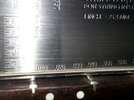
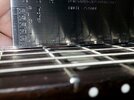
I will generally set everything to .035"/.040" (unfretted @12th fret) on bass and treble side and see how that works. This almost always works. Even if I alter this measurement later, it is recorded.
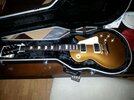
The Les Paul Custom Replica I set up for Mom recently ended up being about .050" @ the 12th unfretted (.046"/.009" Ernie Ball's) on the bass side and .045" on the treble, with the 14" radius neck set almost flat @ .006"/.008" relief, which, I did all by "eyeball" and just recorded the specs when I was finished.
I set the action on the 2016 Gibson Les Paul 50's Tribute to the exact measurements as I always use - .035"/.040" with .008"/012" relief - and it played very well with no buzzing....after knocking down several very high frets by hand.
I have a engineering background and worked many years as a machinist, so measurements make sense to me....its all about consistency, economy of movement and repeatability.
Now, there is more than one way to do things and if you choose a different path, that's fantastic too.
Not long ago, I helped a friend setup a few guitars at his shop. I could complete a setup my way, with my ruler and feeler gauges, before he could finish one using his strumming, adjusting, strumming, adjusting by feel method.
Any way you choose to perform a setup is "right" for you...no matter how much others may try to convince you their way is best...
 View attachment 5623
View attachment 5624
View attachment 5625
View attachment 5626
View attachment 5628
View attachment 5623
View attachment 5624
View attachment 5625
View attachment 5626
View attachment 5628