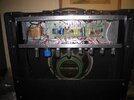
OP


So based on the above Ted Weber Kit review, which speaks of a "thinner board" and turrets that are not "Well tinned," what suggestions do you guys have for me???


 tedweber.com


Why use a Steel Chassis instead of Aluminum?Response received from Weber:
Hi Rob.
here is a link to all our cabinet covering options, and there are handle pics down at the bottom.
Cabinet Covering – Weber Speakers
In our amp kits, the speaker, cabinet, chassis, fiberboard, and brass plate are all made in Indiana. all other components are made overseas and carry no brand name most of the time. (the tubes are Shuguang Premium tubes, and sometimes they have markings and other times not.)
C.J. Sutton - T.A. Weber Inc.
You gotta respect honesty and transparency. Also, in order to make the kits cheaper, obvious concessions must be made.
I suppose one could easily upgrade the internals to higher quality components???
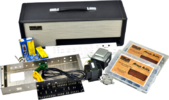
What i like about the Weber kit is how its made like the old 18watt Marshall's with a fixed power cord and a few other details that have since gone "modern style" on other kits.
Could use some guidance here, Gents...
Why use a Steel Chassis instead of Aluminum?
Steel Chassis = Great Idea.
I would not use an aluminum chassis.
Off to a great start.
The first thing I would do is: make sure the chassis you are buying is galvanized steel.
Aluminum definitely has safety issues.
When steel/copper/tin etc is used to connect to aluminum, the metals will oxidize very rapidly.
These connections are made with screws and washers.
No matter how tight the screw is, a layer of oxide forms between the 2 dissimilar metals.
Over time, this oxide layer forms a perfect insulator.
Any electrical connection to the aluminum can fail because of this insulation affect of oxide formation.
Including: the ground connections can fail.
Which means: the safety ground connection to the amp can fail, when it is attached by a screw to aluminum.
Alternative: The electrical terminals can be welded to the chassis aluminum.
This prevents oxide from forming between the 2 dissimilar metals; making the safety ground connection much more reliable.
Which is why (starting 1971) specific rules were created to prohibit electrical grounding using dissimilar metals.
View attachment 48212
Why use a Steel Chassis instead of Aluminum?
Steel Chassis = Great Idea.
I would not use an aluminum chassis.
Off to a great start.
The first thing I would do is: make sure the chassis you are buying is galvanized steel.
Aluminum definitely has safety issues.
When steel/copper/tin etc is used to connect to aluminum, the metals will oxidize very rapidly.
These connections are made with screws and washers.
No matter how tight the screw is, a layer of oxide forms between the 2 dissimilar metals.
Over time, this oxide layer forms a perfect insulator.
Any electrical connection to the aluminum can fail because of this insulation affect of oxide formation.
Including: the ground connections can fail.
Which means: the safety ground connection to the amp can fail, when it is attached by a screw to aluminum.
Alternative: The electrical terminals can be welded to the chassis aluminum.
This prevents oxide from forming between the 2 dissimilar metals; making the safety ground connection much more reliable.
Which is why (starting 1971) specific rules were created to prohibit electrical grounding using dissimilar metals.
The aluminum to aluminum is OK, but the solder terminal for ground is not aluminum.Why not use an aluminum screw and washer for the grounding, along with dielectric grease????
The mojotone chassis "is" steel. From what I see in the pictures, it's not aluminum.I can express that...I recently put an aluminum pick guard on a guy's Stratocaster. I pot a square section of conductive-adhesive .025" copper tape on the back of the pickguard and soldered a ground terminal to that, but that's always voltage application, much different from an amplifier....
Maybe I could find a steel 18 watt chassis???

I can express that...I recently put an aluminum pick guard on a guy's Stratocaster. I pot a square section of conductive-adhesive .025" copper tape on the back of the pickguard and soldered a ground terminal to that, but that's always voltage application, much different from an amplifier....
Maybe I could find a steel 18 watt chassis???
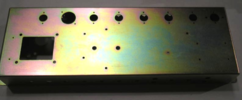


A good cleaning followed by the application of dielectric grease is what I use for any grounding points on a aluminum or steel chassis.Why not use an aluminum screw and washer for the grounding, along with dielectric grease????