Interview:

I am not a number!
I am a free man!
From now on i'm calling you inspector.
:pound-hand:
MV5BMTc1MWExYmYtMDI3Yy00ZmIxLTg4OTMtODIzZjRjOGExMGY2XkEyXkFqcGdeQXVyMTA3MzQ4MTg5._V1_.jpg
 
@Robert Herndon Congrats on the new gig :-)
If you ever get a chance let me know the scoop on the Kenny Wayne Shepherd sig. strats, I heard some horrible rumor they are no longer using ash and the god awful word of "pine" I heard? this can't be true, say it isn't so.. :)

Fender specs say a "chambered Ash body" finished in lacquer is used on the USA model..but the first KWS Signature Models were MIM and they have Alder bodies.

 
I'm hoping they stick with the ash but Kenny himself said something about moving to pine because of the supply chain stuff, current situation.. :-(
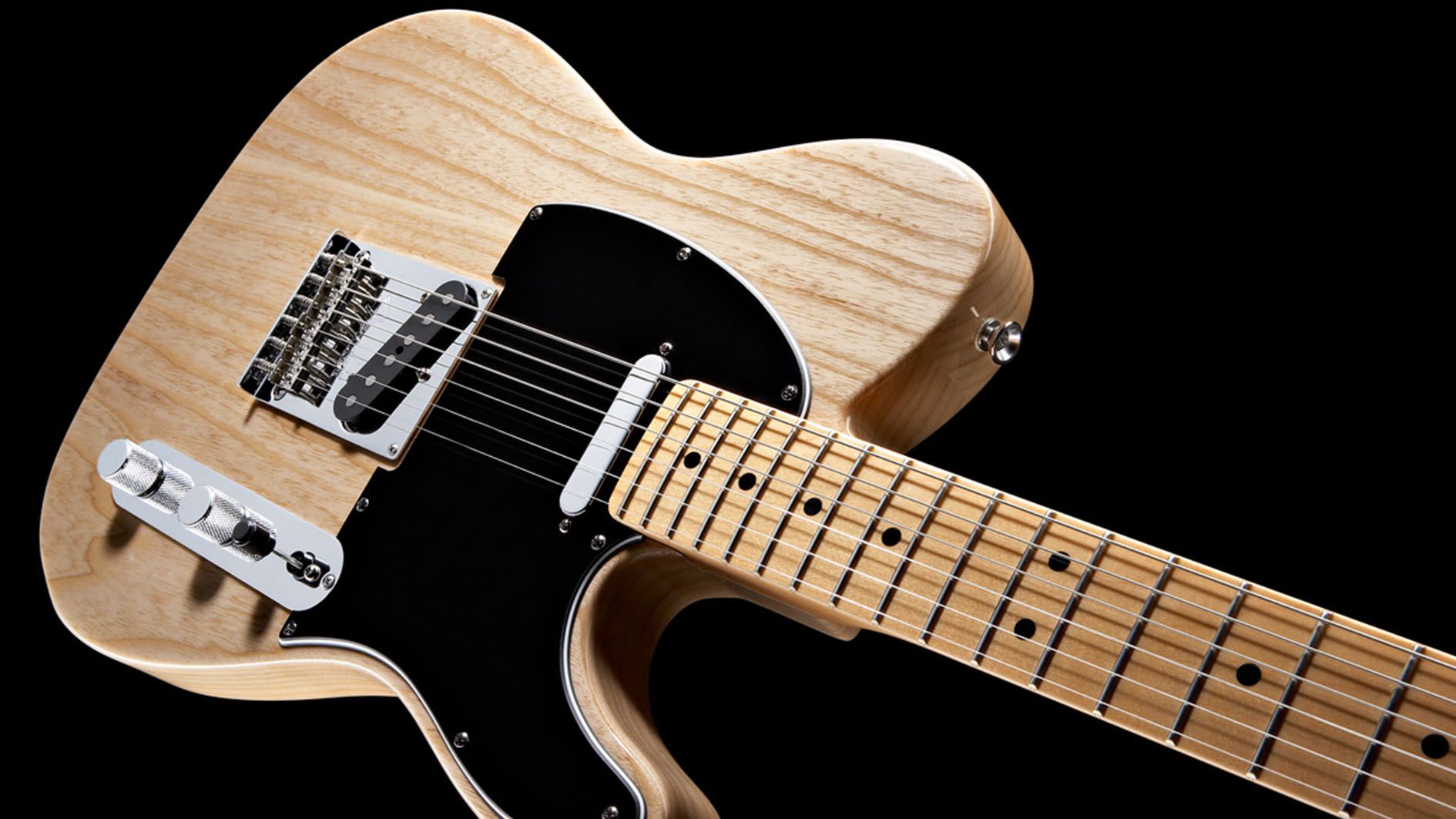
There's no official indication of any proposed change in materials. Keep in mind that a switch in specifications (on any maker's "signature guitar model") would not be something done arbitrarily.

For example, imagine a Les Paul that was made from Poplar??? Regardless of tonal characteristics, the purists would object. Look how many people objected to maple necks on Les Paul's, even though it is a superior material in terms of rigidity

In a September 15, 2020 interview with Guitar.Com, KWS stated:

“After playing Strats for decades in alder, ash, even pine-bodied Strats, I found the difference in sound between ash and alder is pretty minimal but visually you get that gorgeous effect.

That said, ash can sometimes be quite heavy so we decided to lighten the instrument with the whole chambered body thing which also adds resonance so it all contributes to a unique look and a unique sound. We’re touching on different eras of the Stratocaster with this instrument too...."

Fender has always been very open about changes in materials in response to their concerns about being a responsible member of the global community. It's not just supply chain issues, but also sustainability issues that require a very wide perspective.

Remember Gibson's move to Richlite in response to ebony supply and considerations for sustainable sourcing???

Here's an article in which Fender management discusses some of these issues:


Roasted pine has been used on several models with great success. It has similar properties to roasted maple. You can find these bodies everywhere.

Now, another important thing to keep in mind here is the difference between a production line guitar and a artist signature series.

A "signature guitar" is held to a very high degree of faithfulness to the original design specifications.

A good example would be my Jackson San Dimas Adrian Smith Import Model that I got from @eSGEe.

The import uses a Basswood body and rosewood or maple board and the USA model (based on published specifications) uses an Alder body and ebony fretboard.

Personally, I think either one would be great, but I always suggest putting "hands on" any guitar purchase. If ot feels good and sounds good, I'm not concerned about the materials used...FWIW
 
A hardwood is not necessarily a harder material (more dense) and a softwood is not necessarily a softer material (less dense). For example, balsa wood is one of the lightest, least dense woods there is, and it's considered a hardwood.

The distinction between hardwood and softwood actually has to do with plant reproduction. All trees reproduce by producing seeds, but the seed structure varies. Hardwood trees are angiosperms, plants that produce seeds with some sort of covering. This might be a fruit, such as an apple, or a hard shell, such as an acorn.

Softwoods, on the other hand, are gymnosperms. These plants let seeds fall to the ground as is, with no covering. Pine trees, which grow seeds in hard cones, fall into this category. In conifers like pines, these seeds are released into the wind once they mature. This spreads the plant's seed over a wider area.

For the most part, angiosperm trees lose their leaves during cold weather while gymnosperm trees keep their leaves all year round. So, it's also accurate to say evergreens are softwoods and deciduous trees are hardwoods.

The hardwood/softwood terminology does make some sense. Evergreens do tend to be less dense than deciduous trees, and therefore easier to cut, while most hardwoods tend to be more dense, and therefore sturdier. But, as the classification of balsa wood demonstrates, there is no minimum weight requirement to become a hardwood.
 
What about the Taylor made from old pallets????

The Taylor Pallet guitar was originally conceived in 1995 as a way of proving to the guitar world that the quality of wood is not the only factor in building great guitars, Bob wanted to prove that the quality of the luthier was just as, if not more important than the quality of the wood by building a guitar entirely out of Pallet wood.

This was a complete shock to the acoustic guitar world and the outcome far exceeded the expectations of everyone. It was in fact a revelation that a guitar made out of Oak Pallet wood back and sides with a 6 piece top of non-descript Pallet soft wood could sound so good and play so well, it was actually a very striking looking guitar with some very distinct features.

The Forklift inlay was designed by Larry Breedlove and made out of Formica and Pearl, they also went as far as placing aluminium dots where the nail marks were in the wood to resemble the head of a nail which is a great touch that helps set this guitar apart from anything else that has been on the market.

"The whole point of the Pallet Guitar is to return the emphasis to the guitar maker, Bob Taylor explained in an interview for the Spring 1995 issue of Wood & Steel. "By now a lot of people think that Taylor makes great guitars because we have a stock of exceptional wood. Even salesman use that as a selling point. But that's not what makes our guitars so good. Taylor makes great guitars because we know how. And to prove it, we can even make one out of a junky, old, discarded pallet."

In the year 2000 Taylor released a series of 25 limited edition Pallet Guitars at Namm.
 
The type of wood used in the making of a guitar is like saying a cake tastes better made from stone milled flour. It's only a single ingredient and there's way too much hype and superstition surrounding this fact.

A guitar is made up of many parts. Some just naturally sound better than others.

The best guitar is the one that feels good in your hands and sounds good.

I know fellow musicians who had a great sounding guitar, then abruptly sold it when they found it was made from ______ instead of _____.

When they bought the guitar made from _____, they were disappointed.

Trust your hands and your ears more than the folklore of a particular species of wood...
 
A hardwood is not necessarily a harder material (more dense) and a softwood is not necessarily a softer material (less dense). For example, balsa wood is one of the lightest, least dense woods there is, and it's considered a hardwood.

The distinction between hardwood and softwood actually has to do with plant reproduction. All trees reproduce by producing seeds, but the seed structure varies. Hardwood trees are angiosperms, plants that produce seeds with some sort of covering. This might be a fruit, such as an apple, or a hard shell, such as an acorn.

Softwoods, on the other hand, are gymnosperms. These plants let seeds fall to the ground as is, with no covering. Pine trees, which grow seeds in hard cones, fall into this category. In conifers like pines, these seeds are released into the wind once they mature. This spreads the plant's seed over a wider area.

For the most part, angiosperm trees lose their leaves during cold weather while gymnosperm trees keep their leaves all year round. So, it's also accurate to say evergreens are softwoods and deciduous trees are hardwoods.

The hardwood/softwood terminology does make some sense. Evergreens do tend to be less dense than deciduous trees, and therefore easier to cut, while most hardwoods tend to be more dense, and therefore sturdier. But, as the classification of balsa wood demonstrates, there is no minimum weight requirement to become a hardwood.

Is all this information from your training and orientation?
 
no kidding? would love to hear a sound sample... I'm looking into a new strat and the KWS checks all the boxes, under the hood it's routed for HSH pickups if you want to swap.. binding and block inlays. I am a bit worried since the past 2 years not sure on the production side but I heard they are shelving the ash and going with pine, I freaked out when I heard that :-/


Fender Classic Vibe 6 String Solid-Body Electric Guitar, Right, Butterscotch Blonde, Full (0374030501)​


Brand: Fender


4.0 out of 5 stars 3 ratings


$589.99$589.99


New (2) from $589.99 & FREE Shipping.


BrandFender
ColourButterscotch Blonde
Top material typeMaple
Body materialPine
Back material typeMaple Wood, Pine Wood
Neck material typeMaple
Fretboard material typeMaple
Guitar pickup configurationS
String material typeNickel Steel
Hand orientationRight
 
How about the cardboard/paper mache guitar of 1862???

Sound clip in link:

Many models of Martins are now made from compressed paper...

But I am forever convinced that the wood drastically affects the sound and sustain of solid body electric guitars.
I never found any electric guitar that sustained better than mahogany or koa wood.
 
What about the Taylor made from old pallets????

The Taylor Pallet guitar was originally conceived in 1995 as a way of proving to the guitar world that the quality of wood is not the only factor in building great guitars, Bob wanted to prove that the quality of the luthier was just as, if not more important than the quality of the wood by building a guitar entirely out of Pallet wood.

This was a complete shock to the acoustic guitar world and the outcome far exceeded the expectations of everyone. It was in fact a revelation that a guitar made out of Oak Pallet wood back and sides with a 6 piece top of non-descript Pallet soft wood could sound so good and play so well, it was actually a very striking looking guitar with some very distinct features.

The Forklift inlay was designed by Larry Breedlove and made out of Formica and Pearl, they also went as far as placing aluminium dots where the nail marks were in the wood to resemble the head of a nail which is a great touch that helps set this guitar apart from anything else that has been on the market.

"The whole point of the Pallet Guitar is to return the emphasis to the guitar maker, Bob Taylor explained in an interview for the Spring 1995 issue of Wood & Steel. "By now a lot of people think that Taylor makes great guitars because we have a stock of exceptional wood. Even salesman use that as a selling point. But that's not what makes our guitars so good. Taylor makes great guitars because we know how. And to prove it, we can even make one out of a junky, old, discarded pallet."

In the year 2000 Taylor released a series of 25 limited edition Pallet Guitars at Namm.

This was an idea that interested me back in the day. I think Bob Taylor is very correct in suggesting that construction techniques are often overlooked. The actual wood species is but one piece of the equation.

The reaction on the acoustic guitar forums to the pallet guitar is mixed, however. Some will say they didn’t care for the sound. Others will say it sounded okay, but not great. Others will say it sounded pretty good but not up to the same caliber of sound as those made with true, acoustic guitar tonewoods (yes, tonewood is a real thing with acoustic instruments).

At a minimum, I think the pallet guitar shows that even getting a workable and passable sound via emphasis on construction demonstrates it value..

But, I think historical awareness is always useful. We need to remember that the guitar didn’t suddenly show up in C.F. Martin’s first shop in 1830. The guitar is a product of centuries (perhaps millennia) of development stretching from the oud (a precursor to the lute) in Mesopotamia and pre-Islamic Arabia, through to Spain, and the rest of Europe. Luthiers have experimented with differing woods this whole time. We didn’t arrive at the currently regarded woods in a hasty fashion.

Whereas I truly do admire Bob Taylor’s goal of focusing attention back on the worker and the importance of construction, I think it is worth noting that even Taylor guitars uses more traditional tonewoods in their instruments which draw the highest acclaim.

Nothing I’ve said should be interpreted as throwing shade on Taylor. I have a Taylor and I very much enjoy it. I could easily own another and be very pleased.
 
Back
Top