
Jethro Rocker
Ambassador of Live & Loud Action

I am not a number!
I am a free man!
From now on i'm calling you inspector.


I am not a number!
I am a free man!
From now on i'm calling you inspector.


@Robert Herndon Congrats on the new gig
If you ever get a chance let me know the scoop on the Kenny Wayne Shepherd sig. strats, I heard some horrible rumor they are no longer using ash and the god awful word of "pine" I heard? this can't be true, say it isn't so..
@Robert Herndon Congrats on the new gig
If you ever get a chance let me know the scoop on the Kenny Wayne Shepherd sig. strats, I heard some horrible rumor they are no longer using ash and the god awful word of "pine" I heard? this can't be true, say it isn't so..

I'm hoping they stick with the ash but Kenny himself said something about moving to pine because of the supply chain stuff, current situation.. :-(
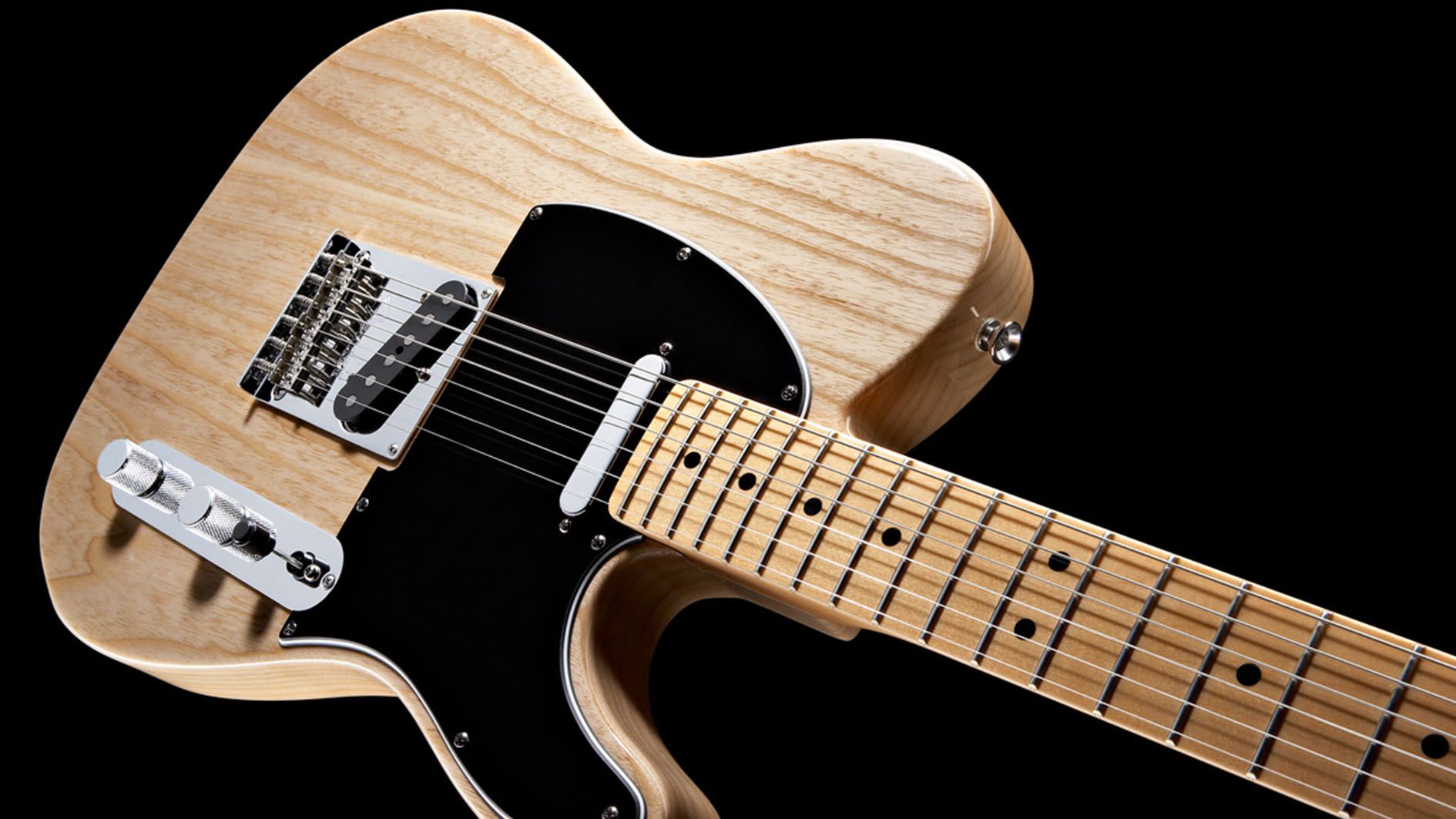
Stu, I hate to say it, but my Pine Fender product is sensational.
Comfortable barstool allowed ? Add one of those Custom Shop pillows and you’re styling !

A hardwood is not necessarily a harder material (more dense) and a softwood is not necessarily a softer material (less dense). For example, balsa wood is one of the lightest, least dense woods there is, and it's considered a hardwood.
The distinction between hardwood and softwood actually has to do with plant reproduction. All trees reproduce by producing seeds, but the seed structure varies. Hardwood trees are angiosperms, plants that produce seeds with some sort of covering. This might be a fruit, such as an apple, or a hard shell, such as an acorn.
Softwoods, on the other hand, are gymnosperms. These plants let seeds fall to the ground as is, with no covering. Pine trees, which grow seeds in hard cones, fall into this category. In conifers like pines, these seeds are released into the wind once they mature. This spreads the plant's seed over a wider area.
For the most part, angiosperm trees lose their leaves during cold weather while gymnosperm trees keep their leaves all year round. So, it's also accurate to say evergreens are softwoods and deciduous trees are hardwoods.
The hardwood/softwood terminology does make some sense. Evergreens do tend to be less dense than deciduous trees, and therefore easier to cut, while most hardwoods tend to be more dense, and therefore sturdier. But, as the classification of balsa wood demonstrates, there is no minimum weight requirement to become a hardwood.
Is all this information from your training and orientation?

no kidding? would love to hear a sound sample... I'm looking into a new strat and the KWS checks all the boxes, under the hood it's routed for HSH pickups if you want to swap.. binding and block inlays. I am a bit worried since the past 2 years not sure on the production side but I heard they are shelving the ash and going with pine, I freaked out when I heard that :-/
| Brand | Fender |
| Colour | Butterscotch Blonde |
| Top material type | Maple |
| Body material | Pine |
| Back material type | Maple Wood, Pine Wood |
| Neck material type | Maple |
| Fretboard material type | Maple |
| Guitar pickup configuration | S |
| String material type | Nickel Steel |
| Hand orientation | Right |
Its actually some information I found from a wood supplier and it seemed relevant to add it here.

For sure. I think I learned more about trees in those few paragraphs than I’d learned…. Ever. Like who knew balsa wood is considered a hardwood.Ahh…absolutely.
I just recalled you recently saying you would have to go through training and I was wondering if they went into this. Interesting content, nonetheless.

Many models of Martins are now made from compressed paper...How about the cardboard/paper mache guitar of 1862???
Sound clip in link:
Torres' cardboard guitar | cumpiano-guitarmaker
www.cumpiano.com
What about the Taylor made from old pallets????
The Taylor Pallet guitar was originally conceived in 1995 as a way of proving to the guitar world that the quality of wood is not the only factor in building great guitars, Bob wanted to prove that the quality of the luthier was just as, if not more important than the quality of the wood by building a guitar entirely out of Pallet wood.
This was a complete shock to the acoustic guitar world and the outcome far exceeded the expectations of everyone. It was in fact a revelation that a guitar made out of Oak Pallet wood back and sides with a 6 piece top of non-descript Pallet soft wood could sound so good and play so well, it was actually a very striking looking guitar with some very distinct features.
The Forklift inlay was designed by Larry Breedlove and made out of Formica and Pearl, they also went as far as placing aluminium dots where the nail marks were in the wood to resemble the head of a nail which is a great touch that helps set this guitar apart from anything else that has been on the market.
"The whole point of the Pallet Guitar is to return the emphasis to the guitar maker, Bob Taylor explained in an interview for the Spring 1995 issue of Wood & Steel. "By now a lot of people think that Taylor makes great guitars because we have a stock of exceptional wood. Even salesman use that as a selling point. But that's not what makes our guitars so good. Taylor makes great guitars because we know how. And to prove it, we can even make one out of a junky, old, discarded pallet."
In the year 2000 Taylor released a series of 25 limited edition Pallet Guitars at Namm.