
You are using an out of date browser. It may not display this or other websites correctly.
You should upgrade or use an alternative browser.
You should upgrade or use an alternative browser.
Best Mics for Vocals
- Thread starter Cadorman
- Start date


I am no help here brotherHas anyone tried any of the less expensive Blue mics like the Spark or Ember? I might be able to afford one of those.

flatrockmobile
Well-Known Member
Cadorman, Is this mic intended for live work or studio or some of both? What's the budget? Dynamic or condenser?
One that like and use that would cover a lot of ground would be the Shure Beta58 for dynamic. Great gain before feedback on live and good for Cookie Monster and screamo vocals in studio. I have 3 of them. They make a great snare mic in the studio as well.
For a live condenser, I'll stand by my tried and true Rode NT3's. Again, great gain before feedback on live with a studio quality condenser sound. Great rejection of sounds not directly in front of them. I have 4 of these and mainly used them on lead and harmony vocals in live recording situations.
One that like and use that would cover a lot of ground would be the Shure Beta58 for dynamic. Great gain before feedback on live and good for Cookie Monster and screamo vocals in studio. I have 3 of them. They make a great snare mic in the studio as well.
For a live condenser, I'll stand by my tried and true Rode NT3's. Again, great gain before feedback on live with a studio quality condenser sound. Great rejection of sounds not directly in front of them. I have 4 of these and mainly used them on lead and harmony vocals in live recording situations.
OP

Cadorman
Ambassador of the Catocaster
Studio is what I am looking at.Cadorman, Is this mic intended for live work or studio or some of both? What's the budget? Dynamic or condenser?
One that like and use that would cover a lot of ground would be the Shure Beta58 for dynamic. Great gain before feedback on live and good for Cookie Monster and screamo vocals in studio. I have 3 of them. They make a great snare mic in the studio as well.
For a live condenser, I'll stand by my tried and true Rode NT3's. Again, great gain before feedback on live with a studio quality condenser sound. Great rejection of sounds not directly in front of them. I have 4 of these and mainly used them on lead and harmony vocals in live recording situations.
flatrockmobile
Well-Known Member
On the cheap side, MXL V67 is a fantastic condenser mic. I own a couple and have used them on lead and backup vocals in-studio quite a bit. The black one, if you can find it, claims to have mogami wire.
From there, prices only go up. AKG 414 is another I've borrowed, used, and liked but never owned.
The Oktava MK-012 small diaphragm condenser is a great all around mic that will find a lot of uses in the studio without breaking the bank. I've got 4 of these and used them on everything from vocals, drum overheads, acoustic guitar, etc.
From there, prices only go up. AKG 414 is another I've borrowed, used, and liked but never owned.
The Oktava MK-012 small diaphragm condenser is a great all around mic that will find a lot of uses in the studio without breaking the bank. I've got 4 of these and used them on everything from vocals, drum overheads, acoustic guitar, etc.

Amp Mad Scientist
Ambassador of Heresy
Well? I'm waiting.
To reject background noise, the SM58 is still the wiener. But it's not the best sounding vocal mic by a long ways.
The problem w/ vocal mics is picking up external noise, like crash symbols.
So to get the band to calm down, you could use a better mic without too much bleeding like a Sennheiser 421.
The second problem is tuning out the feedback w/ a 31 band EQ, which you really should have.
But it's surprising how much bands resist using a professional EQ
 even though it can make a big difference.
Amp Mad Scientist
Ambassador of Heresy
Neumann U87 but always use the spit screen.Studio is what I am looking at.

OP
Cadorman
Ambassador of the Catocaster
I would have to sell my Harley to buy one of those .

Col Mustard
Ambassador of Perseverance
I actually sang into my Sennheiser E609 the other night and it wasn't terrible (the mic). Might try that one a little more.
Yes and I've used my e609 to mic an acoustic guitar. I told the soundman that I wanted to try it,
and get his opinion at the sound check. He'd used them to mic guitar amps before, (and so have I)
and he said they work well for drums too in his experience, especially hand drums like my djembe.
I haven't tried that, but I'm willing to after listening.
Anyway, the upshot of the test was that after sound check, we decided to go ahead and use that
mic during the performance. I asked the sound man specifically to look at the highs, mids and lows
compared with the instrument mikes he usually used in that venue. He said to me that the
response was comparable. That's the technical response. My ear told me that it sounded fine
as an acoustic instrument mike. He had no problems mixing that signal with the signals from
his normal mikes.
So I'd use it again. e609 seems like a versatile addition, for reasonable money.

Good starter, I’m guessing...spec’s look good...it can handle some noise @148dB...fairly low self noise...shock mount included. I have the same shock mount, and it works well.I've been looking at the Audio Technica at2035 to try for vocals. At $150 it is in my price range. Seems to have pretty good reviews especially in the performance versus price aspect.
Should be a good mic.


BFT Gibson
Ambassador of Originality
if you could inch up to the 3035...they retired it but it really is one heck of a mic..vocals def,,,guitars even...its sensitive but not in a sissy way.(all i could think of) but it does pick up pretty good on what you are playing. has the EQ shelf that is nice if needed. I have used mine --beat it up & dropped it..threw it...it's on every recording have ever done. Maybe mostly cause it does reflect what you put in so well. No noise on it..quiet mic as far a noise floorI've been looking at the Audio Technica at2035 to try for vocals. At $150 it is in my price range. Seems to have pretty good reviews especially in the performance versus price aspect.

stringtree
Well-Known Member
AKG P420 is nice to have the different polar patterns. This one gives you options on how you would want to capture your recordings.
Polar Pattern: Cardioid, Omni, Figure-8
Whats great about this for a first mic is, if down the line you want to get into different dual mic techniques. Like close mic a cab and use this one to capture more of the sound in the room. This would help create a more dynamics to your guitar tracks.
Just lots of possibilities here. :dood:
I think the Figure-8 would be so cool for recording an open back combo!
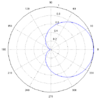
Cardioid
Mics with a Cardioid polar pattern “hear” best what happens in front of them while rejecting sound from the sides and rear. The graphic representation of the pattern resembles a heart (thus, “cardioid” shape. The ability to reject sound from the rear makes Cardioid patterns useful in multi-miking situations, and where it’s not desirable to capture a large amount of room ambience. Popular in both studio and live use (where rear rejection cuts down on feedback and ambient noise), Cardioid mics are used for a very high percentage of microphone applications. Keep in mind that like all non-omnidirectional mics, Cardioid mics will exhibit proximity effect (increased bass response when the mic is very close to the sound source).
Omnidirectional
Omnidirectional microphones detect sound equally from all directions. The graphic representation of the pattern is a circle. An omni microphone will not exhibit a pronounced proximity effect. All mics are born omnidirectional. Additional engineering is then applied to create directional polar patterns. Omnis are great for capturing room sound along with whatever you’re recording.
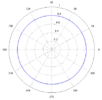
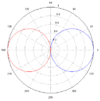
Figure-8
A Figure-8 polar pattern is one in which the mic is equally sensitive to sounds picked up from front and back, but rejects sounds coming from the sides. This produces a pattern that looks like a “figure-8”, where the mic capsule is at the point of crossover on the 8. This pattern is also known as bi-directional.
Polar Pattern: Cardioid, Omni, Figure-8
Whats great about this for a first mic is, if down the line you want to get into different dual mic techniques. Like close mic a cab and use this one to capture more of the sound in the room. This would help create a more dynamics to your guitar tracks.
Just lots of possibilities here. :dood:
I think the Figure-8 would be so cool for recording an open back combo!
Cardioid
Mics with a Cardioid polar pattern “hear” best what happens in front of them while rejecting sound from the sides and rear. The graphic representation of the pattern resembles a heart (thus, “cardioid” shape. The ability to reject sound from the rear makes Cardioid patterns useful in multi-miking situations, and where it’s not desirable to capture a large amount of room ambience. Popular in both studio and live use (where rear rejection cuts down on feedback and ambient noise), Cardioid mics are used for a very high percentage of microphone applications. Keep in mind that like all non-omnidirectional mics, Cardioid mics will exhibit proximity effect (increased bass response when the mic is very close to the sound source).
Omnidirectional
Omnidirectional microphones detect sound equally from all directions. The graphic representation of the pattern is a circle. An omni microphone will not exhibit a pronounced proximity effect. All mics are born omnidirectional. Additional engineering is then applied to create directional polar patterns. Omnis are great for capturing room sound along with whatever you’re recording.
Figure-8
A Figure-8 polar pattern is one in which the mic is equally sensitive to sounds picked up from front and back, but rejects sounds coming from the sides. This produces a pattern that looks like a “figure-8”, where the mic capsule is at the point of crossover on the 8. This pattern is also known as bi-directional.
Alright then... @stringtree touched on a good point, above...Well, I have narrowed it down to the Audio Technica AT2035, AKG P220 or AKG P420. I'm planning on pulling the trigger today. Anyone have a preference? And is the multi pattern of the P420 useful?
You may want this mic to pull multiple duties. I’ve already commented on the AT2035. I have several different Audio Technica mic’s. They’ve been good soldiers, and I wouldn’t hesitate to try another.
I have a pair of AKG mic’s too...love ‘em, and use them often.
The AKG mic’s you’ve mentioned also spec out pretty well, but the roll off(high pass) filter switch seems like it might be a little aggressive/high at 300Hz....as opposed to the traditional of around 70-100Hz.
The multi-pattern mic could prove to be effective, and valuable, as a tool in the future for you.
I use a couple of figure-eight mic’s regularly. They are great tools for a few tasks.
You have a really nice new bass set up...you may find that your new “vocal mic” would also compliment your bass tracks.(Personally, I like the Audix D6 kick drum mic for my bass rig, with a ribbon[also a figure-eight pattern] mic A few feet out in the room.)
High pass filters can be used to really great effect on guitars, and vocals, among other things. There’s usually not a lot of useful noise below 100Hz on most any vocal track...or guitar for that matter...that’s where the stand rumble lives.That high pass filter does make me wonder how useful it would be. I don't have a deep voice.
Anything down there usually serves to cloud the bottom of the bass, and kick drum etc.
Once you approach 200Hz, you hit the meat of deep vocals(chest thumping sounds), and guitar low end.
From there up, it’s a dance to find the spaces each track needs to shine on the frequency spectrum.
stringtree
Well-Known Member
Alright then... @stringtree touched on a good point, above...
You may want this mic to pull multiple duties. I’ve already commented on the AT2035. I have several different Audio Technica mic’s. They’ve been good soldiers, and I wouldn’t hesitate to try another.
I have a pair of AKG mic’s too...love ‘em, and use them often.
The AKG mic’s you’ve mentioned also spec out pretty well, but the roll off(high pass) filter switch seems like it might be a little aggressive/high at 300Hz....as opposed to the traditional of around 70-100Hz.
The multi-pattern mic could prove to be effective, and valuable, as a tool in the future for you.
I use a couple of figure-eight mic’s regularly. They are great tools for a few tasks.
You have a really nice new bass set up...you may find that your new “vocal mic” would also compliment your bass tracks.(Personally, I like the Audix D6 kick drum mic for my bass rig, with a ribbon[also a figure-eight pattern] mic A few feet out in the room.)
Great insight shared here @Thatbastarddon! :dood:
Love the tip about the Audix D6 kick drum mic too!
Below from Sweetwater.
Audix D6 at a Glance:
- Tuned specifically for kick drum and low-frequency instruments
- Sounds good no matter where you place it
Drums are one of the hardest instruments to record, especially when trying to replicate the sound of a previous recording. The D6 is designed to sound good in any position and it is not dependent on finding the "sweet spot" of the drum. This is great since you know that time after time, the kick will sound great!
Its nice when the write up matches real world experience!
Again, thanks for sharing!
I’ll add:
If I want to hear a lone guitar track...like a sound sample recorded to show off a particular guitar and/or amp...I want to hear a full spectrum recording, flat EQ curve, usually.
If I’m recording a guitar track that is to be mixed with bass, drums, and vocals, I will usually set a high pass filter, to taste, around 100Hz.(give or take)
If I want to hear a lone guitar track...like a sound sample recorded to show off a particular guitar and/or amp...I want to hear a full spectrum recording, flat EQ curve, usually.
If I’m recording a guitar track that is to be mixed with bass, drums, and vocals, I will usually set a high pass filter, to taste, around 100Hz.(give or take)