
chilipeppermaniac
Ambassador of Decibels

well played Sir!
LOL How timely was that? A friend on Facebook who likes Laney amps posted that today.

well played Sir!

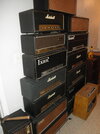
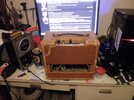
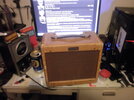

I'm almost afraid to ask, but what's the hammer for?When I played all these last week ......


That all sounds pretty good to me...One thing I've noticed over the years is, the biggest market for modeling and solid state amps are for bedroom players, beginners, and intermediate players. It's a huge chunk of the market. Like several have mentioned, they are a good stepping stone to move on from. Except the retardedly expensive Kemper, which has a useful place in the GB cover band setting. They are like the racks of the eighties, where you can switch between your "Dad Blooze" and your "Beyonce" sound on the fly.
As for anyone playing in any kind of live setting(maybe more original bands) and doing a serious amount of recording, they will have several tube amps at the disposal. Even the bass players. I've played with guys that have Hartke heads, and they sound like crap. They are a very late '80s sounding amp, and they do very little else. Old Acoustic 300 and 360 bass heads are very good sounding bass amps, but need the right speakers to sound correct. And, they are bloody loud when they actually start to sound good. They are one solid state bass amp that will rock the house, and are very impractical. Granted, my current bass player has one, along with his Ampegs, Oranges, and Marshalls. But seriously, for recording, most bass will always be DI. Sometimes, the bass rig will be in an iso booth with a mic or two in front of it, and a DI box. Sometimes, you really need the speaker flub on a bass track. So, I think the one is better is a moot point with bass amps, but more personal preference. I personally prefer the sound of a Hiwatt or Marshall tube amp for bass, which is preferably a Rickenbacker or Thunderbird. Again, personal preference.
Guitars, on the other hand will not be recorded with a DI. That's why old tube amps like Fender Tweed Champs, Deluxes, and Princetons, along with old Selmar, Gibson, Ampeg, Watkins, Vox, and many other old low output tube amps are essential. You are not going to replicate the sound of a Tweed Deluxe with long plate RCA tubes. Also, with low output tube amps wound up to the max, you'll get a sag that you can't get out of solid state, especially when running a tube rectifier. That's why when you see one for sale you're bidding against Neil Young, Joe Walsh, and several other people who know exactly how to use them. Their paychecks depend on that kind of gear so that they sound consistently the same as they did in 1975, or even 1965. My own experience in studios has dictated everything from Gibson Skylarks to Marshalls and Hiwatts running in stereo, with room mics grabbing the overall sound. Also, a good sized stage is a fun place to wind up an amp. Those venues are becoming less, but it's still fun to be "that jerk" who brings in a Hiwatt.
One thing I noticed to by going to the amp club in Cambridge, is that younger players want good tube amps. They'll buy a Fender Blues Junior because it's reasonable, but not cheap. Until it fails, and they realize it's cheaply made. Then Tim turns them on to a cottage industry of replacement boards specifically for Blues Juniors, and they can upgrade it to a great sounding tweed amp. Then they go into the rabbit hole of trying to find better quality tubes that are more reliable. All they want is a good tube amp to play out with and record with, because all the solid state stuff they had been using sounds like poop. These are all good players who are industry savvy, and are getting out into different forms of media I would have never thought of of. Thirty years difference in age shows sometimes.
Like everything, they have a purpose. Tubes won't go away. Just like points have not been replaced in many old cars and bikes. Yeah, solid state ignitions may run a bit smoother. But, when they fail, you're stuck on the side side of the road. With points, if you know what you're doing you are getting home. Just like a valve amp. When solid state fails, it's in the trash. With valves, you can fix it and play again.
I'll keep all my tube amps. Almost all of them have NOS tubes from the about the year they were made. They are very good quality, and will probably last in the amps as long as I still have them. They work for me. I love the sound. When I have time, I'll tinker with them a bit, but they are what they are.


Sounds excellent. I have one.
Ive also got a Quilter 101, all analog SS which sounds and feels particularly nice. As well as a Peavey Wiggy that's the best SS amp I've ever played.
I just use my ears to judge.
I'm almost afraid to ask, but what's the hammer for?
Hammer-on licks?Is that an input jack alignment tool?
Or a volume control shaft straightener?
John, when I first got into AC30's and everything else Vox I would go over the Mass Ave Charles River bridge to Cambridge, pass Cambridge and Harvard, and MIT further north a mile or so and bring my Voxen to Roy at " Goodesound " and he had a friend in the same building who did guitars, I remember his name was Jim. He and Roy were great friends< would you know them? They were very good at what they did and were close to the same age so I thought to ask!
I'm almost afraid to ask, but what's the hammer for?

