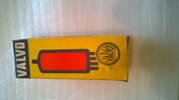
Valve production is starting back up

I too, wonder what the cost of new Brimars will be?

And, how this might affect the NOS market... :hmmm:

I don't think it would affect the NOS market, people will always want the old production valves. One reason that people will prefer NOS over new production, no matter how well made the new production is, is that new production can't use some of the radio active cathode treatment materials etc that were used in old production valves. How critical to valve quality this actually is I don't know, but I do know that when we did produce valves here in Australia on Mullard tooling, everything was manufactured here in Australia except for the cathodes. The cathodes for all valves produced were shipped from Mullard plants in Britain. Cheers
 
And Slovak Republic (JJ) produce valves.

AFAIK, Tung Sol never was american made, but always chinese.
 
Last edited:
IMG_7030.JPG I love my English Brooks Saddle but it stops there. For a bunch of white guys they know how to screw up a one car funeral. Made in England is a code for minor fire. After my Vox AC TV explosion and other more strange British product related miss happens I just can't change valves from the Angel Isl . I had three British Automobiles, that is how my legs got so strong and insurance is in high risk.
 
.

AFAIK, Tung Sol never was american made, but always chinese.

As far as I know, Tung Sol were indeed USA manufactured tubes. The USA 12AX7's are very nice tubes which the Chinese don't equal & the legendary USA Tung Sol 6550's surpass any new production 6550's, Chinese Tung Sol's included. Cheers
 
View attachment 17383 I love my English Brooks Saddle but it stops there. For a bunch of white guys they know how to screw up a one car funeral. Made in England is a code for minor fire.

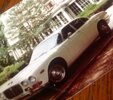
That's a little harsh, there's good & bad examples in every country's manufacturing if you really look, but to be fair, the British have produced some cracking cars. There's no denying something like an E type Jag for example & the car that the world knows as the Shelby Cobra was imported from Britain, made by the AC company at Ditton. Another little known fact about the Cobra is that Shelby first approached Chev for the V8's & transmission's he wanted to transplant into his British sports cars but they knocked him back thinking the cobra might hurt corvette sales. Ford was his second choice, but that's all beside the point. The point is, sure, the Brits may have produced some lemons, but there's some damn well designed examples too. Not all of Colin Chapman's Lotus designs hit the mark, but some were excellent & the list goes on. To see some British excellence in sports car design, check out the Ultima GTR720 that beat the lap record set by Schumacher's Ferrari FXX (track only car) at the circuit used by Top Gear. The Ultima is road registered. Ok, rant over. Cheers
 
Last edited:
That's a little harsh, there's good & bad examples in every country's manufacturing if you really look, but to be fair, the British have produced some cracking cars. There's no denying something like an E type Jag for example & the car that the world knows as the Shelby Cobra was imported from Britain, made by the AC company at Ditton. Another little known fact about the Cobra is that Shelby first approached Chev for the V8's & transmission's he wanted to transplant into his British sports cars but they knocked him back thinking the cobra might hurt corvette sales. Ford was his second choice, but that's all beside the point. The point is, sure, the Brits may have produced some lemons, but there's some damn well designed examples too. Not all of Colin Chapman's Lotus designs hit the mark, but some were excellent & the list goes on. To see some British excellence in sports car design, check out the Ultima GTR720 that beat the lap record set by Schumacher's Ferrari FXX (track only car) at the circuit used by Top Gear. The Ultima is road registered. Ok, rant over. Cheers
Interesting info... :coffee:
 
Interesting info... :coffee:

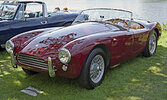
The forerunner of the cobra was the AC Ace, produced from 1953 to 1963. The early ace's were powered by AC's own proven 2 litre straight six (aluminum) engine, though with speed records being chased this was later replaced with the Bristol 2 litre straight six. I believe they did set speed records with this. Here's a pic of the AC Ace, a '56 model (below)
Bodies (even cobra's) are hand formed aluminium & the pedigree is undeniable. Shelby, unable to win Le Mans as a driver decided to have a crack as a (IIRC) constructor (maybe owner). He knew he needed something that handled & braked well & had come into contact with British sports cars while racing, so headed to England to search for a candidate. The rest is history. Ok, that's enough derailing. CheersV__F22E.jpg
 
Last edited:
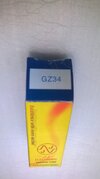
I had some excellence in British valve design & manufacturing arrive yesterday, in the form of a true NOS/NIB Mullard GZ34 rectifier, the one by which all other GZ34/5AR4 rectifiers are judged. I tried several new production types, all short lived. Going through my notes (& then old tube boxes), I found that I had tried a JJ GZ34, which admittedly was the longest lasting at almost six monthsWP_20180820_004.jpg
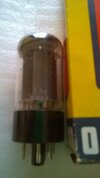
Here is the rebranded "Valvo" (which I think was for the European market) MullardWP_20180820_001.jpg WP_20180820_003.jpg
Date code etched into the glass near the base (below the "f32") is seen as B3C1, showing it was manufactured in the Blackburn plant, 1st of March 1973. Having used the 7 notch plates, 4 notch plates & smooth plates type Mullard GZ34's in the past I know that not only should this tube outlast me, but probably also my (now grown) kids. Cheers
 
I tried several new production types, all short lived. Going through my notes (& then old tube boxes), I found that I had tried a JJ GZ34, which admittedly was the longest lasting at almost six months
What amp is eating up your rectifier tubes?

Do you know why the modern GZ34's are failing too soon on your amp(s)?
 
giphy.gif
 
What amp is eating up your rectifier tubes?

Do you know why the modern GZ34's are failing too soon on your amp(s)?

The amp is a 50 watt 4 hole Marshall clone, so a duet of EL34's & 3x ECC83. Main filter is 32uf so well within the GZ34's maximum of 60uf. I've been using SS rectifier but when I was using new production type rectifiers the amp was seeing use of 3 to 3 1/2 hours, 4 or 5 times a week. After the first failure I fitted a 1000V 3A (1N5408) diode connecting the rectifier to the main filter, to keep AC out of circuit in the event of further failures. I'll get back to you after work. Cheers
 
Some amps are kinder to a GZ34 than others. At start up (switch on) the DC resistance of the PT's HT winding comes into play. When you turn the amp on, the rectifier (momentarily) sees the uncharged filter capacitor as close to a dead short. For that split second, current spikes to a very, very high level (way, way above the tubes max current rating) with the only limiting resistance being the internal resistance of the rectifier & the DC resistance of the PT's HT winding. This "inrush current" is the reason we need a "slow blow" main fuse in amps. Then we have that the GZ34, of all the tube rectifiers commonly used in guitar amps, has the lowest internal resistance (hence also the smallest voltage drop), meaning the plates are very closely spaced to the cathodes.
Now we get to the only design difference that I've read of between original & new production GZ34's. With the original production the cathode material gets thicker towards the base of the cathode, being at its thickest at the point the cathode ties to the heater. Analysis has shown new production GZ34 cathodes do not have this feature, being the same thickness along the length of the cathode & measurably quite thinner than original production where tied to the heater. Does this cause problems? Well I'm sure they made the original cathodes the way they did for a reason. Considering that the most common failure of new production GZ34's is ark over between cathodes & plates, you gotta surmise it does cause a problem. I'm sure they can pump just as hard vacuum now as they did & keep impurities & contamination out, & "getter" the tube just as well. Well, we'd hope.
Common fixes for new production include adding series resistance between the PT & rectifier plates or between the rectifier & filter, but both of these will introduce more "sag" to the B+ line, changing the feel/response of the amp. Another is to add series diodes & snubber caps to the GZ34 plates so the rectifier doesn't see the peek inverse voltages it normally would, but in reality this is still a bandaid fix for a rectifier that isn't up to par. Ok, rant over, I need another coffee. Cheers
 
Last edited:
View attachment 17383 I love my English Brooks Saddle but it stops there. For a bunch of white guys they know how to screw up a one car funeral. Made in England is a code for minor fire. After my Vox AC TV explosion and other more strange British product related miss happens I just can't change valves from the Angel Isl . I had three British Automobiles, that is how my legs got so strong and insurance is in high risk.
PErhaps--- however this is my 3rd British 2 wheeler -- and all have been AMAZING and awesome with ZERO issues-----unlike the American "H" word hunk of excrement I owned for a SHORT time
tiger chain2.jpg

As I understand i5t-- when Mr. Bloor bought and revived TRIUMPH Motorcycles-----design--- and RELIABILTY where put BEFORE all else---

My Sprint had 100,000 miles on it--- when the starter clutch died--- Opened the cases --- intending to do a rebuild-- that was the CLEANEST engine I ever saw-------put it back together and sold it last I heard the bloke I sold it to in TN. is STILL riding it!
 
I don't think it would affect the NOS market, people will always want the old production valves. One reason that people will prefer NOS over new production, no matter how well made the new production is, is that new production can't use[/QUO
A buddy of mine bought one of the T120 Bonneville Triumph's & also swears by it. Cheers[/QU


I bought a 1966 Triumph Tiger. It is a Bonneville with one carb. The same as the common BSA. It's still up at our old summer house. My drivers kids took a fancy to it so I gave it to them.
 
Last edited:
Back
Top