
You are using an out of date browser. It may not display this or other websites correctly.
You should upgrade or use an alternative browser.
You should upgrade or use an alternative browser.
So Anyway...
- Thread starter Sp8ctre
- Start date


syscokid
Ambassador of War & Peace

Both of y'all look so cute together! Congratulations...


RVA
Ambassador
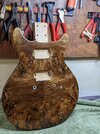
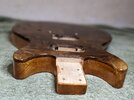
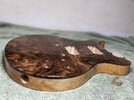
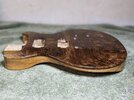
Thank you. I did a sealer coat with Solarez "I can't believe it's not laquer" and then sprayed with 2K urethane. No stainLooking good Ray. Is that just a gloss poly spray?

mcblink
Ambassador of Riffs & Spliffs
Holy §hit!!!
What did that big guy weigh?

CoyotesGator
Ambassador of Reptilian Rum Bar Affairs
No Idea other than it was all I could do to pick it up for the picture before I sent him back home!Holy §hit!!!
What did that big guy weigh?
mcblink
Ambassador of Riffs & Spliffs
Great catch! That's one hell of a fish!No Idea other than it was all I could do to pick it up for the picture before I sent him back home!
CoyotesGator
Ambassador of Reptilian Rum Bar Affairs
It is by far the largest black drum I've ever caught
mcblink
Ambassador of Riffs & Spliffs
That's a sport I really need to get back into. I kinda stopped being a pretty hard-core fisherman after I had kids. It is time to get back at it and bring them with me this time....but that's also going to require that I change the way I used to do it. Bigger boat, etc...

jtcnj
Ambassador of the Crossroad
Again.
My last pack on hand of D'addario EXL110 10-46.
And maybe ever.
Put on my Ibanez AS73 in Feb. and not played much, until the second time I picked it up (last night) after the Gretch Filtertron went in the bridge.
I still say it was a bad batch and I like these strings. I sent a contact message to D'addario relating my experience.
I may or may not buy them again, depending on the response I get.
My last pack on hand of D'addario EXL110 10-46.
And maybe ever.
Put on my Ibanez AS73 in Feb. and not played much, until the second time I picked it up (last night) after the Gretch Filtertron went in the bridge.
I still say it was a bad batch and I like these strings. I sent a contact message to D'addario relating my experience.
I may or may not buy them again, depending on the response I get.
Last edited:

chilipeppermaniac
Ambassador of Decibels
Spray can or Air Compressor and paint gun type?
RVA
Ambassador
rattle can, but 2K spray (2 parts, with a hardener)Spray can or Air Compressor and paint gun type?
chilipeppermaniac
Ambassador of Decibels
I know of this one. Ray. Has good reputation.
syscokid
Ambassador of War & Peace
Can you please explain, for lil O'me?(2 parts, with a hardener)
RVA
Ambassador
2 part urethane finishes are quite common for the pro sprayers with guns. It involves 1 park urethane and 1 part hardening agent (example). The proper mix is important, and to get it as you desire usually takes a fair amount if trial and error. It is harder to clean equipment after use than with one part poly, but has major advantages. It is sandable in 24-72 hours (depending on conditions and how much is sprayed) and it results in a harder, more scratch resistant surface. It is also less prone to runs and flattens out nicely .Can you please explain, for lil O'me?
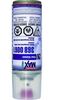
This rattle can makes 2K spray available to those of us without spray guns and booths. It has a diaphragm with the hardener inside the can at the base, which is released by taking the red plunger off the cap and pushing it in to the insert on the bottom, thus allowing the perfect mix of urethane and hardener just when you need it.
CONS:
- It has catalyzed urethanes. This is highly toxic and can cause cancer. It can be absorbed through the skin. Long sleeves, rubber gloves and a proper respirator are mandatory. I also use a shower cap and goggles.
- it is more expensive ($20 per can).
- It is no good 24 hours after mixing, so if you don't use the whole can, or you want to open another can for just a few more sprays, it is wasteful, especially given the expense.
For me, it is worth the cons. The results, time savings and scratch resistance are a huge benefit. Also, less risk of burn through when finish sanding
Last edited:
syscokid
Ambassador of War & Peace
Pretty cool info, thanks!
How much per guitar?- it is more expensive ($20 per can).
RVA
Ambassador
Well, the first 3 guitars, I did not use a sealer before spraying and I over-applied to try to get a glass finish without sanding. You see, when you lay it on thick, it comes out better than you could ever buff to without pro equipment, but it is NEVER perfect throughout and you get pock marks as the excessive vapors make their way up through the thick spray and crater. You also have to deal with runs (which can be managed). The end result...you have to sand anyway even though it is 92% like glass, so it was a waste. This resulted in my using 2 1/2-3 cans, making quite the mess and spending lots of time correcting errors. Needless to say, this approach was not a success.Pretty cool info, thanks!
How much per guitar?
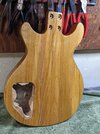
This time, I used a sealer so I was starting with a true surface without any uneven absorption, sprayed in thin layers like you are supposed to do (despite the obvious orange peel that was resulting) and sanded to a finish with only 1 can.
I have other tips applicable to any spray if you plan on doing a job. I learned the hard way. Avoid my MANY mistakes
chilipeppermaniac
Ambassador of Decibels
chilipeppermaniac
Ambassador of Decibels