Real Truth of The Matter

Your points are good. I get it and I understand. What is frustrating, however, (and I'm NOT accusing you of this), is that most often when I read various articles decrying the environmental impact of battery production - which is real and I don't deny it is a real problem that must be addressed - that negative commentary usually just takes a laissez faire attitude and adopts a business-as-usual approach. The negative commentary doesn't actually contribute to a solution. It's just naysayers in the peanut gallery.

In other words, it comes off as, "Yeah, we know gasoline pollutes and puts CO2 into the atmosphere, but making batteries impacts the environment, too. So, let's keep burning gasoline."

It doesn't help and very much resembles a Tu Quoque fallacy.
One could argue that such a lazee fair attitude is similar to the other problem of what to do with these batteries when they have expired and how much earth it takes to move along with all the forest and wetland areas will be eliminated to mine the materials for all these new batteries. Also not a great solution. But I heard we were 90 seconds from midnight so it all may be moot anyway. :blink: :shock:
 
Electric cars will take many hours to recharge; not like refueling at a gas station.
Quick charging requires 3X bigger sized electric capacity, compared to what is existing now in most residential homes.
The electric grid was never designed to quick charge millions of automobiles....
but that's basically the commitment we are making.

The electric capacity overall will need to (more than) triple starting with the power plants.
Nuclear power is no bed of roses either...
 
Now looking for a Mopar Big Block , going to gather a few more Ford FE 390's to go with 2 460's & the parts to rebuild them. getting all the projects set for next 10 years. looking for 65-66 Fairlane, early Falcon, 64 galaxie , 67-73 Mustang(easy 460 drop) & mid 60's Mopar body
 
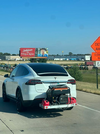
Downtown Charleston, South Carolina.

1681993089798.jpg

1681993088980.jpg

There are several commercial parking structures there that prohibit electric vehicls of ANY make and model, including Teslas.
 
Last edited:
I was asked if i wanted a new car. I said, "Nah."
One could argue that such a lazee fair attitude is similar to the other problem of what to do with these batteries when they have expired and how much earth it takes to move along with all the forest and wetland areas will be eliminated to mine the materials for all these new batteries. Also not a great solution. But I heard we were 90 seconds from midnight so it all may be moot anyway. :blink: :shock:

Think....

FB_IMG_1633989823911.jpg
 
We are looking at a new Kia Telluride. To my mind, the most important factor on a vehicle purchase is a warranty that lasts as long as the note.

We had a 2022 VW Tiguan during our recent trip and it wasn't a bad vehicle at all, but the third row and lack of occupant controllable rear HVAC was disappointing.
 

200w.gif
 
I was asked if i wanted a new car. I said, "Nah."

Think....

View attachment 92065

fb_img_1633989823911-jpg.92065


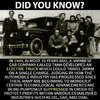
This is an urban legend.

First, the Tama truck was built in 1947, not 1949. The vehicle also had only a 4.5 horsepower motor and had a top speed of 21 mph, and lacked any other power-robbing features such as power steering or air conditioning.

Tama also made an electric car, also in 1947. The figures for the car publish a range of 65 Km (40 miles), not 200 Km (124 miles). The car used the same motor as the truck and had a top speed of only 22 mph. So, given the fact that it had the same motor and similar performance, it is absurd to think that the truck somehow achieved three times the range of the car.

Either way, it's not a logical comparison. It is only meaningful if you know the number and type of batteries in each system. It's a little like a dude in a dually pickup truck with two fuel tanks boasting that he can get better range than my Chevy Spark. But, my Chevy Spark only has a 9 gallon tank. How far will Mr. Pickup Truck get on 9 gallons! The same here. Without knowing exactly how many batteries (which were lead acid) and the total kwH capacity available, a 200 km range (even if it is true) is meaningless in isolation of other information.

Tama became part of Nissan. Here is Nissan's own description of the vehicle:


I'm not certain of the source of the 200 km claim. However, Tama made both gasoline and electric versions of their cars and trucks. It is possible that the 200 km range actually applies to one of the gasoline models, and not the electric variant. Tama did come out with a mid-sized passenger car in 1949. So, perhaps the 200 km range and the date of 1949 actually apply to this car, but someone assumed it must be talking about the electric truck, since that is the thing Tama is famous for producing and was their first prototype vehicle. That's just a personal theory; I'm not sure of that.
 
fb_img_1633989823911-jpg.92065


This is an urban legend.

First, the Tama truck was built in 1947, not 1949. The vehicle also had only a 4.5 horsepower motor and had a top speed of 21 mph, and lacked any other power-robbing features such as power steering or air conditioning.

Tama also made an electric car, also in 1947. The figures for the car publish a range of 65 Km (40 miles), not 200 Km (124 miles). The car used the same motor as the truck and had a top speed of only 22 mph. So, given the fact that it had the same motor and similar performance, it is absurd to think that the truck somehow achieved three times the range of the car.

Either way, it's not a logical comparison. It is only meaningful if you know the number and type of batteries in each system. It's a little like a dude in a dually pickup truck with two fuel tanks boasting that he can get better range than my Chevy Spark. But, my Chevy Spark only has a 9 gallon tank. How far will Mr. Pickup Truck get on 9 gallons! The same here. Without knowing exactly how many batteries (which were lead acid) and the total kwH capacity available, a 200 km range (even if it is true) is meaningless in isolation of other information.

Tama became part of Nissan. Here is Nissan's own description of the vehicle:


I'm not certain of the source of the 200 km claim. However, Tama made both gasoline and electric versions of their cars and trucks. It is possible that the 200 km range actually applies to one of the gasoline models, and not the electric variant. Tama did come out with a mid-sized passenger car in 1949. So, perhaps the 200 km range and the date of 1949 actually apply to this car, but someone assumed it must be talking about the electric truck, since that is the thing Tama is famous for producing and was their first prototype vehicle. That's just a personal theory; I'm not sure of that.

I thought it was interesting, nonetheless.
 

Yeah, because no-one ever ran out of fuel with a gas-powered car? This has become a specious argument that I keep hearing from people that want to cling to industrial revolution-era technology, but the charging times have come way down and most miles are driven within 25 miles of their home. Many people very happily and easily travel long distances with electric vehicles.
 
We are looking at a new Kia Telluride. To my mind, the most important factor on a vehicle purchase is a warranty that lasts as long as the note.

We had a 2022 VW Tiguan during our recent trip and it wasn't a bad vehicle at all, but the third row and lack of occupant controllable rear HVAC was disappointing.

Yeah, the warranty is a MAJOR consideration for me, too.
 
Yeah, because no-one ever ran out of fuel with a gas-powered car? This has become a specious argument that I keep hearing from people that want to cling to industrial revolution-era technology, but the charging times have come way down and most miles are driven within 25 miles of their home. Many people very happily and easily travel long distances with electric vehicles.

Yeah. They also discovered the cause of overheating and fires with lithium batteries. So, that will become another non-issue as the technology gets applied to that area.
 
Back
Top