Protecting your assets

DonP

Guest
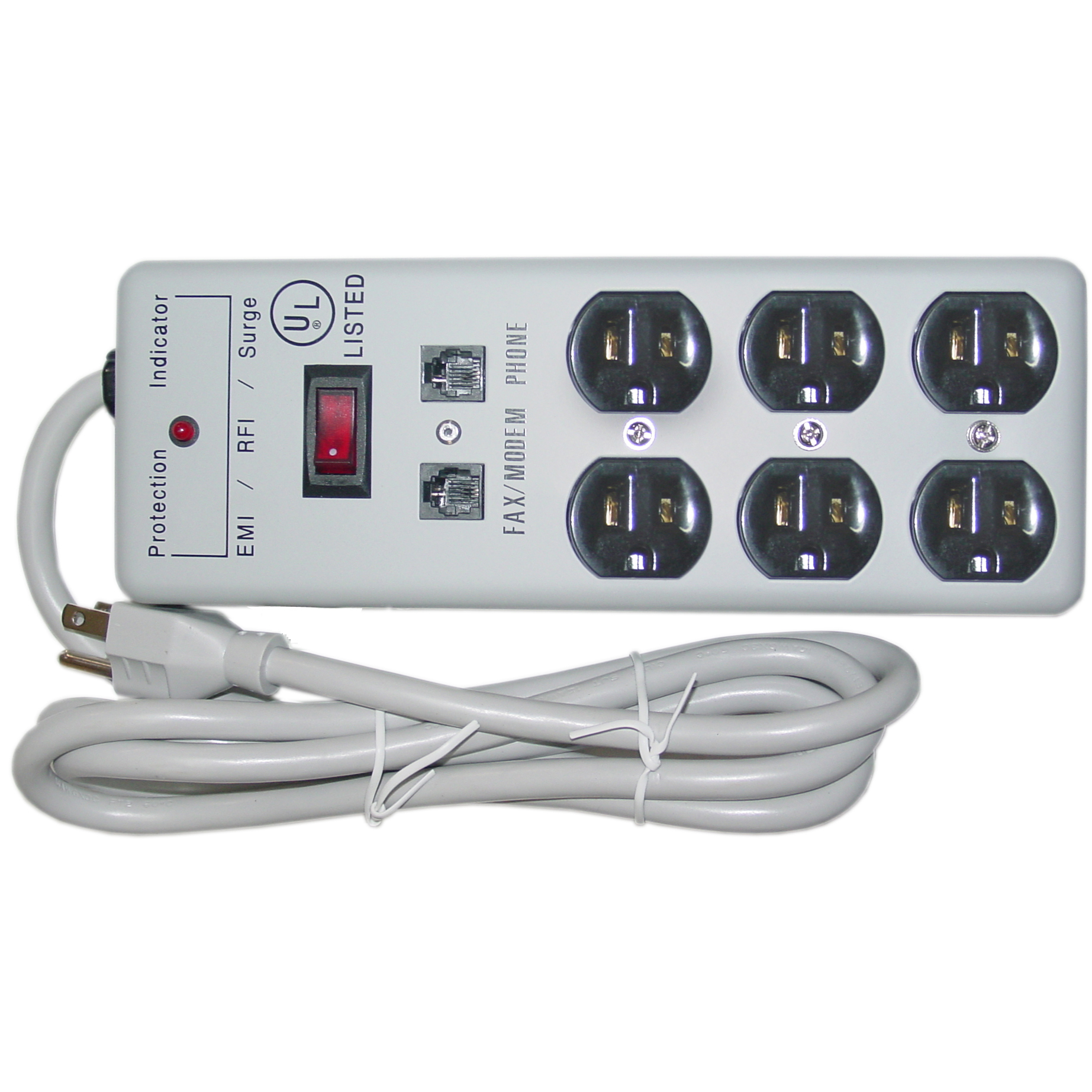
Thought I'd let you know one of the things I do to protect my gear - particularly away from home. I always use an extension cable with half a dozen sockets on the end, and every time I get a new one I open it up and put surge protection inside. This is serious protection too - the stage can take a lightning hit and you amp will be the one still working afterwards. You'll be safer too.

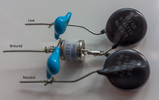
This is the device - nothing to it
anti_surge_captioned.png

It can go anywhere inside the socket strip, provided those three connections can be made. Obviously put tape around so nothing else can touch - I left that off so you can see better.

The main protection is the big black Metal Oxide Varistors. They are cheap, and there are plenty on Ebay. These are they

http://www.mouser.com/ds/2/315/awa0000ce2-33884.pdf

The two blue capacitors are special. They MUST carry a Y1 rating. That means that should they ever fail, they will never go short circuit.

These are ok here

DE1E3KX102MA5BA01 | Murata Ceramic Single Layer Capacitor 1nF 250 V ac ±20% E Dielectric DE1 Series Through Hole +125°C Max Op. Temp. | Murata

Finally the gas discharge tube in the middle. That is like a mega-high-speed fuse that catches the burst of lightning. There are many makers - this particular one is

https://www.onlinecomponents.com/world-products-wpgt2r2700b8l.html?p=12801409

Needless to say, don't attempt this if you don't know what you are doing. But if you are ok with it, it's worth a lot of peace of mind. I'm sure you can find your own local suppliers.
 
Being American I immediately thought of this................
hqdefault.jpg


But your thing works too
 
Thought I'd let you know one of the things I do to protect my gear - particularly away from home. I always use an extension cable with half a dozen sockets on the end, and every time I get a new one I open it up and put surge protection inside. This is serious protection too - the stage can take a lightning hit and you amp will be the one still working afterwards. You'll be safer too.

This is the device - nothing to it

View attachment 6096

It can go anywhere inside the socket strip, provided those three connections can be made. Obviously put tape around so nothing else can touch - I left that off so you can see better.

The main protection is the big black Metal Oxide Varistors. They are cheap, and there are plenty on Ebay. These are they

http://www.mouser.com/ds/2/315/awa0000ce2-33884.pdf

The two blue capacitors are special. They MUST carry a Y1 rating. That means that should they ever fail, they will never go short circuit.

These are ok here

DE1E3KX102MA5BA01 | Murata Ceramic Single Layer Capacitor 1nF 250 V ac ±20% E Dielectric DE1 Series Through Hole +125°C Max Op. Temp. | Murata

Finally the gas discharge tube in the middle. That is like a mega-high-speed fuse that catches the burst of lightning. There are many makers - this particular one is

https://www.onlinecomponents.com/world-products-wpgt2r2700b8l.html?p=12801409

Needless to say, don't attempt this if you don't know what you are doing. But if you are ok with it, it's worth a lot of peace of mind. I'm sure you can find your own local suppliers.

Smart fellow...
 
Sure. For simple protection you don't even really need the caps. They just help keep mains noise out. But if you want the caps, pretty much any value will do. Just don't go any higher than this, or you will start tripping the house circuit breakers. I would not go any lower on voltage rating - the safety margin is important.
 
Sure. For simple protection you don't even really need the caps. They just help keep mains noise out. But if you want the caps, pretty much any value will do. Just don't go any higher than this, or you will start tripping the house circuit breakers. I would not go any lower on voltage rating - the safety margin is important.
So no higher than .01uf and no lower than 250VAC?

Thanks
 
Doesnt this do the same thing?
9 things you should know about surge protectors

Power strips and surge protectors (also called surge suppressors) are different. Typically, power strips are cheap, multi-outlet products that are merely an expansion of a wall outlet. These usually have a circuit breaker of some sort, but most don't offer any real "protection" from electrical issues. Some might have the barest level of protection, but they're all pretty much just like plugging into the wall direct.

Surge protectors offer some level of protection against power spikes. How much and how well varies considerably. Surge protectors offer protection in amounts called joules. Think of this like a reservoir of protection. If a product has 1,000 joules of protection, that means it can take ten 100 joule hits, or one 1,000 joule hit. Generally, the more joules the better.

How do you know how many joules a protectors has left, or if the rating is even accurate? Well, you don't. The Wirecutter did a massive test on surge protectors, essentially blowing them up to see how well they worked, to see if they could answer this question.

While not offering much protection, a portable power strip might prevent marital friction, and/or invoke bliss from travel companions. Most hotels and hostels have few accessible outlets, yet everyone has multiple devices that need recharging. Most portable power strips add two to three additional outlets, plus offer direct USB charging (see number 7!).

Remember the joule rating we discussed earlier? Well, it means that over time, a surge protector is going to wear out. Some will give you a warning when they do. Many won't. If you know you've had a serious electrical event (like lighting blew out a transformer down the street), it's probably worth replacing your surge protector just in case.
 
Back
Top