
You are using an out of date browser. It may not display this or other websites correctly.
You should upgrade or use an alternative browser.
You should upgrade or use an alternative browser.
NG Project!
- Thread starter RVA
- Start date




OP

RVA
Ambassador
Yes it does. they were both listed as rosewood, but I think I got one of each based on color and grain. No complaints!Hey Ray...does one of the necks have an ebony fret board & the other rosewood? It looks like it from the photos.
;>)/
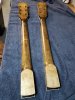


Looking good!


syscokid
Ambassador of War & Peace
I don't know...Thanks. I have been applying it very light with different cotton cloths. I did one coat 4 hours after the other and even sanded between coats. Recommended dry time is 2-4 hours. It seemed OK and I have read of other doing this. Do you think this is imprudent?

When I researched Tru Oil application, I chose a finishing schedule that allows only one coat per day. Also, the directions of the bottle of Tru Oil also states that it could take 24 hours per coat, depending on the conditions.
OP
RVA
Ambassador
Well, allow me to be the test run once again! I now realize tht it was "them", the colloective on the internet, that said 2-4 hours and that I did not read the instructions. It it has been fine after 4 hours of drying time when applying thin coats, with no clouding upon sanding. Also, since I will not be buffing to a gloss, I already get the sense that has more than enough coats at present. However, the bodies will not be here for another 7-10 days, so I will keep applying coats for another few days.I don't know...
When I researched Tru Oil application, I chose a finishing schedule that allows only one coat per day. Also, the directions of the bottle of Tru Oil also states that it could take 24 hours per coat, depending on the conditions.
Although I am told it takes 7 days to fully cure, I do not think this is necessary to slap it on a guitar and play it, but only if you want to buff it to a gloss.
Last edited:
syscokid
Ambassador of War & Peace
Be patient my Son...Although I am told it takes 7 days to fully cure, I do not think this is necessary to slap it on a guitar and play it, but only if you want to buff it to a gloss.
I think that oil takes longer to cure than nitro. Even though you are putting on thin coats, the more coats you put on - the longer the oil finish is going to need for curing. Proper curing is going to hold up better to the pressures being applied by all the hardware that you plan on mounting. Also, more resilient to your body funk, like sweat, oils, saliva, boogers...
OP
RVA
Ambassador
My playing is pretty funky!Be patient my Son...
I think that oil takes longer to cure than nitro. Even though you are putting on thin coats, the more coats you put on - the longer the oil finish is going to need for curing. Proper curing is going to hold up better to the pressures being applied by all the hardware that you plan on mounting. Also, more resilient to your body funk, like sweat, oils, saliva, boogers...
Very good advice. The necks will not go on for at least 10 days, so I will stop applying in another 2 days. Thanks
OP
RVA
Ambassador

The dude knows a lot about naphtha, except for how to spell it.
That, of course, doesn't invalidate his advice, but every time I read, "napthia" I felt like I got a speck of dust in my eye!
He also seems to have developed some creative capitalization rules!
That, of course, doesn't invalidate his advice, but every time I read, "napthia" I felt like I got a speck of dust in my eye!
He also seems to have developed some creative capitalization rules!




syscokid
Ambassador of War & Peace
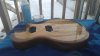
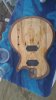
This is F'n awesome. I want to try this technique. I still have a little bit of Tru Oil left.
The builder is doing some fine thngs this weekend!!!
Did you apply the same technique here? Whatever you did here, looks excellent...


OP
RVA
Ambassador
I wish. I have not gotten either of these bodies yet. These are coming from Dolmage Designs. The man does some impressive workRay, how did you inlay that top? That looks fantastic.
OP
RVA
Ambassador
I want to also, at least for the last coat or 2, but is that a good idea for a neck? I usually scuff a poly finish to make it a bit faster, and the tru oil as it is now certainly does the trick. Do you think that this technique would make the feel "sticky" when sliding?This is F'n awesome. I want to try this technique. I still have a little bit of Tru Oil left.
Did you apply the same technique here? Whatever you did here, looks excellent...
syscokid
Ambassador of War & Peace
I have no idea. I was thinking of trying it with one of two guitars of mine that I have finished in Tru Oil already, but with a very thin and satin to semi-gloss sheen. But which one should I do? Or, start a new addition to the arsenal? ... UGH!!!!!!! Maybe I should just dump a big bucket of cold water over my head!Do you think that this technique would make the feel "sticky" when sliding?