So, I've been considering changing my tuners on my Stratocaster with locking tuners mostly from a desire to improve tuning stability with trem usage on the Strat.
I have been using the self-locking stringing method for several years on my guitars, whether or not they had a trem.
For review, the self-locking string method is described below:
Changing Guitar Strings Video | Winding Strings Around the Tuning Machine Heads
However, the return to pitch on my Strat trem has never been fantastic. It's been sort of okay, but nothing that gives me much confidence using it. So, I've generally avoided it. So, I began to wonder about the potential benefits of a set of locking tuners, and whether they would be better than the self-locking stringing method. I've always lubed the nut well with each string change, and the nut has never given any indication of binding, so I've not really suspected that.
Fortunately, Fender sells locking tuners that are a perfect drop-in for stock tuners.
Here's a shot of the tuners I got:
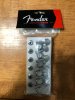
These were only $60.00 (well, $59.99...that one cent makes a huge difference, you know) from Sweetwater.
Here's a shot from the back, post installation:

And the front:

The result?
Well, after appropriate playing time and allowing the new strings to stretch in, initial results are very promising. I've been having much better return to pitch with reasonable vibrato use and even some mild dive bombing. I won't say the return to pitch is as good as my double-locking Floyd Rose, but I got this guitar new in 2006 and can definitely say it's never been as good with return to pitch as it is now. When I started using the self-locking method I did notice an improvement, but this is even better. Best of all, this is absolutely reversible.
So, whereas I do think the self-lock stringing method is perfectly fine for a non-vibrato guitar, my experience with this strongly suggests it isn't quite good enough for vibrato-equipped guitars. I did nothing new with this guitar when restringing it after I installed the new tuners. I lubed the nut, as I always have, but nothing besides the tuners is different.
I'm going to be looking into good locking tuners for the rest of my vibrato-equipped guitars, if I can find some that don't require modifying the headstock or drilling new holes.
I have been using the self-locking stringing method for several years on my guitars, whether or not they had a trem.
For review, the self-locking string method is described below:
Changing Guitar Strings Video | Winding Strings Around the Tuning Machine Heads
However, the return to pitch on my Strat trem has never been fantastic. It's been sort of okay, but nothing that gives me much confidence using it. So, I've generally avoided it. So, I began to wonder about the potential benefits of a set of locking tuners, and whether they would be better than the self-locking stringing method. I've always lubed the nut well with each string change, and the nut has never given any indication of binding, so I've not really suspected that.
Fortunately, Fender sells locking tuners that are a perfect drop-in for stock tuners.
Here's a shot of the tuners I got:
These were only $60.00 (well, $59.99...that one cent makes a huge difference, you know) from Sweetwater.
Here's a shot from the back, post installation:
And the front:
The result?
Well, after appropriate playing time and allowing the new strings to stretch in, initial results are very promising. I've been having much better return to pitch with reasonable vibrato use and even some mild dive bombing. I won't say the return to pitch is as good as my double-locking Floyd Rose, but I got this guitar new in 2006 and can definitely say it's never been as good with return to pitch as it is now. When I started using the self-locking method I did notice an improvement, but this is even better. Best of all, this is absolutely reversible.
So, whereas I do think the self-lock stringing method is perfectly fine for a non-vibrato guitar, my experience with this strongly suggests it isn't quite good enough for vibrato-equipped guitars. I did nothing new with this guitar when restringing it after I installed the new tuners. I lubed the nut, as I always have, but nothing besides the tuners is different.
I'm going to be looking into good locking tuners for the rest of my vibrato-equipped guitars, if I can find some that don't require modifying the headstock or drilling new holes.