Meet Our Producer's New Squier Stratocaster:

we are supposed to intonate these things??????????? (where can I buy a can of FIX A FLAT/INTONATE??)

good GAWD when will this end !?.... I have to buy strings....solder... intonate....... I dont want a second job man .... I just want to play guitar and relax ........

can't I just buy one that just f-ing works?
 
What are the odds of it sounding the same as everything else, I might throw a fiver on it if they're good.
An interesting exercise is to listen to your guitar run directly to a mixer, with no intervening processing, and just listen with headphones. It will let you hear what your guitar really sounds like without any coloration from an amp, pedals, or guitar speaker. This lets you hear the real difference between guitars like a Strat and a Les Paul. What may be surprising, when played completely dry and clean, is how similar they sound. Of course, you will hear a brighter, more trebly overtone to the Strat. It will also sound a little more percussive. The Les Paul is a bit warmer and louder. I am NOT saying they sound the same. But the differences are not as pronounced as one might imagine.

Where the differences start to get more noticeable is when the sound is pushed into overdrive in the amp.

A lot depends on the overall rig, not just the guitar.

When using my ‘73 Fender amp, while there is definitely a difference between a Strat and a humbucker-based guitar, like a Les Paul, it’s not a harsh or abrupt change.

In my little Marshall DSL, however, the difference between my Strat and Les Paul was more noticeable, especially when pushing into distortion territory. If I EQ’d the sound to be good with the Les Paul, the Strat was spiky and harsh. I ended up incorporating an EQ pedal to compensate - not to make it sound like a Les Paul, just to tame the spikiness.

When I got my Rivera amp, I had no idea what to expect. To my great satisfaction, the Strat is much less spiky and has enabled me to not have to use my EQ pedal every time I use the Strat. It is a much smoother sound. There is a tonal difference when switching between the Strat and Les Paul, but it is not as abrupt. I can enjoy the differences without feeling the need to re-EQ the amp.

The point being, the voicing of the amp and speaker has a lot to do with it. Some frequencies that come through with one amp/speaker setup may be somewhat filtered or attenuated merely by the component selection in the circuitry of another setup.

In Robert’s case, I’m sure the engineers will probably select and configure a VST to get them what they need to take advantage of whatever tonal characteristics - whether large or small - that the single-coil Strat will give them.
 
An interesting exercise is to listen to your guitar run directly to a mixer, with no intervening processing, and just listen with headphones. It will let you hear what your guitar really sounds like without any coloration from an amp, pedals, or guitar speaker. This lets you hear the real difference between guitars like a Strat and a Les Paul. What may be surprising, when played completely dry and clean, is how similar they sound. Of course, you will hear a brighter, more trebly overtone to the Strat. It will also sound a little more percussive. The Les Paul is a bit warmer and louder. I am NOT saying they sound the same. But the differences are not as pronounced as one might imagine.

Where the differences start to get more noticeable is when the sound is pushed into overdrive in the amp.

A lot depends on the overall rig, not just the guitar.

When using my ‘73 Fender amp, while there is definitely a difference between a Strat and a humbucker-based guitar, like a Les Paul, it’s not a harsh or abrupt change.

In my little Marshall DSL, however, the difference between my Strat and Les Paul was more noticeable, especially when pushing into distortion territory. If I EQ’d the sound to be good with the Les Paul, the Strat was spiky and harsh. I ended up incorporating an EQ pedal to compensate - not to make it sound like a Les Paul, just to tame the spikiness.

When I got my Rivera amp, I had no idea what to expect. To my great satisfaction, the Strat is much less spiky and has enabled me to not have to use my EQ pedal every time I use the Strat. It is a much smoother sound. There is a tonal difference when switching between the Strat and Les Paul, but it is not as abrupt. I can enjoy the differences without feeling the need to re-EQ the amp.

The point being, the voicing of the amp and speaker has a lot to do with it. Some frequencies that come through with one amp/speaker setup may be somewhat filtered or attenuated merely by the component selection in the circuitry of another setup.

In Robert’s case, I’m sure the engineers will probably select and configure a VST to get them what they need to take advantage of whatever tonal characteristics - whether large or small - that the single-coil Strat will give them.

What a long winded waste of your time. You missed my point completely.

On a record, in a full mix with no other references it's a whole different ball game. Like when somebody says listen to so and so's amazing Strat solo, not realising that on the record it's actually a session player using a Guild.
 
Like when somebody says listen to so and so's amazing Strat solo....

Speaking of Strat solo...at Ghost's March 3, 2022 performance in Anaheim, the lead guitarist - who is playing a visibly modded Stratocaster - ripped a blazing volley of notes to close the show at the end of 'Square Hammer.'

It had such an Yngwie flavor and tone (definitely position 4) yet had other elements that really made it an incredible experience.
 
What a long winded waste of your time. You missed my point completely.

On a record, in a full mix with no other references it's a whole different ball game. Like when somebody says listen to so and so's amazing Strat solo, not realising that on the record it's actually a session player using a Guild.

Perhaps I did miss your point.

I wasn’t attempting to argue against you.

I was introducing some personal observations and ideas which I intended to reinforce your comment, not debate it.

Obviously, I failed miserably!

So, I do apologize for not making myself clear and causing offense. I achieved precisely the opposite of my intention.

I’m sorry, Beagle.
 
I have no love for that thin, jangly Stratocaster/Telecaster tone.

It works only in one arena...IMHO

When paired with a humbucker, such as the Walsh/Felder ltrade-off icks in Hotel California.

But, I do acknowledge that our producer knows far more than I do and I'm eager to learn from this experience.
 
Perhaps I did miss your point.

I wasn’t attempting to argue against you.

I was introducing some personal observations and ideas which I intended to reinforce your comment, not debate it.

Obviously, I failed miserably!

So, I do apologize for not making myself clear and causing offense. I achieved precisely the opposite of my intention.

I’m sorry, Beagle.
I don't claim any special knowledge, but I've been recording electric guitars for over forty years, mainly without overdrive, pedals or effects except delay. It's amazing how alike and different they can sound depending how you use them.

I have no love for the tone most people here seem to chase, but clean humbuckers and single coils can sound really good.
 
I don't claim any special knowledge, but I've been recording electric guitars for over forty years, mainly without overdrive, pedals or effects except delay. It's amazing how alike and different they can sound depending how you use them.

I have no love for the tone most people here seem to chase, but clean humbuckers and single coils can sound really good.

Very much agreed.
 
What a long winded waste of your time. You missed my point completely.

On a record, in a full mix with no other references it's a whole different ball game. Like when somebody says listen to so and so's amazing Strat solo, not realising that on the record it's actually a session player using a Guild.
exactly--- prime example (just one of thousands)

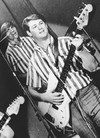
WHAT BEACH BOYS FANS SAW
1646497222449.png

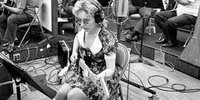
a DUDE.........what was on the record???
the session musician ........Carol Kaye ;)

1646497294888.png

How many people listened to the albums and went "man that BRIAN WILSON can play !!!" or insert any LIST of musicians who star/toured/played live .................. but that wasnt them on the album/tap/reel to reel/8 track etc etc

How many songs did Carol Kaye play on?


10,000 recordings

Carol Kaye (born March 24, 1935) is an American musician, known as one of the most prolific and widely heard bass guitarists, playing on an estimated 10,000 recordings in a career spanning over 50 years.Jul 28, 2018
https://www.radioswissjazz.ch/en/music-database/musician/61322251cbd87f585d0455bbbb3854b13db7d

Carol Kaye - Musician - Music database - Radio Swiss Jazz

https://www.radioswissjazz.ch/en/music-database/musician/61322251cbd87f585d0455bbbb3854b13db7d
session work 99.9% of it -- and the songs from the recordings were played live by others ....


The SWAMPERS in Muscle Shoals Al. are another PRIME example tons of hit recordings to their credit but they didnt tour with Aretha or any of the others....
 
Last edited:
Then you may ask what amp did the wrecking crew use on most of the hit recordings ??

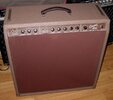
1959 Fender Concert amp 5G12 for bass and guitar.

I own serial # XXXX047 5G12 what makes it great is the Triad transformers and the warm mid range.

And the 1960 6G12 does sound different when Fender switched to Woodward-Schumacher transformers.

001 (3).JPG
 
Back
Top