What are the odds of it sounding the same as everything else, I might throw a fiver on it if they're good.
An interesting exercise is to listen to your guitar run directly to a mixer, with no intervening processing, and just listen with headphones. It will let you hear what your guitar really sounds like without any coloration from an amp, pedals, or guitar speaker. This lets you hear the real difference between guitars like a Strat and a Les Paul. What may be surprising, when played completely dry and clean, is how similar they sound. Of course, you will hear a brighter, more trebly overtone to the Strat. It will also sound a little more percussive. The Les Paul is a bit warmer and louder. I am NOT saying they sound the same. But the differences are not as pronounced as one might imagine.
Where the differences start to get more noticeable is when the sound is pushed into overdrive in the amp.
A lot depends on the overall rig, not just the guitar.
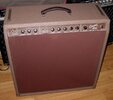
When using my ‘73 Fender amp, while there is definitely a difference between a Strat and a humbucker-based guitar, like a Les Paul, it’s not a harsh or abrupt change.
In my little Marshall DSL, however, the difference between my Strat and Les Paul was more noticeable, especially when pushing into distortion territory. If I EQ’d the sound to be good with the Les Paul, the Strat was spiky and harsh. I ended up incorporating an EQ pedal to compensate - not to make it sound like a Les Paul, just to tame the spikiness.
When I got my Rivera amp, I had no idea what to expect. To my great satisfaction, the Strat is much less spiky and has enabled me to not have to use my EQ pedal every time I use the Strat. It is a much smoother sound. There is a tonal difference when switching between the Strat and Les Paul, but it is not as abrupt. I can enjoy the differences without feeling the need to re-EQ the amp.
The point being, the voicing of the amp and speaker has a lot to do with it. Some frequencies that come through with one amp/speaker setup may be somewhat filtered or attenuated merely by the component selection in the circuitry of another setup.
In Robert’s case, I’m sure the engineers will probably select and configure a VST to get them what they need to take advantage of whatever tonal characteristics - whether large or small - that the single-coil Strat will give them.