OP


@STU - The first song on that clip is an original that we just finished. Here's the completed song:

I applaud your ability to stand strong in the face of the GAS Gods.I've tried them and they have merit. But, I've tried to perform with unfamiliar equipment (quite recently I tried a Mesa Fillmore) and I don't want anything with a learning curve, so I will probably stick with a hand-wired, re-issued (brand new) Marshall 100 watt Plexi.

It seems to me that when you plug a cable into it, that the amp makes the cable into an antenna for picking up every kind of interference around
Which would lead me to suspect an input jack grounding issue. (Very common type of problem with input jacks)
If it were mine, I'd pull the jack and reflow the solder.
Not that I'm any kind of amp tech, but that makes sense in my old brain.
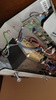
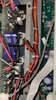
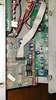
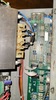

They are 8 pin DIP chips. They should have TL072 on them. Easy to remove if you have a solder sucker.Got a response from a guy on the Marshall 8200 forum with the same problem.
He sent this video and said: "I’ve repaired a few of these in the past. It’s an easy fix if you can use a soldering iron. The TL702 chips are pennies to buy...."
Can we find this device in these photos???
View attachment 81966View attachment 81967View attachment 81968View attachment 81969View attachment 81970
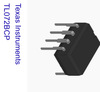
They are 8 pin DIP chips. They should have TL072 on them. Easy to remove if you have a solder sucker.
View attachment 81972
They are 8 pin DIP chips. They should have TL072 on them. Easy to remove if you have a solder sucker.
View attachment 81972
O-scope and a function generator along with the schematic. I have all 3.How does one isolate the bad one?
O-scope and a function generator along with the schematic. I have all 3.
Nah, but I did escape from Gilligan’s island once. :dood:You are like the genius professor.
Possible ESD damage.@Don O - The guy told me the usual culprit is 'IC1' on the "Preamp A.I. PCB" closest to the input jack...
Possible ESD damage.
ESD damage can occur years earlier and have a delayed failure, if it is indeed ESD damage.
