Guitar Frequencies:

Inspector #20

Ambassador of Tone
Fallen Star
Country flag
So, i thought this would be a cool thread, since I've never really paid any attention to what the actual frequencies (in Hz) are when EQ'ing with, let's say, a Boss GE7, just kinda split them into 3 catergories from left to right.

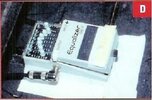
Here's a shot of Slash's GE-7 showing his settings.

YDkpR18.jpg

Clearly he's pulling down the low frequency and boosting the mids here, which is interesting to see in an image that allows me to "see" the changes in the tonal spectrum.

I've never changed my EQ's much at all over the years, but this new music project has me re-writing the book on everything.

Moving forward, with respect to a typical Marshall tone stack, does increasing volume tend to increase bass response, or not???

So, if i am going to increase the mids on my EQ's (both on the amp and on my GE-7) would it be beneficial to lower or raise any other frequencies when increasing the mids???

I'm just wanting to develop a better understanding of this beyond "bumping the middle sliders" and i appreciate your input on this topic.
 
Interesting trhead. I think there are many variables that effect on the EQ. As you said on Marshall tone stacks does increasing volume tend to increase bass response. But It depends in wich amp. JCM's does increasing volume increase bass response but JVM's not. They has a great master volume. Anyway tone is subjective. I changed my EQ's because different guitars or speakers.
 
So, i thought this would be a cool thread, since I've never really paid any attention to what the actual frequencies (in Hz) are when EQ'ing with, let's say, a Boss GE7, just kinda split them into 3 catergories from left to right.

Here's a shot of Slash's GE-7 showing his settings.

View attachment 92679

Clearly he's pulling down the low frequency and boosting the mids here, which is interesting to see in an image that allows me to "see" the changes in the tonal spectrum.

I've never changed my EQ's much at all over the years, but this new music project has me re-writing the book on everything.

Moving forward, with respect to a typical Marshall tone stack, does increasing volume tend to increase bass response, or not???

So, if i am going to increase the mids on my EQ's (both on the amp and on my GE-7) would it be beneficial to lower or raise any other frequencies when increasing the mids???

I'm just wanting to develop a better understanding of this beyond "bumping the middle sliders" and i appreciate your input on this topic.

That pic is very similar to how my EQ on my board is set up. Well, mine is a 10-band, but the general EQ is very similar.

In my digital rigs, I set my EQ (either parametric or graphic) similarly.

I will often pull higher frequencies down. They tend to add high frequency noise.

Also, learn to practice "subtractive" EQ-ing. Too much bass response can tend to make the sound a little muddy, especially when you consider that you already have a bass guitar in the mix. Before boosting mids, try bringing lower freqs down first.
 
Do you know if he uses it out front or through the loop of his amps? Those Slash sig amps have a loop, and the effect of the EQ will be really different depending. But...from the look of it he's using it as a solo boost to me. One thing I learned about running a JCM at high volume is it will turn to mud quick if you don't back off the bass when you slam the front end using the high sensitivity input.
 
Do you know if he uses it out front or through the loop of his amps? Those Slash sig amps have a loop, and the effect of the EQ will be really different depending. But...from the look of it he's using it as a solo boost to me. One thing I learned about running a JCM at high volume is it will turn to mud quick if you don't back off the bass when you slam the front end using the high sensitivity input.

Good question. There's an entire group in France dedicated to interviewing and knowing his settings and they claim the EQ is up front.

I'm not trying to cop his settings, just posting as an example.
 
Last edited:
Do you know if he uses it out front or through the loop of his amps? Those Slash sig amps have a loop, and the effect of the EQ will be really different depending. But...from the look of it he's using it as a solo boost to me. One thing I learned about running a JCM at high volume is it will turn to mud quick if you don't back off the bass when you slam the front end using the high sensitivity input.

^^^^^ This...
 
Interesting trhead. I think there are many variables that effect on the EQ. As you said on Marshall tone stacks does increasing volume tend to increase bass response. But It depends in wich amp. JCM's does increasing volume increase bass response but JVM's not. They has a great master volume. Anyway tone is subjective. I changed my EQ's because different guitars or speakers.
It's interesting how much he pulls down the ends of the tone spectrum.
 
That is pic is very similar to how my EQ on my board is set up. Well, mine is a 10-band, but the general EQ is very similar.

In my digital rigs, I set my EQ (either parametric or graphic) similarly.

I will often pull higher frequencies down. They tend to add high frequency noise.

Also, learn to practice "subtractive" EQ-ing. Too much bass response can tend to make the sound a little muddy, especially when you consider that you already have a bass guitar in the mix. Before boosting mids, try bringing lower freqs down first.

That's kinda my approach at present and I appreciate your sharing this.

I've got a few changes that I am currently making:

I switched out the 50 watt, @syscokid Hot-Rodded Origin 50 for the 1993 Valvestate Bi-Chorus 200

I switched from running one amp output to each of the 16Ω speakers, to flipping the cabinet switch to 'Mono' and running only one cable, which gives me 7.5Ω (actual reading at the end of the speaker cable)

I'm pickup up an amp/cabinet stand to bring the cabinet up off the floor, largely so I can hear it better.

Eliminating the Lehle Amp Switching Pedal from the board for a little more space.

Doing a complete re-EQ'ing of the rig in a rehearsal studio to verify my changes are going in the right direction.
 
It's interesting how much he pulls down the ends of the tone spectrum.

Not surprising though if you are using it as a solo boost. You don't want the low end competing with the bass player or getting flubby, and you want to keep the high end from getting squealy or harsh.

Also, I'm going to assume that's a modded GE-7? They are awfully noisy stock.
 
Not surprising though if you are using it as a solo boost. You don't want the low end competing with the bass player or getting flubby, and you want to keep the high end from getting squealy or harsh.

Also, I'm going to assume that's a modded GE-7? They are awfully noisy stock.
Both my GE-7's have the Monte Allums Mods. They are both super quiet.

My primary GE-7 is in the front of the amp and is used for color.

GE-7 #2 is EQ'd flat and is in the loop. It is used only as a solo boost, so I don't have to worry about the volume pedal. I just step on the EQ, and step off to return to previous volume level.
 
Not surprising though if you are using it as a solo boost. You don't want the low end competing with the bass player or getting flubby, and you want to keep the high end from getting squealy or harsh.

Also, I'm going to assume that's a modded GE-7? They are awfully noisy stock.
In his case, what amp? The Jubilees he used to use have plenty of lows and low mids.

I just set by ear. I really like the Parametric I got as I only have 3 bands but I get to pick what frequency. Also I have one on each patch of my G3 multi to use however needed. All in the loop, amp dependent.
 
Made some major improvements tonight.

I rolled the gain off quite a bit - on the amp - down to around halfway...then pulled a good deal of bass and treble...

20230509_205824.jpg

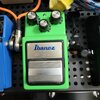
I then added the TS-9 on the gain channel and adjusted it for maximum tightness.

20230509_205750.jpg

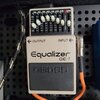
Next, i kinda created a "frown" on the primary GE-7.

20230509_205757.jpg

The result was just a much "cleaner" (read: tighter) tone overall.

A step in the right direction.
 
In his case, what amp? The Jubilees he used to use have plenty of lows and low mids.

I just set by ear. I really like the Parametric I got as I only have 3 bands but I get to pick what frequency. Also I have one on each patch of my G3 multi to use however needed. All in the loop, amp dependent.

Good question. Seems he uses a mix of Jubes and his Signature heads. Either way, they are hotrodded JCMs so yeah, plenty of low end.

I wouldn't mind a parametric, they are so powerful. And I figure ya gotta set everything by ear, but dangit if the old "everything at 7" rule doesn't seem to work every time with a JCM.
 
Made some major improvements tonight.

I rolled the gain off quite a bit - on the amp - down to around halfway...

Usually the best thing you can do for your tone on any amp. High-school-kid-wanking-at-the-Guitar-Center levels of gain are fun when you're alone in your underwear but don't translate well to playing in a band setting.
 
Usually the best thing you can do for your tone on any amp. High-school-kid-wanking-at-the-Guitar-Center levels of gain are fun when you're alone in your underwear but don't translate well to playing in a band setting.

Funny thing, i now have more gain overall, but its more manageable. The gain levels are pretty high in both Halford and Fight numbers.
 
Funny thing, i now have more gain overall, but its more manageable. The gain levels are pretty high in both Halford and Fight numbers.

Yeah, less compression makes it sound angrier somehow but you get more dynamics so its easier to modulate what's going on.
Took me a long time to figure this trick out. I used to dime the gain the my 800 and hit it with a TS-9, and it would get real wooly sometimes. When I backed off the gain everything changed and it actually sounded bigger and nastier than with the gain all the way up. Nowadays, I don't have the gain past 10 or 11 on any of my amps.
 
Most players are stuck on wattage (because of years of marketing) and that's really not it at all. It's much more to do with speaker efficiency, measured in SPL.

Here are some examples of speaker SPL versus amp wattage. This is an old published test from Eminence, but it's factual. Test speakers in this case were two Eminence Texas Heat speakers rated at 100dB @ 1 watt.

Fist off, remember that when ANY two matching SPL speakers are combined, you add +3dB SPL. (Guys will argue this. More on this point later)

5 watt amp:

1W=103dB
2W=106dB
4W=109dB
5W=109.3dB.

20 watt amp:

1W=103dB
2W=106dB
4W=109dB
8W=112dB
16W=115dB
20W=115.4dB.

50 watt amp:

1W=103dB
2W=106dB
4W=109dB
8W=112dB
16W=115dB
32W=118dB
50W=119.3dB.

100 watt amp:

1W=103dB
2W=106dB
4W=109dB
8W=112dB
16W=115dB
32W=118dB
64W=121dB
100W=122.3dB.

So, don't think you can't do a large show with a 20 watt amp? You can if you are using speaker rated at 102 to 109dB SPL.

20 watt amp with 412 cab using speakers rated at 109dB:

1W=109dB
2W=112dB
4W=115dB
8W=118dB
16W=121dB
20W=121.4dB.

Here's how loud a 20 watt amp is with a full stack. Speakers used, Eminence Wizards (G12H30 clones) rated at +103dB.

One speaker=103dB
Two speakers=106dB
Four speakers=109dB

Two cabs=112dB

Okay, with one watt, we are at a point that the cab is already very loud.

20 watt amp with full stack @ 112dB SPL @ 1W:

1W=112dB
2W=115dB
4W=118dB
8W=121dB
16W=124dB
20W=Just under 125dB.

You are correct in assuming a 3dB increase from coupling when you double the amount of speakers used. I also take issue with the guys saying that the math doesn't work out to a 3dB increase in SPL once you consider the speakers are sharing the power. For example, you start with a 1 watt amp on one 103dB speaker....that's 103dB at 1 meter. Then you add another 103dB speaker, but you're splitting the 1 watt of power....the math tells me that the 1/2 watt decrease in power to each speaker should negate the gain from coupling. BUT....what you actually have to consider is the system SPL and power. When you had one speaker it was 1 watt to a 103dB system. With two speakers, it's still 1 watt from the amp (we are assuming that it didn't change with impedance), but now it's to a 106dB system.

Speakers, however, generally all seem to reach a plateau around 100db SPL:

  • Eminence Wizard – 102.8 dB.
  • Eminence The Governor – 102.3 dB.
  • Eminence Hempdog – 102.3 dB.
  • Eminence CV-75 – 102.2 dB.
  • Eminence Swamp Thang – 102 dB.
  • Eminence Cannabis Rex – 101.8 dB.
  • Eminence Man O War – 101.6 dB.
  • Eminence Tonker – 101.5 dB.
Here's a calculator for figuring out SPL:


And here's how loud a 20 watt amp is with a full stack. Speakers used, Eminence Wizards (G12H30 clones) rated at +103dB.

One speaker=103dB
Two speakers=106dB
Four speakers=109dB

Two cabs=112dB

Okay, with one watt, we are at a point that the cab is already very loud.

20 watt amp with full stack @ 112dB SPL @ 1W:

1W=112dB
2W=115dB
4W=118dB
8W=121dB
16W=124dB
20W=Just under 125dB.

Just remember this. I can take that 20 watt amp and hook it up to a high efficiency 412 cab and it can hit a max SPL of 121dB. I am now as loud as a 100 watt amp with 212's.

So, in the case of your 50 Watt Origin, you (and your tech) noticed the amp was louder after the HeadFirst and Ivanberg added gain stage mods. That's likely from making the tone stack more efficient. The Celestion Copperback 250's are rated at 100db SPL, which isn't bad at all. Let's see how they stack up:

50 watt amp with (1) Celestion Copperback 250 rated at 100db SPL:

1W=103dB
2W=106dB
4W=109dB
8W=112dB
16W=115dB
32W=118dB
50W=119.3dB.

Now, let's combine the two Celstion Copperback 250s in your 2x12 cabinet and add +3db SPL for the second speaker:

1W=106dB
2W=109dB
4W=112dB
8W=115dB
16W=118dB
32W=121dB
50W=122.3dB.

Taking all things into consideration, you really couldn't improve upon your current setup within your space/transportation constraints, and even going up to high SPL speakers wouldn't be an appreciable increase over the 100db SPL Copperback 250s.

Even the EVM12L measures a true 103dB at 1kHz, the JBL K120 does too, but a pair of them weighs 40 pounds, and a PAIR of Copperbacks weighs only 10 pounds!

In your case, this is a very well thought out rig, lightweight, portable and plenty of power.

Technical Support
www.tonespeak.com | www.miscospeakers.com

@Don O

@smitty_p
 
Last edited:
Back
Top