Fixing Broken USA 1989 STRAT Neck Truss Rod

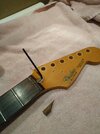
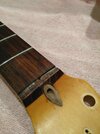
I just glued in the 2 chips of rosewood that broke off behind the nut just above the hole the walnut plug goes in. This area got damaged when I had to drill out the plug before extracting the old rod.

Once the glue dries I will sand the rosewood repair smooth and hope for nearly invisible,. Then that will leave me with shaping and gluing in the plug, installing a new nut, reinstalling the tuners, string trees and reattaching the neck for strings and neck adjustment.

Good work!
 
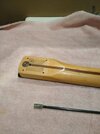
This pic is nut removed, 2 rosewood chips glued in and old T Rod with coupler nut attached to drive the new rod into place.
IMG952017122395213128.jpg
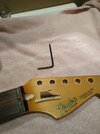
This is the headstock, old nut, and new Walnut plug shaped with my Dremel and a cylinder sanding attachment bit

IMG952017122395213259.jpg

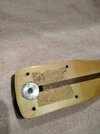
This is 1/8 inch Allen wrenches in new T nut before plug inserted.

IMG952017122395213222.jpg

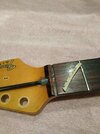
This is shaped plug test fit in place before sanding and gluing in

IMG952017122395213435001.jpg
 
Last edited:
Next is 1/8 inch Allen wrenches in new T nut before plug inserted. Then next pic is shaped plug test fit in place before sanding and gluing in
Then pic of headstock, old nut, and new Walnut plug shaped with my Dremel and a cylinder sanding attachment bit
First pic is nut removed, 2 rosewood chips glued in and old T Rod with coupler nut attached to drive the new rod into place.
I edited all the info in
 
I shaped the plug with the nut adjusted just a little snugged up till I felt a little pressure on the neck. Not cranked uber tight if you follow me.

I am trying to think logically on how Fender goes about setting up the necks before gluing in the plug. As a Biflex rod that takes a dip out when the nut is tightened and conversely takes the hump out if nut is backed off against the plug, I want to leave enough adjustment room with the plug depth fairly precisely set.

I am debating on how critical it is to get the neck really straight with nut adjusted to achieve this ( with or without help from clamps or string tension etc.) and then glue in the plug.

To err on the safe side, I could try stringing it up prior to gluing in the plug to see how much the strings pull the neck into a curve. Then try clamping the neck a hair past straight and then adjust the nut.

Ideas?
 
Oh no Robert, they come pre drilled.

My basic question I am working at is, basically a length of ROD (including NUT) when tightened adequately enough to make the neck straight even when under string tension, but simultaneously having enough length in the neck hole where the nut could then be backed out far enough to press against the inner non contoured edge of the plug. This outward loosening of the nut is what makes a bi flex rod a bi flex rod. Loosening will take a humped curvature out whereas Single flex rods only can straighten a concave dipped neck.

So, I want to make the plug fit perfectly to make sure I am not too far in or too far out when I glue it.

I do have a 2nd plug, if I determine the 1st was trimmed too short or something.
 
OK, I finally got my Strat NECK feeling like a Strat Guitar again. I put my tuners and string trees back on and then mounted the neck to the body. The next job in line is to sand the glued in chip parts behind the nut slot, and then install nut and then get the neck adjusted dead flat and then string it up to see how much string tension pulls a bow in it.
 
Saturday, I sanded my behind the nut repair of the rosewood just above the wood plug hole and reinserted the strings nut.

Restrung the guitar with EBall 10's and found out I had to adjust the micro tilt to set the neck nicely for the strings to be perfect.
After that I had to clamp the neck to take the bow out and tighten the truss rod nut to hold the neck straight again when I released the clamp and set the strings to pitch.


**** As a side note
I left the walnut plug unglued and uninstalled to see if the neck makes any odd movements after strings are on it awhile before I decide all is perfect before I give it 2 thumbs up to do the final gluing and sanding. As it is now, I can take the concave ( dip) type bow out.

Needless to say when I got it plugged in to my Red Knob Twin amp, it sounds AMAZING. MY old friend is now back to make music as it should.
 
Saturday, I sanded my behind the nut repair of the rosewood just above the wood plug hole and reinserted the strings nut.

Restrung the guitar with EBall 10's and found out I had to adjust the micro tilt to set the neck nicely for the strings to be perfect.
After that I had to clamp the neck to take the bow out and tighten the truss rod nut to hold the neck straight again when I released the clamp and set the strings to pitch.


**** As a side note
I left the walnut plug unglued and uninstalled to see if the neck makes any odd movements after strings are on it awhile before I decide all is perfect before I give it 2 thumbs up to do the final gluing and sanding. As it is now, I can take the concave ( dip) type bow out.

Needless to say when I got it plugged in to my Red Knob Twin amp, it sounds AMAZING. MY old friend is now back to make music as it should.

Awesome work!!!!
 
Back
Top