
You are using an out of date browser. It may not display this or other websites correctly.
You should upgrade or use an alternative browser.
You should upgrade or use an alternative browser.
First Time Pedalboard Size Advice:
- Thread starter Inspector #20
- Start date

Bocc69
Ambassador of Metal Health

The Waza ones rule, I want more of them. It's not some marketing hyperbole, they really do have lower noise and a clearer output from the improved buffer. Plus they all have a second mode that the originals didn't. The Custom mode on the Blues Driver turns it into a very neutral sounding clean boost, or if you turn up the gain it's bordering on distortion territory, lots more dirt than the regular mode. Custom mode on the delay is much brighter and tighter sounding, with more delay time. It gets close to a digital delay but still has the texture and organic detail that bucket brigade delays have.
The blues driver is what I'm after. I used one at an open mic and really liked it. I've been looking to buy, and then noticed the waza. Kind of threw a wrench in my plans to buy a used std. So, it's $65-$70 on Ebay for a used original, or $159 for a new Waza at Sweetwater. What to do!!?
OP

?????doesnt Sp8ctre have one for sale?

eSGEe
Ferengi Ambassador of Trade
OP
Ok, after a lot of deliberation, I decided on an aluminum board. This particular one is a DB-3 made by Donner and it's very well made. It's all TiG welded aluminum construction and finished in a textured enamel. All the welds are very cosmetic and the welds are ground down in areas to maintain a flat surface. The board is made from heavy wall, square aluminum tubing, with flats strips added for a mounting surface. The board has rubber feet and measures 20" x 11" x 3.5" in height at the front.
I looked at a lot of boards and while some were made better than others, the more expensive boards seemed to lack attention to detail. I first saw one of these DB-3's that a music colleague had and I was impressed with the build. I asked where he got it and he replied, "Amazon...70 bucks with a carry bag."
So, having tried running my effects via the '4 cable method,' and many other suggested combinations, I found that none of these methods worked very well...and some methods did not work at all. The same can be said for the actual order of the pedals.
For example, if I place delay after chorus, the effect of the delay is diminished to the extent the delay really cannot be used. It is - as if - the chorus simply nullifies the delay's effect. Putting the delay before the chorus - whether right or wrong - worked.
My approach was to build the circuits based on placing the heavy, all-metal FV30L well-balanced and in the relative center of the board.
The super-heavy and all-metal Dunlop GCB-95 (NOS Vintage) is only used on 'Mr. Brownstone' and 'Watchtower,' neither of which we do that often. These pedals are also not a true-bypass pedal, so there is an advantage to not having them running all the time. At 3.8 pounds, it would also make the board rather lopsided and require a much larger board.
Having rubber feet, and being about the same height as the pedal-board itself, it made sense to me to simply set it on the floor next to the board if our set list happened to include those two aforementioned tunes.
The signal path basically runs from right to left across the board. The pedal order is based on the order used for last Saturday's audition and rehearsal. It works.
PEDAL ORDER AT FRONT OF AMP:
1. Dunlop GCB-95 Wah (Only Connected If Needed Based On Set List)
2. Korg Pitchblack Stage Tuner (Mutes When Tuning Function Is Selected - Extra Bright/Large LED Easily Read From Standing Position)
3. Ibanez TS-9 Tube Screamer (Clean Boost Only)
4. Boss GE-7 EQ
5. Boss CS-3 Compressor
6. Boss NS-2 Noise Gate
PEDAL ORDER AT AMP FX LOOP:
1. Boss FV30L Unpowered Volume Pedal
2. Boss DD-3 Digital Delay
3. Boss CE-5 Chorus
Basicially, I run these pedals 24/7 and the combination of these pedals was a key component of getting the tone I was after. Delay is dialed up to be subtle and you really only hear it during a double stop, so it doesn't make the signal muddy.
In the interest of logical placement, and economy of movement, combined with ease of access, I took into consideration that only (3) effects are ever manipulated once a performance begins.
1. Volume Pedal
2. Tuner
3. Delay (sometimes switched off for heavy palm mutes)
Everything else is running 24/7. You will note that clear paths were provided to the aforementioned pedals.
Currently, I have done nothing but just place the pedals on the board as a mock-up, but I have already worked out a number of details from past performances/rehearsals:
1. The FX Loop cables are 90° at the board and straight where they enter the back of the amplifier.
2. A 90° cable at the Les Paul is much cleaner and neater than a straight cable
3. A 90° cable at the front of the amp is less likely to get pulled out when walking by the amp
4. A straight cable (when used, as some venues you just can't get wireless to run right) is easier to roll and keep untangled when moving about.
5. Black and Tweed cables are used to differentiate between FX Loop and Amp Front
I've attached a couple of photos of the mock-up board with notes attached:
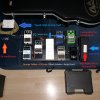
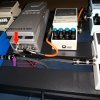
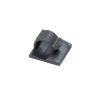
The One Spot has produced zero noise when powering all the pedals shown here and when connected in this arrangement. The daisy chain will be attached to both top and bottom of the board with the adhesive black cable clips:
Another advantage to this pedal arrangement is that all cables exit the left side of the board and can be routed under a single cable ramp, or secured with gaffer's tape.
Maybe tonight I will be able to apply the Velcro and make things 'official,' so to speak...just in time for Saturday's 8 hour rehearsal...
Time for bed now....
I looked at a lot of boards and while some were made better than others, the more expensive boards seemed to lack attention to detail. I first saw one of these DB-3's that a music colleague had and I was impressed with the build. I asked where he got it and he replied, "Amazon...70 bucks with a carry bag."
So, having tried running my effects via the '4 cable method,' and many other suggested combinations, I found that none of these methods worked very well...and some methods did not work at all. The same can be said for the actual order of the pedals.
For example, if I place delay after chorus, the effect of the delay is diminished to the extent the delay really cannot be used. It is - as if - the chorus simply nullifies the delay's effect. Putting the delay before the chorus - whether right or wrong - worked.
My approach was to build the circuits based on placing the heavy, all-metal FV30L well-balanced and in the relative center of the board.
The super-heavy and all-metal Dunlop GCB-95 (NOS Vintage) is only used on 'Mr. Brownstone' and 'Watchtower,' neither of which we do that often. These pedals are also not a true-bypass pedal, so there is an advantage to not having them running all the time. At 3.8 pounds, it would also make the board rather lopsided and require a much larger board.
Having rubber feet, and being about the same height as the pedal-board itself, it made sense to me to simply set it on the floor next to the board if our set list happened to include those two aforementioned tunes.
The signal path basically runs from right to left across the board. The pedal order is based on the order used for last Saturday's audition and rehearsal. It works.
PEDAL ORDER AT FRONT OF AMP:
1. Dunlop GCB-95 Wah (Only Connected If Needed Based On Set List)
2. Korg Pitchblack Stage Tuner (Mutes When Tuning Function Is Selected - Extra Bright/Large LED Easily Read From Standing Position)
3. Ibanez TS-9 Tube Screamer (Clean Boost Only)
4. Boss GE-7 EQ
5. Boss CS-3 Compressor
6. Boss NS-2 Noise Gate
PEDAL ORDER AT AMP FX LOOP:
1. Boss FV30L Unpowered Volume Pedal
2. Boss DD-3 Digital Delay
3. Boss CE-5 Chorus
Basicially, I run these pedals 24/7 and the combination of these pedals was a key component of getting the tone I was after. Delay is dialed up to be subtle and you really only hear it during a double stop, so it doesn't make the signal muddy.
In the interest of logical placement, and economy of movement, combined with ease of access, I took into consideration that only (3) effects are ever manipulated once a performance begins.
1. Volume Pedal
2. Tuner
3. Delay (sometimes switched off for heavy palm mutes)
Everything else is running 24/7. You will note that clear paths were provided to the aforementioned pedals.
Currently, I have done nothing but just place the pedals on the board as a mock-up, but I have already worked out a number of details from past performances/rehearsals:
1. The FX Loop cables are 90° at the board and straight where they enter the back of the amplifier.
2. A 90° cable at the Les Paul is much cleaner and neater than a straight cable
3. A 90° cable at the front of the amp is less likely to get pulled out when walking by the amp
4. A straight cable (when used, as some venues you just can't get wireless to run right) is easier to roll and keep untangled when moving about.
5. Black and Tweed cables are used to differentiate between FX Loop and Amp Front
I've attached a couple of photos of the mock-up board with notes attached:
The One Spot has produced zero noise when powering all the pedals shown here and when connected in this arrangement. The daisy chain will be attached to both top and bottom of the board with the adhesive black cable clips:
Another advantage to this pedal arrangement is that all cables exit the left side of the board and can be routed under a single cable ramp, or secured with gaffer's tape.
Maybe tonight I will be able to apply the Velcro and make things 'official,' so to speak...just in time for Saturday's 8 hour rehearsal...
Time for bed now....

Tony M.
Ambassador
Looks good to me. No bigger than it has to be.
1- Excellent idea to only bring the wah when it is needed.
2- May I suggest putting the compressor before the dirt pedal?
3- If you move all the pedals closer to the sides of the board you
will have more room to manipulate the volume pedal with your foot.
1- Excellent idea to only bring the wah when it is needed.
2- May I suggest putting the compressor before the dirt pedal?
3- If you move all the pedals closer to the sides of the board you
will have more room to manipulate the volume pedal with your foot.
OP
Looks good to me. No bigger than it has to be.
1- Excellent idea to only bring the wah when it is needed.
2- May I suggest putting the compressor before the dirt pedal?
3- If you move all the pedals closer to the sides of the board you
will have more room to manipulate the volume pedal with your foot.
Hey, Tony...I can try the Compressor first as you suggested...I cant recall if I tried that order first or not...but I do recall some pedals becomming 'ineffective' when I changed the order.
This morning I also shifted the DD-3 back a little and I potentially have room for one more pedal at the front of the amp.

Hey, Tony...I can try the Compressor first as you suggested...I cant recall if I tried that order first or not...but I do recall some pedals becomming 'ineffective' when I changed the order.
This morning I also shifted the DD-3 back a little and I potentially have room for one more pedal at the front of the amp.
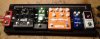
One thing I’d suggest as you figure out the size of the board is not to pack the pedals too tightly together.
You want to leave enough space so that you can tap the pedal quickly without having to aim your foot too carefully. Depending on how much you plan to use the pedals, you don’t want to have them so close that you risk hitting one as you reach for another.

gball
Ambassador of Boogie
Ok, after a lot of deliberation, I decided on an aluminum board. This particular one is a DB-3 made by Donner and it's very well made. It's all TiG welded aluminum construction and finished in a textured enamel. All the welds are very cosmetic and the welds are ground down in areas to maintain a flat surface. The board is made from heavy wall, square aluminum tubing, with flats strips added for a mounting surface. The board has rubber feet and measures 20" x 11" x 3.5" in height at the front.
I looked at a lot of boards and while some were made better than others, the more expensive boards seemed to lack attention to detail. I first saw one of these DB-3's that a music colleague had and I was impressed with the build. I asked where he got it and he replied, "Amazon...70 bucks with a carry bag."
So, having tried running my effects via the '4 cable method,' and many other suggested combinations, I found that none of these methods worked very well...and some methods did not work at all. The same can be said for the actual order of the pedals.
For example, if I place delay after chorus, the effect of the delay is diminished to the extent the delay really cannot be used. It is - as if - the chorus simply nullifies the delay's effect. Putting the delay before the chorus - whether right or wrong - worked.
My approach was to build the circuits based on placing the heavy, all-metal FV30L well-balanced and in the relative center of the board.
The super-heavy and all-metal Dunlop GCB-95 (NOS Vintage) is only used on 'Mr. Brownstone' and 'Watchtower,' neither of which we do that often. These pedals are also not a true-bypass pedal, so there is an advantage to not having them running all the time. At 3.8 pounds, it would also make the board rather lopsided and require a much larger board.
Having rubber feet, and being about the same height as the pedal-board itself, it made sense to me to simply set it on the floor next to the board if our set list happened to include those two aforementioned tunes.
The signal path basically runs from right to left across the board. The pedal order is based on the order used for last Saturday's audition and rehearsal. It works.
PEDAL ORDER AT FRONT OF AMP:
1. Dunlop GCB-95 Wah (Only Connected If Needed Based On Set List)
2. Korg Pitchblack Stage Tuner (Mutes When Tuning Function Is Selected - Extra Bright/Large LED Easily Read From Standing Position)
3. Ibanez TS-9 Tube Screamer (Clean Boost Only)
4. Boss GE-7 EQ
5. Boss CS-3 Compressor
6. Boss NS-2 Noise Gate
PEDAL ORDER AT AMP FX LOOP:
1. Boss FV30L Unpowered Volume Pedal
2. Boss DD-3 Digital Delay
3. Boss CE-5 Chorus
Basicially, I run these pedals 24/7 and the combination of these pedals was a key component of getting the tone I was after. Delay is dialed up to be subtle and you really only hear it during a double stop, so it doesn't make the signal muddy.
In the interest of logical placement, and economy of movement, combined with ease of access, I took into consideration that only (3) effects are ever manipulated once a performance begins.
1. Volume Pedal
2. Tuner
3. Delay (sometimes switched off for heavy palm mutes)
Everything else is running 24/7. You will note that clear paths were provided to the aforementioned pedals.
Currently, I have done nothing but just place the pedals on the board as a mock-up, but I have already worked out a number of details from past performances/rehearsals:
1. The FX Loop cables are 90° at the board and straight where they enter the back of the amplifier.
2. A 90° cable at the Les Paul is much cleaner and neater than a straight cable
3. A 90° cable at the front of the amp is less likely to get pulled out when walking by the amp
4. A straight cable (when used, as some venues you just can't get wireless to run right) is easier to roll and keep untangled when moving about.
5. Black and Tweed cables are used to differentiate between FX Loop and Amp Front
I've attached a couple of photos of the mock-up board with notes attached:
View attachment 25592
View attachment 25593
The One Spot has produced zero noise when powering all the pedals shown here and when connected in this arrangement. The daisy chain will be attached to both top and bottom of the board with the adhesive black cable clips:
View attachment 25594
Another advantage to this pedal arrangement is that all cables exit the left side of the board and can be routed under a single cable ramp, or secured with gaffer's tape.
Maybe tonight I will be able to apply the Velcro and make things 'official,' so to speak...just in time for Saturday's 8 hour rehearsal...
Time for bed now....
Got to admit it...you've given this subject more thought in one week than I have in 40 years of stringing pedals together.
OP
Got to admit it...you've given this subject more thought in one week than I have in 40 years of stringing pedals together.
Well, I keep thinking maybe ADHD/OCD & ODD has to have a positive side... LOL
OP
Good point. I wear pointed toe boots when performing which helps too....
OP
One thing I’d suggest as you figure out the size of the board is not to pack the pedals too tightly together.
You want to leave enough space so that you can tap the pedal quickly without having to aim your foot too carefully. Depending on how much you plan to use the pedals, you don’t want to have them so close that you risk hitting one as you reach for another.
Good point!!!!
It's just a mock up now, so it can evolve a bit. The only pedals I modulate are the delay (kicked off for palm muted rhythms) the volume pedal and the tuner.
Everything else is always-on...
OP
this should give you the tone you want ------------------

That's ridiculous....

Col Mustard
Ambassador of Perseverance
that huge array of pedals is worth thousands, when they were bought...
and it's worth hundreds now.
But yes, it's crazy. Too many f/x turns music into mush.
The signal path would turn my brain to mush.
I like to keep things as simple as possible, but I love to stomp pedals.
I never use any pedal all the time, except the TC Electronics "Body Rez"
pedal for my acoustic.
The construction of the "board" seems irrelevant to me, because I always make my
own out of a real board. Scrap lumber... I'll get a piece of plywood,
and arrange the pedals on it, and draw around them with a pencil.
If my first try doesn't work well it, I'll cut another one.
The velcro sticks to a real board very well, unless the stage is in
a very hot sunbeam... then the velcro glue can soften, and pedals
can slide oozily when you stomp them. EEEWWWW!
Funny, my latest boards have been designed to fit in an existing backpack.
So I choose which pedals I'll use based on which ones will fit on a board
that fits in that backpack. Logistics, you know. Also, keep it simple.
Painting the pedalboard "theatre black" is also my way.
So if the circular saw kicks a few chunks out of the plywood while I'm cutting,
it doesn't matter. The audience never sees the board, unless you are focused on it, and
not on them. Don't do that. Keep your head up, and for that you need a simple
board that's easy to use.
I'm fickle too, so I keep changing things around. I could never screw everything down
so neatly, because I'd just have to rip it up to change it in a couple weeks. I just
wrap the daisy chain cable with cable ties and tuck it down in. Works fine.
But I respect the care and attention to detail in the pedal board you are
making. That resonates with me too.
I don't use my TS-9 as a clean boost... I use it as an overdrive pedal.
I like mine a lot. Great sustain. Very rock an roll drive.
But I like the Boss Blues Driver better. I've used both, and they are both
very cool. But the stock Blues Driver has been my go-to overdrive for years
now, and I've never gotten tired of that tone.
I wish you well with this pedal project. It sounds like you've got everything arranged
the way you want it.
and it's worth hundreds now.
But yes, it's crazy. Too many f/x turns music into mush.
The signal path would turn my brain to mush.
I like to keep things as simple as possible, but I love to stomp pedals.
I never use any pedal all the time, except the TC Electronics "Body Rez"
pedal for my acoustic.
The construction of the "board" seems irrelevant to me, because I always make my
own out of a real board. Scrap lumber... I'll get a piece of plywood,
and arrange the pedals on it, and draw around them with a pencil.
If my first try doesn't work well it, I'll cut another one.
The velcro sticks to a real board very well, unless the stage is in
a very hot sunbeam... then the velcro glue can soften, and pedals
can slide oozily when you stomp them. EEEWWWW!
Funny, my latest boards have been designed to fit in an existing backpack.
So I choose which pedals I'll use based on which ones will fit on a board
that fits in that backpack. Logistics, you know. Also, keep it simple.
Painting the pedalboard "theatre black" is also my way.
So if the circular saw kicks a few chunks out of the plywood while I'm cutting,
it doesn't matter. The audience never sees the board, unless you are focused on it, and
not on them. Don't do that. Keep your head up, and for that you need a simple
board that's easy to use.
I'm fickle too, so I keep changing things around. I could never screw everything down
so neatly, because I'd just have to rip it up to change it in a couple weeks. I just
wrap the daisy chain cable with cable ties and tuck it down in. Works fine.
But I respect the care and attention to detail in the pedal board you are
making. That resonates with me too.
I don't use my TS-9 as a clean boost... I use it as an overdrive pedal.
I like mine a lot. Great sustain. Very rock an roll drive.
But I like the Boss Blues Driver better. I've used both, and they are both
very cool. But the stock Blues Driver has been my go-to overdrive for years
now, and I've never gotten tired of that tone.
I wish you well with this pedal project. It sounds like you've got everything arranged
the way you want it.
Last edited:

.....and that’s what matters, after all....It sounds like you've got everything arranged
the way you want it.
OP
I have to say that until I started using the TS-9, GE-7, CS-3 and chorus together, I just wasn't hearing the tone in my head. By themselves, the effect was negligible, but when they are all working in unison, the DSL40C is transformed into a terrorizing beast....