Chord theory quandry - m7b5 or 9th with 6th string root?

RVA

Ambassador
Justin, who we all love, has 2 seperate videos with the following explanations:

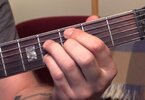
This is a Cm7b5 with a 5th string root

Cm7b5.JPG

at 8:38


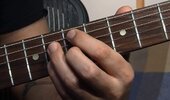
This is a C9 with a 6th string root

C9.JPG


at 5:05


By this logic, the Cm7b5 is also an A#9, and the C9 is also an Em7b5. He does not reference the alternate way of naming it in either video.

So frustrating how slippery theory can be
 
Justin, who we all love, has 2 seperate videos with the following explanations:

This is a Cm7b5 with a 5th string root

View attachment 29847

at 8:38


This is a C9 with a 6th string root

View attachment 29848


at 5:05


By this logic, the Cm7b5 is also an A#9, and the C9 is also an Em7b5. He does not reference the alternate way of naming it in either video.

So frustrating how slippery theory can be

Could the name be determined by whether the chord is being used in a Major key or a relative minor key?
I have been watching a lot of vids lately and I believe I have seen this addressed somewhere.

I have 2 of Justin's books. They are really good, for a person like myself with no real skills as far as playing is concerned.
 
Could the name be determined by whether the chord is being used in a Major key or a relative minor key?
I have been watching a lot of vids lately and I believe I have seen this addressed somewhere.
I assumed it fits both definitions and is a question of context, but that helps since I did not have a context. Thanks. Do you happen to remember where you read that?
 
I assumed it fits both definitions and is a question of context, but that helps since I did not have a context. Thanks. Do you happen to remember where you read that?

It was in a video about theory and how chords with the same notes may have different names based on what is being used as the root note and the scale.
I watch so much crap I have problems remembering what I saw where. :facepalm:

It is even possible I saw it in a Lap Steel video awhile back. I will try looking around for you though.
 
Looks like Justin's site was revamped again - more pro style/ maybe more sponsorship.
Looks like I am still in the beginner course based on his curriculum.
There used to be a licks by genre / artist section I dont see anymore. probably still on Youtube.
 
It was in a video about theory and how chords with the same notes may have different names based on what is being used as the root note and the scale.
I watch so much crap I have problems remembering what I saw where. :facepalm:

It is even possible I saw it in a Lap Steel video awhile back. I will try looking around for you though.
Don't worry. It will become apparent when it needs to!
 
Justin, who we all love, has 2 seperate videos with the following explanations:

This is a Cm7b5 with a 5th string root

View attachment 29847

at 8:38


This is a C9 with a 6th string root

View attachment 29848


at 5:05


By this logic, the Cm7b5 is also an A#9, and the C9 is also an Em7b5. He does not reference the alternate way of naming it in either video.

So frustrating how slippery theory can be


Okay...this is gonna get a little hairy.

Part of the issue you're seeing here is due to the actual, theoretical chord construction versus what you are able to play, or choose to play, on the guitar. There are certain notes that are often omitted on the guitar which are not strictly necessary to capture the essential harmony at a given point.

One of the first notes to omit is the fifth. Now, a power chord consists of the first and the fifth, so if you're playing rock and bashing out power chords ad infinitum...yeah...you need the fifth. But, it is one of the least important notes required to establish the harmony of a chord.

The 3rd is one of the most important notes as it is the only note that establishes if a chord is major or minor. The other additional notes of an altered chord may be omitted or used depending on how easily you can play the chord and depending on what tonality you want.

In the case of your comparison of a C9 to a Em7b5, there are similarities. First, let me address a "9" chord. Without omitting any notes, a 9 chord consists of the 1, 3, 5, b7 and 9 intervals. In the case of a C9 these would be notes C, E, G, Bb, and D. A m7b5 chord consists of the 1, b3, b5, and b7. In the case of an Em7b5 chord these would be notes E, G, Bb, and D. So, yes, there are several notes that are the same between the two. The C9 has the additional note, C, which is not a part of the Em7b5.

Now, getting to the C9 he is playing above at 5:05 and in the screen capture, he does say the root is on the 6th string BUT he is NOT playing it. He actually is using it for reference. Thus, he begins the chord with the 3rd (E) in the bass, which means he is effectively playing the chord in a 1st inversion. Also, he is only playing four notes of the C9 - C, E, G, and D. These would be scale degrees 1, 3, 5, and 9. He is omitting the b7 scale degree. Often you'll see this type of chord referred to as an "add 9" chord or a "2" chord, i.e., "C add9" or "C2".

I have several guitar anthologies by various artists. It's not unusual to see a notation above a staff of music stating something like, "Chords indicated are only meant to show overall tonality". It's not unusual for a chord to be shown on a piece of music, yet the chord, as played, will omit notes from the chord's theoretical construction.
 
Last edited:
Okay...this is gonna get a little hairy.

Part of the issue you're seeing here is due to the actual, theoretical chord construction versus what you are able to play, or choose to play, on the guitar. There are certain notes that are often omitted on the guitar which are not strictly necessary to capture the essential harmony at a given point.

One of the first notes to omit is the fifth. Now, a power chord consists of the first and the fifth, so if you're playing rock and bashing out power chords ad infinitum...yeah...you need the fifth. But, it is one of the least important notes required to establish the harmony of a chord.

Aside from rock and metal, the 3rd is one of the most important notes as it is the only note that establishes if a chord is major or minor. The other additional notes of an altered chord may be omitted or used depending on how easily you can play the chord and depending on what tonality you want.

In the case of your comparison of a C9 to a Em7b5, there are similarities. First, let me address a "9" chord. Without omitting any notes, a 9 chord consists of the 1, 3, 5, b7 and 9 scale degrees. In the case of a C9 these would be notes C, E, G, Bb, and D. A m7b5 chord consists of the 1, b3, b5, and b7. In the case of an Em7b5 chord these would be notes E, G, Bb, and D. So, yes, there are several notes that are the same between the two. The C9 has the additional note, C, which is not a part of the Em7b5.

Now, getting to the C9 he is playing above at 5:05 and in the screen capture, he does say the root is on the 6th string BUT he is NOT playing it. He actually is using it for reference. He is only playing four notes of the C9 - C, E, G, and D. These would be scale degrees 1, 3, 5, and 9. He is omitting the b7 scale degree. Often you'll see this type of chord referred to as an "add 9" chord or a "2" chord, i.e., "C add9" or "C2".

I have several guitar anthologies by various artists. It's not unusual to see a notation above a staff of music stating something like, "Chords indicated are only meant to show overall tonality". It's not unusual for a chord to be shown on a piece of music, yet the chord, as played, will omit notes from the chord's theoretical construction.


Smitty, you are indeed the MAN!
 
Man, I wish I knew even the tiniest bit of theory. Or even what these damn chords are even called!

I see these chords in the OP, and they are things I have picked up here and there over the years just playing with a lot of different cats, and I use them all the time, but mang I could not begin to tell you what they are called. I just plop stuff in where I think it will sound right. Sometimes it does and sometimes...:poo:
 
Okay...this is gonna get a little hairy.

Part of the issue you're seeing here is due to the actual, theoretical chord construction versus what you are able to play, or choose to play, on the guitar. There are certain notes that are often omitted on the guitar which are not strictly necessary to capture the essential harmony at a given point.

One of the first notes to omit is the fifth. Now, a power chord consists of the first and the fifth, so if you're playing rock and bashing out power chords ad infinitum...yeah...you need the fifth. But, it is one of the least important notes required to establish the harmony of a chord.

Aside from rock and metal, the 3rd is one of the most important notes as it is the only note that establishes if a chord is major or minor. The other additional notes of an altered chord may be omitted or used depending on how easily you can play the chord and depending on what tonality you want.

In the case of your comparison of a C9 to a Em7b5, there are similarities. First, let me address a "9" chord. Without omitting any notes, a 9 chord consists of the 1, 3, 5, b7 and 9 scale degrees. In the case of a C9 these would be notes C, E, G, Bb, and D. A m7b5 chord consists of the 1, b3, b5, and b7. In the case of an Em7b5 chord these would be notes E, G, Bb, and D. So, yes, there are several notes that are the same between the two. The C9 has the additional note, C, which is not a part of the Em7b5.

Now, getting to the C9 he is playing above at 5:05 and in the screen capture, he does say the root is on the 6th string BUT he is NOT playing it. He actually is using it for reference. Thus, he begins the chord with the 3rd (E) in the bass, which means he is effectively playing the chord in a 1st inversion. Also, he is only playing four notes of the C9 - C, E, G, and D. These would be scale degrees 1, 3, 5, and 9. He is omitting the b7 scale degree. Often you'll see this type of chord referred to as an "add 9" chord or a "2" chord, i.e., "C add9" or "C2".

I have several guitar anthologies by various artists. It's not unusual to see a notation above a staff of music stating something like, "Chords indicated are only meant to show overall tonality". It's not unusual for a chord to be shown on a piece of music, yet the chord, as played, will omit notes from the chord's theoretical construction.
That is a wonderful explanation. Thank you!
 
i look at it so dif..i consider anything after the 7 full notes in a row..the next octave progression(lower or higher depending on what i need for the song)...so i solo my arse of in octaves for desired effect , not continual note progressions..what happens > i can ascend & descend radically fast vs thinking anything above the the intended 12 notes in a row on a fretboard. before you come back to first note.i do totally respect the notating of it & theory & can use it but my brain reacts better musically than thinks....in original music.. am going for what works with the songs..do i violate theory..yes & no... will modulate between 2 keys a lot..it makes it sonically spread more .when i try to purposefully learn theory..it seems like a forced progression of what others like...i do apply it but it never is domination over what my ears want to achieve in the song...love steely dan. just will never try and learn it it..i can play along but not look at paper with notes on
 
Last edited:
.when i try to purposefully learn theory..it seems like a forced progression of what others like...

I understand why people think that, and some people do approach it that way, but that’s really not it at all. Music theory is an explanation of what we do in western music. It’s not a prescription for what you have to do; it’s a description of what we already do. Our music system that we all use developed over centuries. Music theory developed alongside it to explain how it works and why it works the way it does.

This is one of those cases where the stark individuality of music is on full display. Some people really bristle at theory and interpret it as rigid and confining. Conversely, I really enjoy it and am fascinated by it. To me, it’s a freeing thing. I began learning it on my own when I first began learning guitar. I got tired of memorizing chord shapes. It occurred to me that there must be a reason for these shapes. So, I began studying theory and it opened a new exciting chapter in my musical life. It really accelerated my learning and opened up the fretboard to me. Of course, theory goes way deeper than just understanding chord construction, but that’s how it began for me.
 
Last edited:
I have started and stopped learning the basics a couple of times; I find it interesting.
Need to learn my fretboard notes better too.

Actually this has spurred me to get a little more structured in my practices.
I try to do some skill drills all the time, lately have only done that through a warm up.
Then I just drift from song to song fragment or whatever comes to mind, with lots of wank-noodling mixed in.
 
Back
Top