Capos

You guys will probably think less of me, but...I have been playing guitar for 42 years and I have never owned a capo. I am honestly not even sure what they are for - every time I have ever played with someone that used one I was able to play the same thing somewhere else on the fretboard without it.
 
You guys will probably think less of me, but...I have been playing guitar for 42 years and I have never owned a capo. I am honestly not even sure what they are for - every time I have ever played with someone that used one I was able to play the same thing somewhere else on the fretboard without it.
That is the true way to get there.
Also shows your knowledge of your instrument
 
You guys will probably think less of me, but...I have been playing guitar for 42 years and I have never owned a capo. I am honestly not even sure what they are for - every time I have ever played with someone that used one I was able to play the same thing somewhere else on the fretboard without it.
I bought one for checking neck relief, mostly. :)
 
Like many of you for years I never used a capo. I called them cheaters. Then I started playing acoustic and singing. I also play acoustic with other singers. A capo allows you to quickly change keys to suit the singer. It is an essential tool in my toolbox now. Not so much with electrics but with acoustics I use the capo a lot.
 
Another reason I like the Shubb, its durable and not bulky. doesn't get in the road while doing chord changes, the real beauty is it doesn't pull the guitar out of tune, also I had one of those spring loaded jobs that dented my frets because of the strong spring tension and found it bulky. With the Shubb you can adjust, to just the amount of pressure you need. Its easy to use, I luv it . By the way I just threw the spring loaded one in file 13, right after using the Shubb , and have never looked back.
 
I am honestly not even sure what they are for - every time I have ever played with someone that used one I was able to play the same thing somewhere else on the fretboard without it.

THEORY ALERT!

Technically speaking, the purpose of a capo is to change the key of the guitar. All instruments are tuned to some basic key. The piano, for example is tuned to the key of C. The flute is another instrument in the key of C. In standard tuning, a guitar is also in the key of C. (It is often believed by guitarists that a guitar is in the key of E. This is absolutely not the case. We may use statements, such as, “I tune my guitar to E Standard.” This is a very misleading statement. It means the guitar is tuned using the standard intervalic pattern between strings, referenced to the sixth string, which is tuned to an E. It does not mean the guitar is in the key of E). However, the guitar is not tuned to concert pitch. The guitar is a full octave below concert pitch. So, it is still in C, but an octave below concert C. One telltale way to tell if an instrument is in the key of C is if you can play music written for piano and still be in key with the piano.

So, getting back to the capo, it allows us to compensate for the limitations and inherent shortcomings of the guitar; shortcomings which do not exist with the piano, for example.

Take the regular open G chord. There is only one way to play that chord on the guitar, in that voicing, using all six strings. Now, if you are playing in a different key, but want to capture the same voicing as that open G, but when playing a different chord, the capo is really the only way to do it. I have been able to do it by stretching my fingers enough, but it is clumsy.

True, you could still play that chord in other ways on the guitar. But, the chords won’t have the same voicing. For example, have you ever noticed how an open G and a barre G don’t sound exactly the same? This is due to the different voicing and intervallic structure of the notes in the chord. Using a capo allows you to preserve the voicing in different keys.

@iblive mentioned earlier how he sometimes will play with a guitar player who is using a capo, but he won’t, or vice versa. I do this too. It is a great way to fill out the instrumental harmonies and add complexity to the overall guitar sound.

I almost never use a capo with electric, but I’m not bashful with one with the acoustic.
 
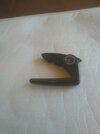
I use capo's regularly & have owned several types. This G7th typeIMG_20191204_075816.jpg
is by far the best that I've tried. Very low profile & a great design. Simply close it to the minimum pressure needed to properly fret the strings & it locks there. To remove you use the "unlock" tab to open it. Simple & functional. Cheers
 
Last edited:
THEORY ALERT!

Technically speaking, the purpose of a capo is to change the key of the guitar. All instruments are tuned to some basic key. The piano, for example is tuned to the key of C. The flute is another instrument in the key of C. In standard tuning, a guitar is also in the key of C. (It is often believed by guitarists that a guitar is in the key of E. This is absolutely not the case. We may use statements, such as, “I tune my guitar to E Standard.” This is a very misleading statement. It means the guitar is tuned using the standard intervalic pattern between strings, referenced to the sixth string, which is tuned to an E. It does not mean the guitar is in the key of E). However, the guitar is not tuned to concert pitch. The guitar is a full octave below concert pitch. So, it is still in C, but an octave below concert C. One telltale way to tell if an instrument is in the key of C is if you can play music written for piano and still be in key with the piano.

So, getting back to the capo, it allows us to compensate for the limitations and inherent shortcomings of the guitar; shortcomings which do not exist with the piano, for example.

Take the regular open G chord. There is only one way to play that chord on the guitar, in that voicing, using all six strings. Now, if you are playing in a different key, but want to capture the same voicing as that open G, but when playing a different chord, the capo is really the only way to do it. I have been able to do it by stretching my fingers enough, but it is clumsy.

True, you could still play that chord in other ways on the guitar. But, the chords won’t have the same voicing. For example, have you ever noticed how an open G and a barre G don’t sound exactly the same? This is due to the different voicing and intervallic structure of the notes in the chord. Using a capo allows you to preserve the voicing in different keys.

@iblive mentioned earlier how he sometimes will play with a guitar player who is using a capo, but he won’t, or vice versa. I do this too. It is a great way to fill out the instrumental harmonies and add complexity to the overall guitar sound.

I almost never use a capo with electric, but I’m not bashful with one with the acoustic.
Excellent post. (y)
Thanks for that.
 
You guys will probably think less of me, but...I have been playing guitar for 42 years and I have never owned a capo. I am honestly not even sure what they are for - every time I have ever played with someone that used one I was able to play the same thing somewhere else on the fretboard without it.

The only reason I own a capo is for guitar work - hold all the strings down at the the first fret at the same time. Other than that, I don't use them.
 
What a strange planet you must inhabit, if you never use a capo.
I read all of the entries in this thread, except the mafia ones.
I found them difficult to believe, but I believed them.

Maybe I'm from some other planet, where guitarists and banjo players and
mandolin players ALL use capos, and play happily together with no problems
and we make excellent music. A capo is just a tool for a musician. It makes your
job easier, so you can concentrate on your performance. It's no big deal if you
use one or if you don't. It's a style thing. To me, it's a weird mentality that would
call a capo a "cheater..." like maybe they think a stomp tuner is a cheater too.

And maybe it is, the tuner allows those of us who don't have perfect pitch to be
musicians. Also: THE MICROPHONE allows those of us who can't sing tenor
to perform a lead vocal in a song. Bing Crosby pioneered this concept, before the
microphone, only the tenor could sing lead. Because those (annoying) tones could
hit the back wall unamplified. The baritone had to be the bad guy.

Anyway, I use capos all the time. I like what they do.
I also play in alternate tunings such as DADF#AD or DADF#CD
where I don't need a capo.
I also play bass with other players who use capos, with no problems.
I don't need a capo for my bass, just tell me what key we're in, or if you
don't I'll figure it out. My mind sees chord shapes and counts frets and
then I know.

So... because I haven't seen anybody mention this yet, and only a few of my colleagues
on this forum seem to use capos, I'll boast a bit about my use of PARTIAL CAPOS so I can
play alternate styles without re-tuning the whole guitar.

Dig this:
Zelda 38*@100.jpg

*laughs... How d'ya like them apples? I'm playing in the key of Bb using the
G pattern. I've got a full capo on the first fret to raise the pitch one half step, and
I'm using a partial capo on the third fret to change the tuning to an open Bb chord,
and then I'm picking higher up the neck using the G pattern... C and D, Em and Am are
all their normal shapes, just raised a step and a half and with some modal notes
thrown in.

Got that? One of the reason for me to do this is my music partner David's preference to play
down-tuned a whole step. So his guitar is a full step low. When he plays in the C pattern, he's
in Bb, and I can play using different chord shapes and a different tonality but still in the same
key. It makes a very interesting guitar duet.

Here's a closer look at the partial capo. Here I have it on the second fret, so I'm playing in
the key of A using the G pattern. You can see that the capo presses down three strings.
In this case giving me an open A chord: EAEAC#E
56@100.jpg
One of the other cool things I do with the partial capo is to flip it over and press down the A,D, and G
strings on the second fret. Then I can play in the key of E using the D pattern, and I get a great low E
note without any problems. Using combination of full and partial capos, a player can create a lot
of exotic sounding music, without re-tuning his guitar all the time. You have to correct the tuning
after you put the capos on of course, and after you take them off... Capos are like that.

But it's only tweaking the tuning, not cranking the strings around and freaking the guitar out
while you're onstage. I find these things quite useful.
 
Last edited:
What a strange planet you must inhabit, if you never use a capo.
I read all of the entries in this thread, except the mafia ones.
I found them difficult to believe, but I believed them.

Maybe I'm from some other planet, where guitarists and banjo players and
mandolin players ALL use capos, and play happily together with no problems
and we make excellent music. A capo is just a tool for a musician. It makes your
job easier, so you can concentrate on your performance. It's no big deal if you
use one or if you don't. It's a style thing. To me, it's a weird mentality that would
call a capo a "cheater..." like maybe they think a stomp tuner is a cheater too.
And maybe it is, the tuner allows those of us who don't have perfect pitch to be
musicians.

Anyway, I use capos all the time. I like what they do.
I also play in alternate tunings such as DADF#AD or DADF#CD
where I don't need a capo.
I also play bass with other players who use capos, with no problems.
I don't need a capo for my bass, just tell me what key we're in, or if you
don't I'll figure it out. My mind sees chord shapes and counts frets and
then I know.

So... because I haven't seen anybody mention this yet, and only a few of my colleagues
on this forum seem to use capos, I'll boast a bit about my use of PARTIAL CAPOS so I can
play alternate styles without re-tuning the whole guitar.

Dig this:
View attachment 35322

*laughs... How d'ya like them apples? I'm playing in the key of Bb using the
G pattern. I've got a full capo on the first fret to raise the pitch one half step, and
I'm using a partial capo on the third fret to change the tuning to an open Bb chord,
and then I'm picking higher up the neck using the G pattern... C and D, Em and Am are
all their normal shapes, just raised a step and a half and with some modal notes
thrown in.

Got that? One of the reason for me to do this is my music partner David's preference to play
down-tuned a whole step. So his guitar is a full step low. When he plays in the C pattern, he's
in Bb, and I can play using different chord shapes and a different tonality but still in the same
key. It makes a very interesting guitar duet.

Here's a closer look at the partial capo. Here I have it on the second fret, so I'm playing in
the key of A using the G pattern. You can see that the capo presses down three strings.
In this case giving me an open A chord: EAEAC#E
View attachment 35324
One of the other cool things I do with the partial capo is to flip it over and press down the A,D, and G
strings on the second fret. Then I can play in the key of E using the D pattern, and I get a great low E
note without any problems. Using combination of full and partial capos, a player can create a lot
of exotic sounding music, without re-tuning his guitar all the time. You have to correct the tuning
after you put the capos on of course, and after you take them off... Capos are like that.

But it's only tweaking the tuning, not cranking the strings around and freaking the guitar out
while you're onstage. I find these things quite useful.

Partial Capos. Yeah, I’ve seen that before. Though, I’ve always called them, “cut capos”. I’ve never personally tried them, however.

No matter.

But, you’re absolutely right. You can get pretty creative that way.

Also, I really like your description of your playing with your friend, Dave. That seems like it would be a great sound.
 
Last edited:
Back
Top