Attenuators?

Just remember ya'll... Attenuators allow you to run the amp hard without extreme volume. That means your operating the amps trannies hard. Which is no problem if the trannies are well built. But your also running the tubes hard, and will shorten the lives of the power tubes and the phase inverter tube. Just like you're going to get worse gas consumption on your car if you keep the pedal to the metal... :cheers:
 
Just remember ya'll... Attenuators allow you to run the amp hard without extreme volume. That means your operating the amps trannies hard. Which is no problem if the trannies are well built. But your also running the tubes hard, and will shorten the lives of the power tubes and the phase inverter tube. Just like you're going to get worse gas consumption on your car if you keep the pedal to the metal... :cheers:


I'm sure that just as with anything else, moderation is the key.

There must be a line where you can start getting some good amplifier response, yet not kill the tubes and trannies. Granted, last night my 100 watt JMP sounded fantastic at practice with the Master Volume at 2, and the Pre-Amp on 5. No attenuator needed. It was just loud enough to hear over the drums, yet not be too loud.
 
... last night my 100 watt JMP sounded fantastic at practice with the Master Volume at 2, and the Pre-Amp on 5.
With that 100 watt JMP's MV at 2, it's barely getting out of bed. But if it sounds good, it is good.

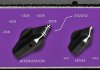
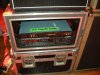
With my two 50 watt JCMs, I like the preamp gain control between 6 and 7. They both sound decent at semi-low volumes when the MV is at 2. But they both sound glorious as the MV moves beyond 5. Both amp's sweet spots are when the MV is at 6 to 7. At those settings the amps are running hard and are brutally too loud to operate in my 11' x 11' mancave. Setting the Rock Crusher's attenuation only at -12dB knocks a lot of volume off, but it's still loud. To reduce the volume to where you can talk over it, the Rock Crusher would have to be set to its STUDIO with LEVEL control setting.

features1.jpg
 
With my two 50 watt JCMs, I like the preamp gain control between 6 and 7. They both sound decent at semi-low volumes when the MV is at 2. But they both sound glorious as the MV moves beyond 5. Both amp's sweet spots are when the MV is at 6 to 7.

Though I prefer to use my 4 hole 50 Watter I do have a clone of a 2204 (footswitchable to Caswell #39 mod) that also sounds best with the MV up near 7 (or beyond). As the MV is turned down the tone thins.
SG John, I think that yes, moderation is the key. How low attenuation affects tube life remains to be seen, however I did take the recently installed xf2 (single halo) Mullards out & put the winged C's back in before using the attenuator. I'll probably get a duet of Svetlana's or other current production types for use with the attenuator so I'm not burning up "out of production" tubes. Cheers
 
what does a mv do anyway?

only 4 holers here. Laney AOR and 2 Marshalls
The most common master volume is a simple volume control placed after the pre amp & limiting signal to the phase inverter. Then there is the PPIMV (post phase inverter master volume, placed after the phase inverter & limiting drive to the power tubes (usually a dual ganged pot). Both types have their pros & cons. Cheers
 
This is the other end of the spectrum I found this by complete accident the Baxandall tone stack used in most Fender and Marshall guitar amps
Treble Mid Bass control is a volume or decibel killer by 50% I first discovered this with the ODS builds on the Rock/Jazz switch on/on I was out
of the on/on switch and used a on/on/on switch so in the middle position it bypassed the tone stack what a huge jump in volume.
Next was the VOX AC-15 EF86 500k volume and a 7 position rotary switch with capacitors going to pin 6 on the EF86 I found the 22nf to be the most used
It is so loud I can't play that amp past volume 1 but what a sound as a test I also used a Marshall pre amp and master volume on channel two
sounds like crap in comparison to the EF86 channel. I used a Radio Spares 18 watt clone transformer set 280V B+1 and 90 VDC on the EF86.
 
MV = Master volume... :cheers:
Ok Sysco, I messed up. Ivan expounded, but what does a mv/ Master Volume do?

I presumed it controls all volume but never used one unless this is what my Fender 2 channel type amps have.

Although my The Twin has a channel footswitch for clean vs gain channels. It has 2 volumes though.
 
Well, in reality that is exactly how I am using it, to just knock a few db off the overall volume...
Yes sir, this is what I meant. I was restating the obvious. In fact, I misunderstood Chili's question, but you explained it very well.
 
Ok Sysco, I messed up. Ivan expounded, but what does a mv/ Master Volume do?

I presumed it controls all volume but never used one unless this is what my Fender 2 channel type amps have.

Although my The Twin has a channel footswitch for clean vs gain channels. It has 2 volumes though.


On the Marshalls with a Master Volume, there is also a Pre-Amp. It's just like a fuzz box. Pre-Amp is how much dirt you want to dial in, and Master Volume is the over all sound. With the Pre-Amp up high, you may only need a small amount of Master Volume. On the other hand, if you have the Pre-Amp clean (low), you'll need more out of your Master Volume knob.
 
This is the other end of the spectrum I found this by complete accident the Baxandall tone stack used in most Fender and Marshall guitar amps
Treble Mid Bass control is a volume or decibel killer by 50% I first discovered this with the ODS builds on the Rock/Jazz switch on/on I was out
of the on/on switch and used a on/on/on switch so in the middle position it bypassed the tone stack what a huge jump in volume.
A popular mod with a lot of the old Fenders is to add a tonestack bypass circuit, either with a switch or a pot. A common name for this mod is "Raw control".
 
On my ODS amps I have a master volume for the overdrive channel and a master volume for the power amp and with
the Dumbelator that runs through the effects loop I have one more master volume that also has a volume control for effects
I can drop my volume level down to zero with the dumbelator no sound degradation no stress on the transformers or power tubes.
It uses one 12AX7 and a Traid TR-2 power transformer 135-0-135

Dumbleator.jpg
 
Treble Mid Bass control is a volume or decibel killer by 50%
Yes. The passive tone control network operates by bleeding signal (mid & low frequencies) off to ground, so there is a lot of loss. A plate driven (high impedance source) tone network suffers even more loss than a cathode driven (low impedance source) tone network. This is why plate driven tone networks usually have another gain stage (or more than one) following the tone network (to make up for the loss) & cathode driven tone networks get away without the following gain stage. But all passive tone networks suffer loss. Cheers
 
Last edited:
Back
Top