
You are using an out of date browser. It may not display this or other websites correctly.
You should upgrade or use an alternative browser.
You should upgrade or use an alternative browser.
Attention Vette Lovers
- Thread starter WavMixer
- Start date


Now do the 2020 Corvette and the Ford GT have similar styling? Of coarse they do. They need to be aerodynamic to go fast and cut wind resistance. They also need to provide air to the engine requiring air inlet ducting. This is not an original idea from Ford or Chevy.
Corvette
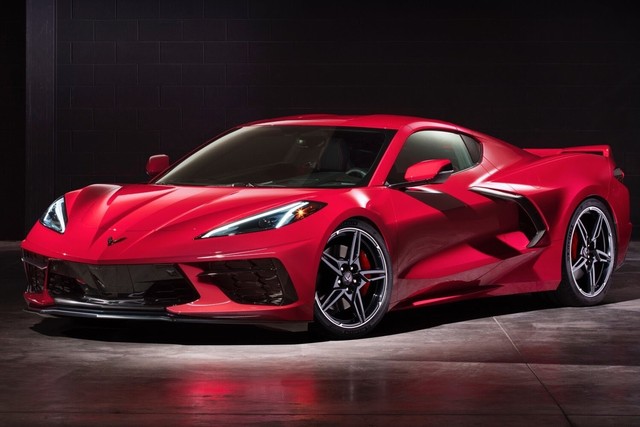
Ford GT

Ferrari

I personally think that the Ford GT looks a lot more like the Ferrari and the Vette looks like the GT.
I think the point is being missed that Corvette engineers are claiming many of these - clearly copied features - as GM innovations....
Well prior to the 1955 Thunderbird, the closest thing to a roadster Ford offered was hot rodders were doing with '32-'34.

Chevy was two years ahead of Ford making a production 2 seat sports car. Ford has undoubtedly had some very nice styling, but the similarity in design of the T-Bird and Vette is more than obvious to me.
The T-Bird was the hottest thing on the road in that period. Chevy couldn't even get close...
But, to get back on track, let's look at the 1951 Paris Auto Show when Ford division general manager Lewis Crusoe was admiring European autos at the 1951 Paris auto show with Ford designer George Walker. "Why can't we have something like that? " Crusoe asked Walker after examining a sporty European two-seater. "Oh, but we do," the quick-witted Walked fibbed--and then telephoned Ford headquarters in Michigan and told it to get to work fast on a two-seater so Crusoe would have something to see after returning from Europe. Ford had been working on a two-seater since late 1951, but wasn't serious about it because sports cars accounted for such a tiny percentage of the U.S. market.
GM tried to make the Corvette both American and foreign--and failed on both counts. It had a hard time even giving away the first Corvettes for promotional reasons to VIPs and celebrities, many of whom disliked the car. Actually, the new Corvette wasn't all that bad despite its drawbacks, being fairly nimble and reasonably fast for its era.
The new T-Bird used a good number of regular Ford parts to hold costs down. They included headlights, taillights and instruments. The parts sharing also let Ford successfully use the 2,980-pound Thunderbird to rub off some of its sporty, glamorous image on the restyled regular Fords.
The new Thunderbird was better for 99 percent of the U.S. market than the Corvette. It could be had with options including power steering, brakes, windows and a power front bench seat designed to look like two bucket seats. (Only two adults actually fit, so the 1955-57 T-Bird always has been described as a two-seater.).
GM hated the rival Thunderbird because that Ford model was an instant success. Ford intended the T-Bird to mainly be an "image car," with annual sales of only 10,000 units. The automaker was surprised when 16,155 T-Birds were snapped up. That compared with merely 674 Corvettes produced in 1955.
The 312cu in (5.1 L) V8 became the Thunderbird's standard engine, and now produced 245 horsepower (183 kW). Other, even more powerful versions of the 312 cu in (5.1 L) V8 were available including one with two four-barrel Holley carburetors and another with a Paxton supercharger delivering 300 Horsepower....
Now take a look at the Corvette construction. This is nothing like either the Ford or Ferrari...
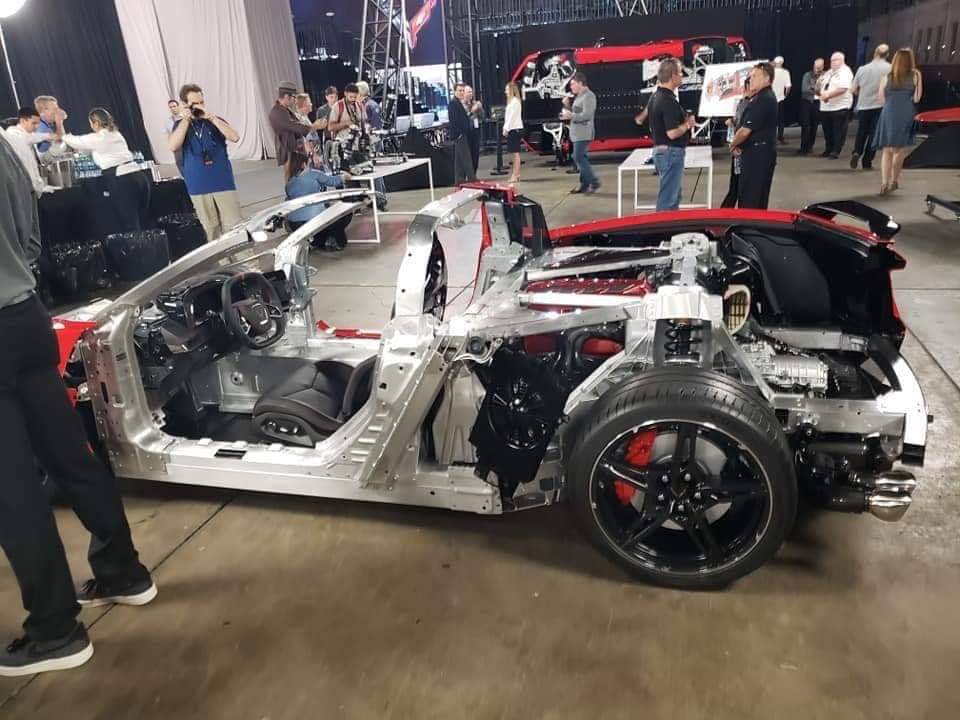
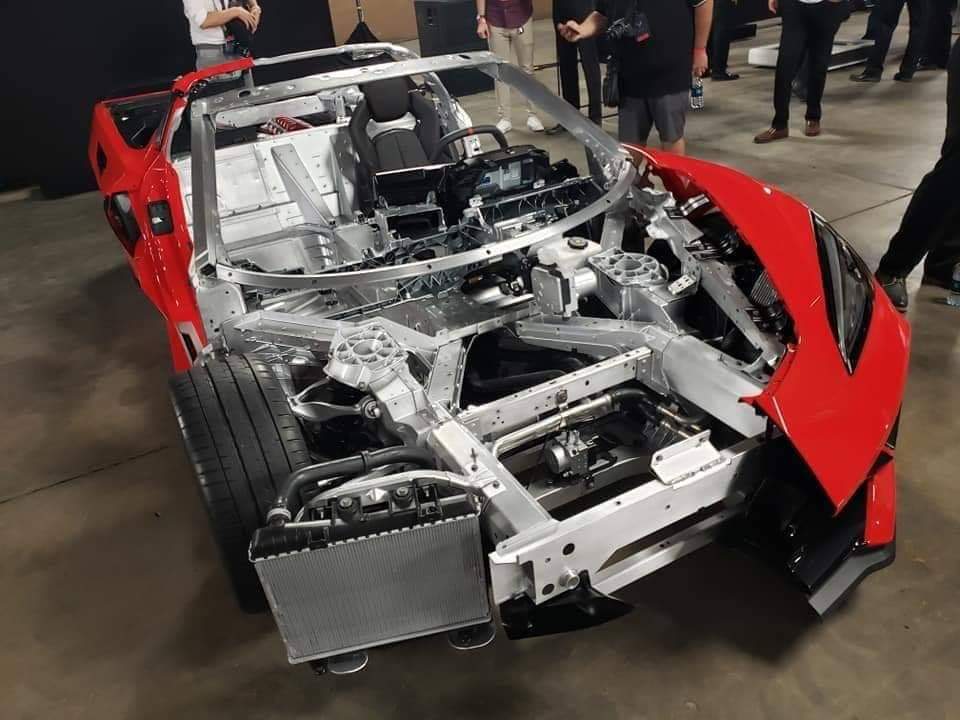
I've had both aforementioned cars apart. There's a number of flaws in the engineering of the Corvette that most layman would never realize...
If you dig it, then that's awesome, but it's a joke from an engineering standpoint...
I would still take a stock Gallardo over the C8 anyday...

I still would take one of each of the big 3 vs the foreign jobbers....And have some real fun with extra dollars in the pocket too...
I really came close to a new Demon or Hellcat. My plan was to revamp the chassis to make it a better handling car, but I was turned off by all the inferior (known to fail in an MBZ platform) suspension components used on the Dodge to keep costs down. C-Class suspension on a V8 car is never a good idea...

OP

I've been looking at the Hellcat and Redeye, but the car does not keep my interest.I really came close to a new Demon or Hellcat. My plan was to revamp the chassis to make it a better handling car, but I was turned off by all the inferior (known to fail in an MBZ platform) suspension components used on the Dodge to keep costs down. C-Class suspension on a V8 car is never a good idea...
In all honesty, im far more impressed with the Subaru WRX than the C8 - The WRX 4 door - by the way - laid down a documented 6 minute 57 second Nurburgring time.
In typical Corvette fan fashion, even if the new C8 ran a 10 minute Nurburgring time, it would be justified by the Corvette worshippers, just like the C7 engine failures are still being blamed on the oil...
OP
I too have much respect for the Subaru line, especially the STi. My son has a bug eye WRX with a late model 2.5 STi. At one time I was actively involved in Rally Racing and was an official at the Rim of the World Rally. There was a long time rivalry between the Mitsubishi Evolution and the Subaru WRX. I still own my Evo that is my 400 HP daily driver. If I were ever able to purchase another new car, I would not want another manual trans car such as the STi.In all honesty, im far more impressed with the Subaru WRX than the C8 - The WRX 4 door - by the way - laid down a documented 6 minute 57 second Nurburgring time.
In typical Corvette fan fashion, even if the new C8 ran a 10 minute Nurburgring time, it would be justified by the Corvette worshippers, just like the C7 engine failures are still being blamed on the oil...
Perhaps it's time you moved on from the "oil failures" in Chevy's past and acknowledge that the C8 has absolutely nothing to do with any previous Chevy product. No LS engine, no front engine. Totally different design than any previous model of Corvette. Just as the 2020 Mustang GT350 and GT500 and not the same Mustangs from the 60's.
I too have much respect for the Subaru line, especially the STi. My son has a bug eye WRX with a late model 2.5 STi. At one time I was actively involved in Rally Racing and was an official at the Rim of the World Rally. There was a long time rivalry between the Mitsubishi Evolution and the Subaru WRX. I still own my Evo that is my 400 HP daily driver. If I were ever able to purchase another new car, I would not want another manual trans car such as the STi.
Perhaps it's time you moved on from the "oil failures" in Chevy's past and acknowledge that the C8 has absolutely nothing to do with any previous Chevy product. No LS engine, no front engine. Totally different design than any previous model of Corvette. Just as the 2020 Mustang GT350 and GT500 and not the same Mustangs from the 60's.
Issue: The new engine uses the powdered metal LS rod, which GM documented as a failure items...
OP
Can you link me to documentation regarding the C8 and the connecting rods used in the LT engine being the same rods as used in the LS engine?Issue: The new engine uses the powdered metal LS rod, which GM documented as a failure items...
Can you link me to documentation regarding the C8 and the connecting rods used in the LT engine being the same rods as used in the LS engine?
Its all over the Corvette forums. GM has been using powdered metal rods for years and GM's Engineering department has advised the higher ups of the rods being structurally compromised but they continue to use them in the LT2.
We are on a strict deadline today, so you may have to go digging...

OP
Its all over the Corvette forums. GM has been using powdered metal rods for years and GM's Engineering department has advised the higher ups of the rods being structurally compromised but they continue to use them in the LT2.
We are on a strict deadline today, so you may have to go digging...
View attachment 36300
does not address the rods
does not address the rods
does not address the rods, but does have some nice guitars on the wall
talks about it being part of the 5th generation small block engines including LT1-LT4-LT5 and truck engines. At 2:28 it says "Forged Powdered Metal." However this does not say that these are the same rods as used in the LS engines. Ls v LT... 351 Windsor vs 351 Cleveland. Both are 351 Cu. In. Both are Ford engines. This does not make them the same engine.
You are struggling so hard to justify everything that GM is preaching to you. If you like the Corvette, Great!!!! But, it's no great engineering achievement - it's a cheaper copy of more costly Italian engineering....like a knock-off cell phone.
With respect to the connecting rods, it's the same construction methodology, one that GM engineering complained to corporate as a source of engine failures. The documents are out there on the web.
GM is closing a couple of engine plants and at this time, it looks like LT2 production will be moved to Mexico.
Like I said, you don't make a cheap car without cutting corners somewhere...
OP
Robert, I am not justifying anything. I titled this thread as "Attention Vette Lovers" as I know that we do have some Vette owners on this forum. I do not own a Vette although I have loved and hated different generations of Vettes. I thought that some of our Vette loving/owning members would be interested in this thread. As it turns out, it seems as though this thread has attracted the attention of a serious Vette hater more so than Vette lovers. I must admit that most of my Chevy experience is old school small block power plants bolted to Turbo 400 transmissions, Muncie M22 "rock crusher" and 12 bolt rear ends. I do appreciate your input with regards to LS engine failures which I was not aware of, however I would like to see documentation to validate your claim that the LT engines suffer from the same problem. I personally think the mid-engine design is a great improvement for the Vette simply due to the front to rear weight ratio. True the Vette looked at the Italian competition as this is who they are competing against just as Ford designed the original GT40 to compete with Ferrari.