And then there was one: second amp has failed


Would be fine with something like that if I had some guarantee they'd hold their own for a fairly long time. Don't mind paying more if you get good miles
Mike I have used a quad of Siemans EL34 in this Marshall since 1987 they still test over 100% this amp never had issues.
And 3 Express amps since the 1990's I would not use the Siemans until you solve your amp issues.

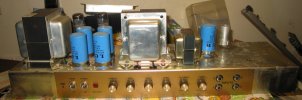
Marshall 001.JPG
 
In the meantime, was checking Tube Depot
There's a bunch of vendors that try to sift through the chit and offer quality tubes, but it's never 100%, that's for sure!
Tubesandmore: aka AES: aka Antique Electronics Supply: aka Amplified Parts... :rolleyes2:
Tube Depot
The Tube Store
Viva Tubes
Doug's Tubes
MESA branded tubes either directly from MESA or from various big box vendors like Sweetwater. MESA is the only one I know that test and rebrand their tubes using real world loads and abuse!


Mike I have used a quad of Siemans EL34 in this Marshall since 1987 they still test over 100% this amp never had issues.
And 3 Express amps since the 1990's I would not use the Siemans until you solve your amp issues.

View attachment 99486
Drug pusher... :cheers:
 
I have had good luck with the Siemans EL34 branded Mesa was able to buy direct before the Gibson buy out


Mesa/Boogie NOS EL34 STR 450 Siemens
I took advantage of the tip you dropped a couple of years ago about these, and picked up a pair to have on hand for my Laney.
Would be fine with something like that if I had some guarantee they'd hold their own for a fairly long time. Don't mind paying more if you get good miles
My experience with directly purchasing Mesa selected tubes has been positive.(It was all pre-Gibson though)
There's a bunch of vendors that try to sift through the chit and offer quality tubes, but it's never 100%, that's for sure!
Tubesandmore: aka AES: aka Antique Electronics Supply: aka Amplified Parts... :rolleyes2:
Tube Depot
The Tube Store
Viva Tubes
Doug's Tubes
MESA branded tubes either directly from MESA or from various big box vendors like Sweetwater. MESA is the only one I know that test and rebrand their tubes using real world loads and abuse!


Drug pusher... :cheers:
Yep…I’ve purchased from tubesandmore shops pretty happily over the years too. The tube store too. And, as @CoyotesGator mentioned, Eurotubes…I haven’t bought from them for a long time, but when I did…my experience was really good.

I did have a bad experience purchasing Mesa power tubes at a Guitar Denter location once…never again…they had re-packed a return, pretty obviously, as I found out after I got home and opened one of the power tube pairs.
 
Last edited:
Bias Adjust Pots:
There has been a lot of failures of the bias adjust pots.
When the pot fails, the tube will lose bias and red plate.*
Because of this, I have been changing out the pots with new ones as a precautionary measure.

Any time you repair the board, or change the board to a new one, you should put in new bias adjust pots.
You should really put in new pots every few years, just to maintain reliability.

Now, I have decided to go with a upgraded bias pot.
This pot is ceramic instead of plastic, and is designed for better high temperature stability.
The old pot was rated 70C and the new pot is rated 90C.

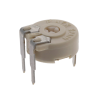
The new pot is:
Amphenol / Piher PTC10LV10-203A2020 (10 mm Round) Cermet (ceramic) instead of Plastic.
The pot can be 22K, 20K, or 25K, any of those should work. I'm using the 20K, because it's in stock and available.

1716115815730.png

* There is two basic types of bias pot adjust circuits:

One is "Wiper Dependent," when the wiper fails, the bias shuts off and the tube red plates.
This is the type of circuit that is designed into DSL 50 / 100 amplifiers.
This type circuit is really not the best way (safer way) to adjust the bias, but it is the original Marshall design for DSL.

The other type of circuit is:
"Fail-Safe," when the wiper fails, the bias stays on and the tube goes cold, instead of red plating.
This would be the preferred method, but Marshall did not use this for DSL amplifiers.

Future Plan:
modify the DSL bias adjust, so that it is changed to the "Fail Safe" circuit.
 
I bought a EH EL34 quad to use on a Silver Jubilee RI. One have red plating after using them three or four hours. A Maximatcher II power tube tester said two EL34 are out of range. Could be a bad power tube. Russian current production are unreliable.
 
I bought a EH EL34 quad to use on a Silver Jubilee RI. One have red plating after using them three or four hours. A Maximatcher II power tube tester said two EL34 are out of range. Could be a bad power tube. Russian current production are unreliable.
IMHO just an opinion, Electro Harmonix had a lot of problems with tube matching.
I received tubes that were not matched correctly...
I hope by now, that they have resolved it.

But it seems that: the equipment widely used to test match tubes is not detecting all of the possible problems.

Only a "tube lab" that selects and matches with expensive sophisticated equipment:
is finding all of the problems.
And such a tube lab is charging very high prices understandably...because of all the extra time, expense, and effort.
 
Bias Adjust Pots:
There has been a lot of failures of the bias adjust pots.
When the pot fails, the tube will lose bias and red plate.*
Because of this, I have been changing out the pots with new ones as a precautionary measure.

Any time you repair the board, or change the board to a new one, you should put in new bias adjust pots.
You should really put in new pots every few years, just to maintain reliability.

Now, I have decided to go with a upgraded bias pot.
This pot is ceramic instead of plastic, and is designed for better high temperature stability.
The old pot was rated 70C and the new pot is rated 90C.

The new pot is:
Amphenol / Piher PTC10LV10-203A2020 (10 mm Round) Cermet (ceramic) instead of Plastic.
The pot can be 22K, 20K, or 25K, any of those should work. I'm using the 20K, because it's in stock and available.

View attachment 99500

* There is two basic types of bias pot adjust circuits:

One is "Wiper Dependent," when the wiper fails, the bias shuts off and the tube red plates.
This is the type of circuit that is designed into DSL 50 / 100 amplifiers.
This type circuit is really not the best way (safer way) to adjust the bias, but it is the original Marshall design for DSL.

The other type of circuit is:
"Fail-Safe," when the wiper fails, the bias stays on and the tube goes cold, instead of red plating.
This would be the preferred method, but Marshall did not use this for DSL amplifiers.

Future Plan:
modify the DSL bias adjust, so that it is changed to the "Fail Safe" circuit.
So what would entail to modify this into a fail-safe design? I would agree: this could've saved countless DSL bias drifts to some extent. Not the boards failing from cheap construction that rendered them conductive in time, but eliminating one of the causes of said drift initially altogether
 
Only a "tube lab" that selects and matches with expensive sophisticated equipment:
is finding all of the problems.
And such a tube lab is charging very high prices understandably...because of all the extra time, expense, and effort.
I don't know. Supuestly TAD do a exaustive check on his tubes to select good ones. I had problems with his valves. It's a hard time to buy afordable good tubes IMHO. I don't know where buy It. Lately some people had good experiences buying expensive Chinesse ones from Aliexpress. I would like buy them near me (Europe).
 
So what would entail to modify this into a fail-safe design? I would agree: this could've saved countless DSL bias drifts to some extent. Not the boards failing from cheap construction that rendered them conductive in time, but eliminating one of the causes of said drift initially altogether
It's adding a couple resistors.
The Marshall Plexi has the fail safe bias adjust since the very start in 1960s.
Whoever designed the DSL did not have the brains to match Dudley Craven's.
Marshall went off course somewhere along the line....

But on the other hand, musicians love the sound of DSL so much, they keep on repairing those amps over and over again.
Despite the defects.
 
So I sent those tubes back and got a refund and went to Viva Tubes to order a new set. They came in today and surprise! No run away mV on either, so the previously bought ones indeed had a single bad tube. No harm, no foul though as the seller was cool and refunded it.

I did have one question though: as you buy a new set of tubes, is it normal to have them come in a little higher in mA/mV , as in is there an adjustment period where they will settle in? If using the mV bias trick, these are setting at 45.5mV which is about .5mV higher than what Marshall claims is the maximum ( 45mV suggested bias).

I however used two meters: one using a plate voltage tester and the other using a mA Bias probe. Doing this and having the amp running for about 10mins I'm reading 470.4VDC plate voltage and about 38.3mA on the bias probe. I know that if you're going with 70% Dissipation for an EL34 rated at 25W, that would come upto 37.2mA based on the formula of (Tube Watt Rating/Plate Voltage) x 70%

So with the bias pots adjusted down to their minimum set point, I would be reading about 72% Dissipation if I am setting at 38.3mA correct? Is this ok or do we need to look into changing the bias potentiometers to see if we can scale this down lower?

Plus, I noticed a small fluctuation up and down of both the plate voltage and the bias mA: the plate voltage would sometimes shift between 466.8 to 473VDC and the mA would concurrently shift up and down as well with the voltage changing. It seemed to hold by and large at 470.4VDC.

Is this due to variances in the outlet line voltage shifting ( 125.5VAC typically, but periodically shifting between 125.3VAC to 125.7VAC)?
 
Just me Mike my Green Hornet amps EL34 470 VDC run them at -34 mA tubes last longer 65% dissipation
I would agree totally that keeping it under the 70% dissipation would be ideal, preferably like you mentioned, nearer to 65%. This makes me wonder if changing the bias pots would help this or perhaps something to condition the line voltage coming into the amp to hold it steadier?
 
So I sent those tubes back and got a refund and went to Viva Tubes to order a new set. They came in today and surprise! No run away mV on either, so the previously bought ones indeed had a single bad tube. No harm, no foul though as the seller was cool and refunded it.

I did have one question though: as you buy a new set of tubes, is it normal to have them come in a little higher in mA/mV , as in is there an adjustment period where they will settle in? If using the mV bias trick, these are setting at 45.5mV which is about .5mV higher than what Marshall claims is the maximum ( 45mV suggested bias).

I however used two meters: one using a plate voltage tester and the other using a mA Bias probe. Doing this and having the amp running for about 10mins I'm reading 470.4VDC plate voltage and about 38.3mA on the bias probe. I know that if you're going with 70% Dissipation for an EL34 rated at 25W, that would come upto 37.2mA based on the formula of (Tube Watt Rating/Plate Voltage) x 70%

So with the bias pots adjusted down to their minimum set point, I would be reading about 72% Dissipation if I am setting at 38.3mA correct? Is this ok or do we need to look into changing the bias potentiometers to see if we can scale this down lower?

Plus, I noticed a small fluctuation up and down of both the plate voltage and the bias mA: the plate voltage would sometimes shift between 466.8 to 473VDC and the mA would concurrently shift up and down as well with the voltage changing. It seemed to hold by and large at 470.4VDC.

Is this due to variances in the outlet line voltage shifting ( 125.5VAC typically, but periodically shifting between 125.3VAC to 125.7VAC)?
What amp are you working on?

If it's the amp with bipolar capacitors you have to change the caps first.
There's not enough bias voltage because the caps are too old.

With the pot set at minimum, it should read below 50%. 70% should be in the 1/3 - middle of the pot range.

Change the bias bipolar and filter caps first then test it again.
 
Back
Top