Ok,
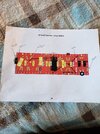
I'm seriously contemplating this build as a science project of sorts. However, I want to convert the amp to more of a JCM800 style circuitry. @Amp Mad Scientist and @ivan H (and others) have told me this is not at all a difficult conversion/
My goal is super-tight bass response.
I researched and found a few clues as to the differences between the early style JTM45 and the later JCM 800 style circuits:
- The huge 250µF (often 330µF) cathode bypass cap on the 1st tube in the JTM45 and this contributes heavily to the muddy sound; Marshall split the cathode on the 1st tube and gave the 1987's Brilliant channel a 0.68µF bypass cap (and a 2.7kΩ cathode resistor) that shaves everything near/below Low-E in a way the Normal doesn't. That helps tighten distortion right off.
- The changes to the channel mix resistors and volume pot bright cap for the Brilliant channel of the 1987 bring more mids back into play for this channel compared to the JTM45. But in practice, and combined with the other two bass cuts in the 1987 Brilliant channel, there is a lot of apparent bass-cut here. It helps keep distortion clearer in the 1987 than the JTM45. In other words, it sounds like early-70's rock.
- The 1987 adds a 0.68µF bypass cap to the 1st gain stage of V2. This has the effect of boosting gain of this stage compared to the JTM45, but again focuses the extra signal gain towards the mids/highs.
- The 1987 trims the coupling caps going into the output tubes by 1/5th. This doesn't so much cut bass (0.022µF against 220kΩ extends below guitar-range), but it does help the output stage recover from momentary input-overload better. This makes distortion less "splatty" (technically, it's faster recovery from blocking distortion).
So, before I drop the $$$$ on this amp, I want to lay this out before the amp Gods so I can plan for it from the very first turret.
I want an amp that will deliver clear and defined high-gain tone, even when being pounded by a TS-9 with heavy bass frequency dialed in while simultaneously offset with dimed mid range frequencies...
let's discuss this...
I'm seriously contemplating this build as a science project of sorts. However, I want to convert the amp to more of a JCM800 style circuitry. @Amp Mad Scientist and @ivan H (and others) have told me this is not at all a difficult conversion/
My goal is super-tight bass response.
I researched and found a few clues as to the differences between the early style JTM45 and the later JCM 800 style circuits:
- The huge 250µF (often 330µF) cathode bypass cap on the 1st tube in the JTM45 and this contributes heavily to the muddy sound; Marshall split the cathode on the 1st tube and gave the 1987's Brilliant channel a 0.68µF bypass cap (and a 2.7kΩ cathode resistor) that shaves everything near/below Low-E in a way the Normal doesn't. That helps tighten distortion right off.
- The changes to the channel mix resistors and volume pot bright cap for the Brilliant channel of the 1987 bring more mids back into play for this channel compared to the JTM45. But in practice, and combined with the other two bass cuts in the 1987 Brilliant channel, there is a lot of apparent bass-cut here. It helps keep distortion clearer in the 1987 than the JTM45. In other words, it sounds like early-70's rock.
- The 1987 adds a 0.68µF bypass cap to the 1st gain stage of V2. This has the effect of boosting gain of this stage compared to the JTM45, but again focuses the extra signal gain towards the mids/highs.
- The 1987 trims the coupling caps going into the output tubes by 1/5th. This doesn't so much cut bass (0.022µF against 220kΩ extends below guitar-range), but it does help the output stage recover from momentary input-overload better. This makes distortion less "splatty" (technically, it's faster recovery from blocking distortion).
So, before I drop the $$$$ on this amp, I want to lay this out before the amp Gods so I can plan for it from the very first turret.
I want an amp that will deliver clear and defined high-gain tone, even when being pounded by a TS-9 with heavy bass frequency dialed in while simultaneously offset with dimed mid range frequencies...
let's discuss this...