
You are using an out of date browser. It may not display this or other websites correctly.
You should upgrade or use an alternative browser.
You should upgrade or use an alternative browser.
Strats and Tele's
- Thread starter Sp8ctre
- Start date

OP

Sp8ctre
Ambassador of Steel

Is that the Ebony board? It's beautiful...

ivan H
Ambassador of Tubes & Grooves

I googled and saw this, Quote ...
"Phenolic is not stable. It warps when heat is applied to one side of the fingerboard. And when the fingerboard cools down, it stays warped; it has no memory. Shine a 60 watt light bulb on one side of a phenolic fingerboard for a while and see what happens if you dare. Phenolic fingerboards (along with wood) are not impervious to temperature."
Interesting

1987 Squire in 1992:
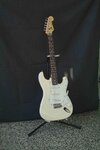
Same guitar in 2011:
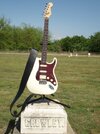
Same guitar in 2011:
I prefer the tortoise pickguard.
I agree...a new blues gig requires me to switch back to the DiMarzio hum cancelling pickups...so I am thinking about getting a S-S-S tortoise shell pickguard and ditching the white...

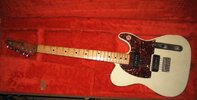
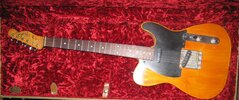

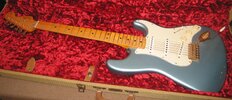

Col Mustard
Ambassador of Perseverance
I have only one guitar with a maple neck, and it's my '06 MIM Fender Tele '72 Deluxe replica...
I actually love the neck. It took me some time to get used to, since it's a different shape than
any other guitar I own. AND it's covered in polyurethane, as I believe all non-USA Fender guitars are.
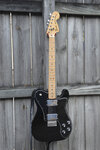
To me this lovely piece of blonde maple on my black Telecaster is really beautiful... BUT
I had some trouble getting used to this instrument on my own... I wanted to very badly
because I love the tone and the look and all. A couple of things really helped me turn
this guitar into a very comfortable friend to make music with.
1. I broke down and took it in for professional setup. I thought I had got it right, but
since I wasn't relating to it very well, I decided to spend some money, and either I would
like it more or it would be easier to sell with a pro setup. I turned out to like it MUCH more,
so what ever they did was very worth it. That was at least five years ago, and it's been great
ever since.
2. On advice from other members on ETSG, I scrubbed the back of the neck with a green kitchen cleaning pad.
I had tried with some steel wool (outside, on a windy day, with the wind carrying the steel crumbs AWAY from
my pickups). But the green kitchen scrubbie really did a number on the polyurethane coating on the back of
the neck. I believe it took a layer of it off... and roughed up the hard slick poly. Then I smoothed it with
the steel wool again and it made a huge difference. It's still hard but it doesn't feel like plastic. It's smooth
but not sticky in any way.
So I voted for maple necks for Fender guitars. I never had any trouble with the fretboard side of this neck.
The fretboard looks great, some maple grain shows, and the frets are solid and easy to work with.
I also do NOT like the looks of an old maple Fender neck with the finish worn away in spots and a lot of dirt and dead
punk skin worked into the cracks in the lacquer. My Tele may escape this fate because the neck is covered in
polyurethane. I dunno. The poly shows no cracks or divots, and the guitar is ten years old.
To me that just goes to show that polyurethane is a very practical finish for guitars.
People go all giddy with enthusiasm over lacquer, and I can't argue with that because it's traditional.
Most of the guitars I own were varnished with lacquer. On some of them it's badly worn.
But my two Epiphones and my MIM Tele and MIC P-Bass all sport polyurethane finishes , and it seems hard
and nearly impervious to anything but boshing the guitar with a brick. Go figure...
Anyway, I stick with my vote for maple on a Fender. I think it's hard to beat.
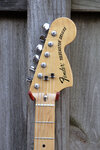
I actually love the neck. It took me some time to get used to, since it's a different shape than
any other guitar I own. AND it's covered in polyurethane, as I believe all non-USA Fender guitars are.
To me this lovely piece of blonde maple on my black Telecaster is really beautiful... BUT
I had some trouble getting used to this instrument on my own... I wanted to very badly
because I love the tone and the look and all. A couple of things really helped me turn
this guitar into a very comfortable friend to make music with.
1. I broke down and took it in for professional setup. I thought I had got it right, but
since I wasn't relating to it very well, I decided to spend some money, and either I would
like it more or it would be easier to sell with a pro setup. I turned out to like it MUCH more,
so what ever they did was very worth it. That was at least five years ago, and it's been great
ever since.
2. On advice from other members on ETSG, I scrubbed the back of the neck with a green kitchen cleaning pad.
I had tried with some steel wool (outside, on a windy day, with the wind carrying the steel crumbs AWAY from
my pickups). But the green kitchen scrubbie really did a number on the polyurethane coating on the back of
the neck. I believe it took a layer of it off... and roughed up the hard slick poly. Then I smoothed it with
the steel wool again and it made a huge difference. It's still hard but it doesn't feel like plastic. It's smooth
but not sticky in any way.
So I voted for maple necks for Fender guitars. I never had any trouble with the fretboard side of this neck.
The fretboard looks great, some maple grain shows, and the frets are solid and easy to work with.
I also do NOT like the looks of an old maple Fender neck with the finish worn away in spots and a lot of dirt and dead
punk skin worked into the cracks in the lacquer. My Tele may escape this fate because the neck is covered in
polyurethane. I dunno. The poly shows no cracks or divots, and the guitar is ten years old.
To me that just goes to show that polyurethane is a very practical finish for guitars.
People go all giddy with enthusiasm over lacquer, and I can't argue with that because it's traditional.
Most of the guitars I own were varnished with lacquer. On some of them it's badly worn.
But my two Epiphones and my MIM Tele and MIC P-Bass all sport polyurethane finishes , and it seems hard
and nearly impervious to anything but boshing the guitar with a brick. Go figure...
Anyway, I stick with my vote for maple on a Fender. I think it's hard to beat.

RVA
Ambassador
That is a killer yellow!It's hard to beat the original Slab board Stratocaster. What about the Fender Esquires I only need one pickup.
Amp 7/61 guitar 7/61
View attachment 633

eSGEe
Ferengi Ambassador of Trade
You're kidding, are you ?

gasket----- I think you have a "type" mate

Send me the one at far left .......and I will send you something Les Paul shaped to break up the monotony......doesnt the DAMN VOLUME KNOB get in your way?!?!?!?
RVA
Ambassador
Wow. Those are wonderful

gasket
Ambassador of the Guitarded
I have only one guitar with a maple neck, and it's my '06 MIM Fender Tele '72 Deluxe replica...
"it's my '06 MIM Fender Tele '72 Deluxe replica", and I keep in on it's hanger on the fence in my backyard. The poly is so tough the changing season don't bother it a bit. LOL.
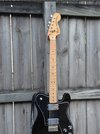
gasket
Ambassador of the Guitarded
doesnt the DAMN VOLUME KNOB get in your way?
How could it?
Hanging on the wall up there and me standing back admiring them.
Hey, did you think they were for actual playing?
Col Mustard
Ambassador of Perseverance
>Gasket said: "I keep in on it's hanger on the fence in my backyard. The poly is so tough the changing season don't bother it a bit. LOL."
>COL SAYS: dat's wight, wabbit! Actually I scrooged the guitar hanger into the fence post so I could
photograph guitars easily, and it worked fine until I sold the building and moved my photo
business to another location. So that's an ol' pitcha, but the Tele hasn't changed much at all.
I named her Snow White. Here she is with Caledonia, my blonde beauty, last summer. There's a blonde/Black
motif going between these two, and I don't totally understand it, but I like it.
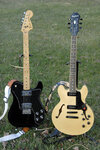
>COL SAYS: dat's wight, wabbit! Actually I scrooged the guitar hanger into the fence post so I could
photograph guitars easily, and it worked fine until I sold the building and moved my photo
business to another location. So that's an ol' pitcha, but the Tele hasn't changed much at all.
I named her Snow White. Here she is with Caledonia, my blonde beauty, last summer. There's a blonde/Black
motif going between these two, and I don't totally understand it, but I like it.
gasket
Ambassador of the Guitarded
>Gasket said: "I keep in on it's hanger on the fence in my backyard. The poly is so tough the changing season don't bother it a bit. LOL."
>COL SAYS: dat's wight, wabbit! Actually I scrooged the guitar hanger into the fence post so I could
photograph guitars easily, and it worked fine until I sold the building and moved my photo
business to another location. So that's an ol' pitcha, but the Tele hasn't changed much at all.
I named her Snow White. Here she is with Caledonia, my blonde beauty, last summer. There's a blonde/Black
motif going between these two, and I don't totally understand it, but I like it.
View attachment 1155
Both lovely ladies but after your comment I'm a thinking the necks & headstocks have been swapped over.
And don't forget to throw some plastic sheet over them if it looks like rain.
RVA
Ambassador
I am a mere member in these pages. You can mess with me any time you all want to (but I will mess with you back!). As long as no one messes with this forum, we are good!I liked this post because it made me spurt beer from my nose and almost choke while LOL.
Then I figured I'm also "nutz" because I also have no idea.
BTW, not a good move to call an administrator "nutz" without a smilie. Some places send members to the naughty corner for that.

Last edited:
RVA
Ambassador
Why you little ....Wait......izzat......French!?!!!
Oh My God!!!!!!!!!!
He's been infected!
GET HIM!!!!!!!!
Ok, I corrected my spelling. And just to prove I do not abuse my admin powers, I will not edit your quote, even though I want to!!!
eSGEe
Ferengi Ambassador of Trade
BUWAHAHHAHAHHAHAHHAHAHHAHHAHAHHAHHAHAH--- haHow could it?
Hanging on the wall up there and me standing back admiring them.
Hey, did you think they were for actual playing?