...you want to chase your tail on the internet??? Go search for a firm answer to this!
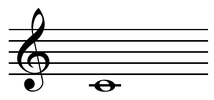
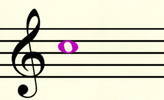
What I want to to know is if I see this on standard notation where the hell do I play it???????
Some say guitarist play it on the 5th string 3rd fret. Some say it's on the 1st string 8th fret
and still others say 2nd string 1st fret...anyone who reads music and can tell me as a guitarist?
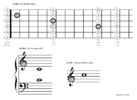
View attachment 8880
Just for clarity, the notes at the 5th string/3rd fret and the 6th string/8th fret are the same note (I assume you meant to say 6th string, instead of 1st string). They are the same fundamental pitch, but they have a different timbre. The decision to use one or the other is determined by the timbre you are trying to achieve. The sheet music, itself, normally won't indicate which should be used. You really have to listen for that. Or, fingering considerations may make it easier to use one or the other.
Incidentally, this is true all over the fretboard. Most notes can be found in more than one place on the fretboard, but the timbre will be different from one to the other.
Getting back to Middle C...
As for the objective, established pitch of "middle C", itself, as Relic and I mentioned, the note at the 2nd string/1st fret is the pitch that corresponds to middle C, as played on the piano - 261.63hz. In PIANO music, this would be the first ledger line beneath the treble clef.
But, the note written as middle C in GUITAR sheet music is actually an octave below middle C on a piano. However, in GUITAR sheet music, this note is also written as the first ledger line beneath the treble clef!
So, you have two different notes on the guitar that may be referred to as "middle C." How do you know which to play?
This is how I approach it:
If you are playing sheet music that was written for guitar (such as guitar music you download from Musicnotes.com or music you find in the printed guitar anthologies you can buy in a music store) whenever you encounter the note written as middle C (the first ledger line beneath the treble clef), use the 3rd fret on the 5th string (or the 8th fret on the 6th string, if it sounds better). You can assume that the music was written taking the pitch characteristics of the guitar into account. But, listen carefully as you play, just in case there has been a transcription error.
On the other hand, if you are playing from music written for another concert pitch instrument, such as flute or piano, you may want to begin by playing an octave higher on the fretboard than you would otherwise play if you were using music written for guitar. But, again, listen to be sure it sounds good in the context of everything else.
The bottom line to remember is that the guitar transposes on the octave. So, within the context of guitar and music written for guitar, a note written as middle C will be played on the 5th string/3rd fret (or 6th string/8th fret). Just be aware that this is an octave below the defined, standard, concert middle C, as played on a piano, which is 261.63 Hz, and corresponds to the note at the 2nd string/1st fret (and it's equivalents). So, from time to time you may have to adjust and play higher depending on the situation.