Harley Benton

A couple of days sgo, he told me that after much consideration, he decided on a LH PRS-24 and it is a really exceptional quality guitar, despite being an Indonesian model, built by Samick.
Samick is a long-established and very accomplished musical instrument maker. Samick was founded in South Korea in 1958 as a piano builder.

Musical instruments are literally what they do. They OEM for quite a few different brands. They can make an instrument up to any quality level. The final quality will really be determined by the price-point they are building to.

My HB-30 that I sold to @chilipeppermaniac was made in Korea by Samick for Washburn. When I got it, I could see the areas where costs were cut, particularly in the electronics and some hardware. However, the construction, fit, and finish are really quite good. Once I replaced the electronics, I played that guitar a lot, including live performances.

Your son will do great with his PRS!
 
Right?! Paul Bigsby would be pissed!!!
O.W. Appleton is rolling in his grave!

I think Bigsby's beef would be with Leo Fender, not Gibson: I sure don't see any inspiration from his guitars in the design of the Les Paul but arguably some in the Broadcaster/Telecaster...

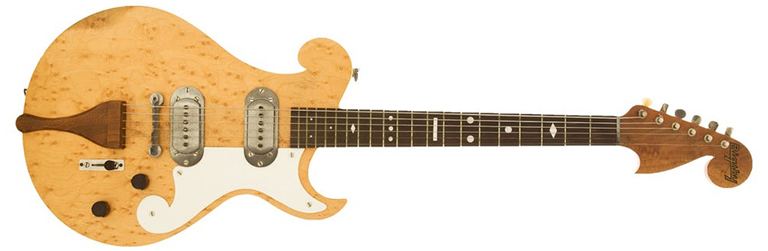
Bigsby-Solid-Body-Electric-Guitar.jpg


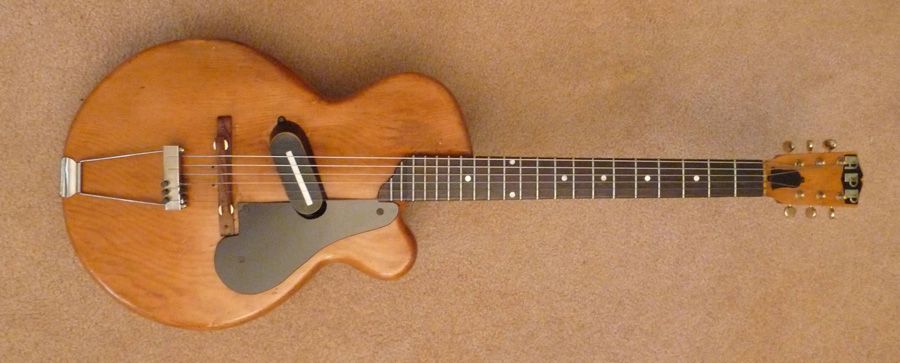
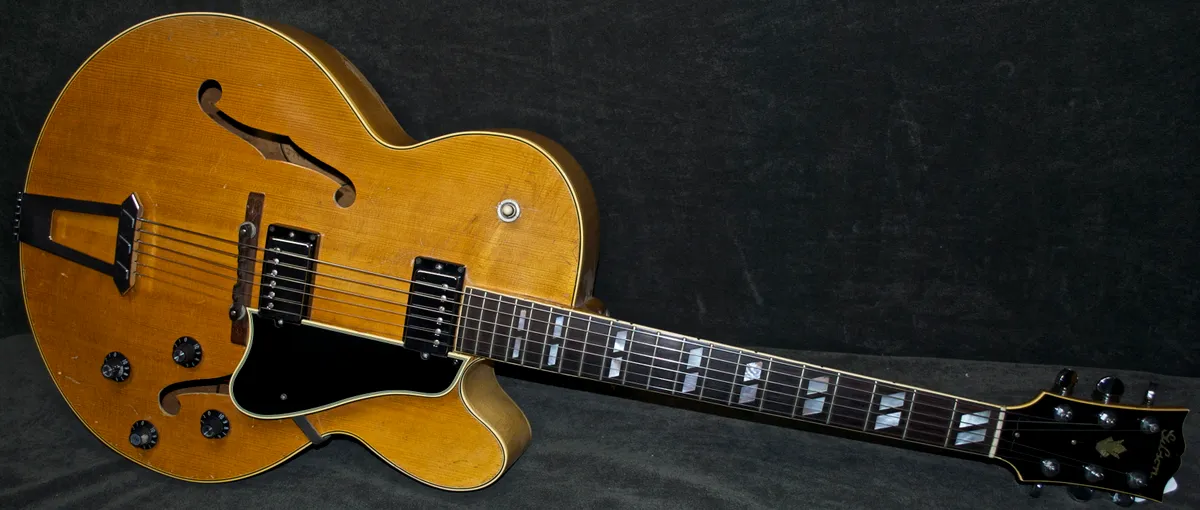
And Appleton aped the aesthetics of the Gibson L7, then later claimed disingenuously that the Les Paul was somehow based on his design

1941 Appleton:

91add76fc120b022cb066d1baae07556.jpg


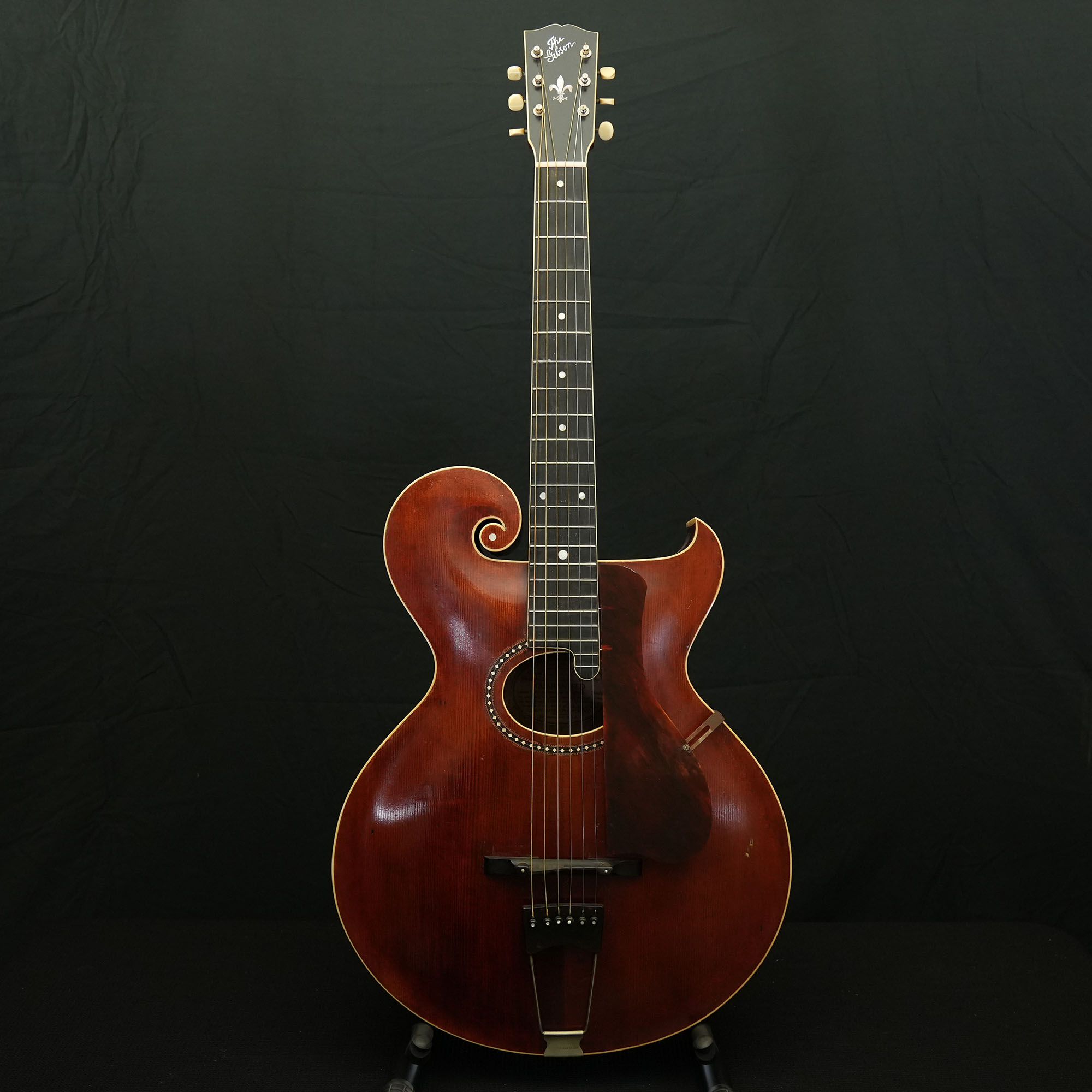
1940 L7 (obviously the humbuckers were added later):

1940-gibson-l7-vvv-sold-blonde-1-AkSXc2K.jpg


I know makers get inspiration from one another and what the public demands. But these cheap offshore brands so blatantly copying products, whether a LP syle, Tele or Strat style, whatever it may be, just bugs me.
 
Last edited:
I think Bigsby's beef would be with Leo Fender, not Gibson: I sure don't see any inspiration from his guitars in the design of the Les Paul but arguably some in the Broadcaster/Telecaster...

Bigsby-Solid-Body-Electric-Guitar.jpg


And Appleton aped the aesthetics of the Gibson L7, then later claimed disingenuously that the Les Paul was somehow based on his design

1941 Appleton:

91add76fc120b022cb066d1baae07556.jpg


1940 L7:

1940-gibson-l7-vvv-sold-blonde-1-AkSXc2K.jpg


I know makers get inspiration from one another and what the public demands. But these cheap offshore brands so blatantly copying products, whether a LP syle, Tele or Strat style, whatever it may be, just bugs me.
I dunno, this one looks pretty LP-ish to me. Fender definitely took and used the headstock shape though. And why not?

1948-Bigsby-Merle-Travis-Credit-Nigel-Osbourne-Redferns@1400x535-1200x459.jpg

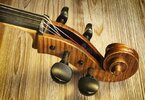
Even Paul Bigsby aped the shape from something that came before:

neck-headstock-cello-textured-wooden-background-warm-light-neck-headstock-cello-179049545.jpg


I get that it's business and it's gotta be the way it is, but it's tiresome pretending that that body shape is so special or unique when they really aren't. It's been around quite a while.
 
And Appleton aped the aesthetics of the Gibson L7, then later claimed disingenuously that the Les Paul was somehow based on his design

If Appleton claimed the Les Paul was based on his design, I would be very skeptical of the claim. I think that would be a real stretch for him to say that.

At the same time, I don't know that I'd necessarily say the Appleton copied off the L-7. He may have, but the Venetian single-cutaway style was so prevalant, from Gibson to Gretsch to Epiphone to D'Angelico and others during that whole era.

Now, if there is some documentation saying that Appleton was, somehow, inspired by the L-7 or something, then I could see the point, but I tend to think it was just the general design concept of the period.
 
I know makers get inspiration from one another and what the public demands. But these cheap offshore brands so blatantly copying products, whether a LP syle, Tele or Strat style, whatever it may be, just bugs me.

Yeah, I agree with that.

But, I extend that to domestic builders, too. I gotta say, often when I hear about some awesome new builder, I’ll check the website and, more often than not, my reaction will be an eye roll and a sigh, “Yay, another Tele copy.”
 
Samick is a long-established and very accomplished musical instrument maker. Samick was founded in South Korea in 1958 as a piano builder.

Musical instruments are literally what they do. They OEM for quite a few different brands. They can make an instrument up to any quality level. The final quality will really be determined by the price-point they are building to.

My HB-30 that I sold to @chilipeppermaniac was made in Korea by Samick for Washburn. When I got it, I could see the areas where costs were cut.

Your son will do great with his PRS!
Smaick builds a lot of Jackson and Gretsch models. Ive seen both heaven and hell from Samick....

received_1564708474044912.jpeg
 
Dang, those Bigsby guitars are hideous.
I think Bigsby's beef would be with Leo Fender, not Gibson: I sure don't see any inspiration from his guitars in the design of the Les Paul but arguably some in the Broadcaster/Telecaster...
I know makers get inspiration from one another and what the public demands. But these cheap offshore brands so blatantly copying products, whether a LP syle, Tele or Strat style, whatever it may be, just bugs me.
Yeah, many copied but some did do unique designs. Ibanez Artist, Hamer. Sure they have double cutaway but that does not make them a LP Jr or SG. Some very nice designs. Sadly most just copied what was popular.
 
If Appleton claimed the Les Paul was based on his design, I would be very skeptical of the claim. I think that would be a real stretch for him to say that.

On his website his heirs defnitely seem to want to give him credit for the Les Paul design:

They stop just short of claiming that Gibson outright stole it from him.

At the same time, I don't know that I'd necessarily say the Appleton copied off the L-7. He may have, but the Venetian single-cutaway style was so prevalant, from Gibson to Gretsch to Epiphone to D'Angelico and others during that whole era.

Now, if there is some documentation saying that Appleton was, somehow, inspired by the L-7 or something, then I could see the point, but I tend to think it was just the general design concept of the period.

Of course I can't prove it and have not seen that documented, but he definitely got inspiration from Gibsons and other designs that preceeded his. I just always thought it looked like one of those.
 
On his website his heirs defnitely seem to want to give him credit for the Les Paul design:

They stop just short of claiming that Gibson outright stole it from him.


Of course I can't prove it and have not seen that documented, but he definitely got inspiration from Gibsons and other designs that preceeded his. I just always thought it looked like one of those.
I saw that. While Les Log wasn't entirely solid body, he designed it in 1939. Predates App and has 2 pickups and controls. App's is no doubt cool being completely solid but the body shape was not unique at that time.

Les+Paul+with+Guitar.jpg
 
On his website his heirs defnitely seem to want to give him credit for the Les Paul design:

Yeah, I think that's a bit of a stretch. Like I said, that Venetian cutaway design was just so pervasive in guitars across the board that I think Gibson could have gotten the general design idea from their own catalog!

Of course I can't prove it and have not seen that documented, but he definitely got inspiration from Gibsons and other designs that preceeded his. I just always thought it looked like one of those.

Oh, I have no doubt. It would naturally look like one of those since that's just about what everything was. I would totally expect him to develop a design consistent with the general look of the time.
 
I saw that. While Les Log wasn't entirely solid body, he designed it in 1939. Predates App and has 2 pickups and controls. App's is no doubt cool being completely solid but the body shape was not unique at that time.

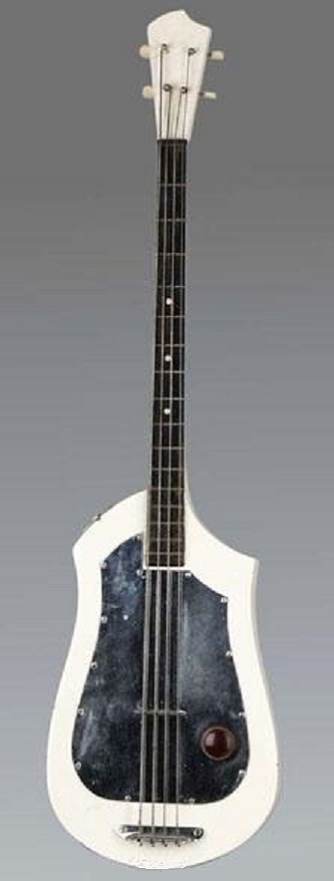
Paul Tutmarc beat Les Paul to the punch though.

He invented and marketed the first solid-body stringed instrument. It was a bass guitar sold by Audio Vox as the Model 736 Electric Bass in 1935 or 1936


audiovox-736-jive-3.png
 
Back
Top