Silkyn Super 50 blowing power tubes V7

jtcnj

Ambassador of the Crossroad
Country flag
I mentioned this in @eclecticsynergy Friedman thread:
Glad you got it sorted!

My Silkyn Super 50 is blowing power tubes in V7 only, most recently biased around 60%.
I have not dug further into it yet and am re-evaluating my understanding and methods of measuring and setting bias.
Only Tung Sol 6L6GC-STR tubes have blown: 3 times, always V7. The other 2 times the bias was @70%.

I will start a thread and post the schematic during the Thanksgiving extended weekend, when I have time.

You should go through tests before installing any tubes.
You need to take meter readings with the tubes removed.

The first thing you do is:
Turn the power on but leave the standby set to 'warm-up.'
Do not turn the standby to 'operate' position.
Set meter for DC volts.

Connect black meter probe to chassis.
Connect red meter probe to pin 5 of output tube socket.
Measure pin 5 of both output tube sockets...write down the DC voltage reading of pin 5 for each output tube socket.
Report the DC volt readings.

Do not put the tubes in.
Do not try to play the amp.
Not until we have taken all the readings and corrected the problem.

Correct problems first.
Put tubes in last.
Each failure instance was with the stock 16Ω speaker on the 16Ω output from the amp, not pushing the amp hard.

The power section schematic pdf is attached.
My bias voltage at pin5 for both power tube sockets V7 and V8, empty, is -54.7v.

I poked around all the bias circuit components with a chop stick, and pressed on the circuit board a bit around them.
The bias voltage holds steady.

I re-flowed the solder joints for the components / connections downstream of the bias pot out to V7, including the V7 socket pin 5.
I let it sit, turned the standby to play, checking the bias and B+ voltages frequently, for about 30 min.
The voltages hold steady.

I put the remaining 2 Tung Sol tubes (unmatched) in the sockets.

They are actually pretty close in voltage drop / current draw, but I cant speak to the transconductance.

The bias is @62%. I let it warm up and kept checking the measurements and watching for red-plating as the tubes warmed up.
The dissipation settled at @65%.

I let this sit and re-checked every 15 min or so for over 3 hours.
The voltage drop across the OT primaries varied 5-8mV or so between measurements.
The bias voltage remained steady at -51.76v.
No red-plating.

I have not pulled the PCB to check for carbon arcing yet; it is a big PITA and will wait for feedback here before doing so.
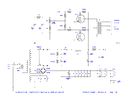
Silkyn Super 50 schematic Power section.png
 

Attachments

Last edited:
I mentioned this in @eclecticsynergy Friedman thread:


Each failure instance was with the stock 16Ω speaker on the 16Ω output from the amp, not pushing the amp hard.

The power section schematic pdf is attached.
My bias voltage at pin5 for both power tube sockets V7 and V8, empty, is -54.7v.

I poked around all the bias circuit components with a chop stick, and pressed on the circuit board a bit around them.
The bias voltage holds steady.

I re-flowed the solder joints for the components / connections downstream of the bias pot out to V7, including the V7 socket pin 5.
I let it sit, turned the standby to play, checking the bias and B+ voltages frequently, for about 30 min.
The voltages hold steady.

I put the remaining 2 Tung Sol tubes (unmatched) in the sockets.

They are actually pretty close in voltage drop / current draw, but I cant speak to the transconductance.

The bias is @62%. I let it warm up and kept checking the measurements and watching for red-plating as the tubes warmed up.
The dissipation settled at @65%.

I let this sit and re-checked every 15 min or so for over 3 hours.
The voltage drop across the OT primaries varied 5-8mV or so between measurements.
The bias voltage remained steady at -51.76v.
No red-plating.

I have not pulled the PCB to check for carbon arcing yet; it is a big PITA and will wait for feedback here before doing so.

View attachment 87301
Still, no tubes installed and power disconnected...

Why don't you try
Disconnect power
Take out tubes
Set meter for ohms
connect red probe to pin 4 of output tube socket...
connect black probe to pin 5 of output tube socket.
Wait, wait...After the reading settles, stabilizes, note the ohm reading.
Now repeat for both output tube sockets, and note the ohm readings for both sockets.

Now do the same test again between pin 3 and pin 2 of the output tube sockets.
Note the readings of both sockets.
(if there is arcing burning of the socket, it usually happens between pin 3 and pin 2)
Then the ohm reading for 1 socket might be different because the pins 3,2 are bridged with carbon....

In other words, look for a difference between the 2 output tubes..

3. Now plug a short speaker cable into the speaker output jack of the amplifier...
Now connect the ohmmeter to the free end of the speaker cable.
Now you will be reading like .2 ohms (you are reading the secondary of the output transformer)
Now flex the speaker cable plug where it goes into the amplifier speaker jack.

Move the plug gently up down left right and wiggle the plug. Flex the cable around...
When you shake and flex the plug, does the ohm reading remain steady?
Or, does it fluctuate all over the place?

The speaker jack on the amp can go bad.
If so it can cause an intermittent connection to the speaker cable plug.
The reading won't hold steady when the plug is flexed....

What you want is for the reading to hold steady no matter how speaker cable plug is flexed....
This is testing for a solid connection...to detect intermittent, or defect contact of that speaker jack.

If the contact is defect you need to replace the speaker jack, on the amp chassis.
The speaker load must remain solidly connected at all times without any fluctuations.

This is called a flex test, it's an industry standard test.

4. Now repeat the same type test on the speaker cabinet jack.
Flex the plug where it goes into the cabinet jack, and see if the ohms stays steady.
Otherwise, replace the cabinet jack till you get a solid connection.

BTW
a 16 ohm cabinet should read about 12.6 ohms when you are testing it w/ the ohmmeter.
What reading are you getting?
 
I'll run through these tests this evening, thx.
It is a combo, so I will test the output jack and the speaker plug / lead/ connectors.
 
The odd thing about this is the first 2 times the Tung-Sol tube failed, I put the stock Sovtek 5881/6L6WGC pair back in, biased them - and they are fine. I thought I had a bad tube in each case.

Also, I was biasing the Sovtek tube close to 70% as a 30w tube, @syscokid pointed out they are a 25w tube.
 
Confused here…
Does a tube in V7 immediately fail upon power up?
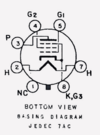
With the tube installed but no power, have you checked for proper and improper continuity or shorts within the socket’s lugs? Example: Heater filament terminals should have continuity between them but not with any other of its terminals.
9D39C7F3-4459-4838-8453-2DA9CD77932A.png
Also, I was biasing the Sovtek tube close to 70% as a 30w tube, @syscokid pointed out they are a 25w tube.
The Sovtek 5881/6L6WGC is a 20.5 watt tube!!!
 
Last edited:
The speaker jack on the amp can go bad.
If so it can cause an intermittent connection to the speaker cable plug.
The reading won't hold steady when the plug is flexed....

What you want is for the reading to hold steady no matter how speaker cable plug is flexed....
This is testing for a solid connection...to detect intermittent, or defect contact of that speaker jack.

If the contact is defect you need to replace the speaker jack, on the amp chassis.
The speaker load must remain solidly connected at all times without any fluctuations.

This is called a flex test, it's an industry standard test.

4. Now repeat the same type test on the speaker cabinet jack.
Flex the plug where it goes into the cabinet jack, and see if the ohms stays steady.
Intermittent bad connection at the amps output or speaker cabinets jacks/speaker cable, are a VERY common cause of power tube failure, & the fault often goes undetected by lesser experienced persons as they simply think "bad tube/s". You see, if (during applied signal conditions) the connection between the OT secondary & speakers is lost, even for an instant, the voltage on the OT primary (& so the tubes) skyrockets (& I do mean skyrockets), easily taking out not only tubes, but also quite possibly the OT primary.
The amps output & speaker cabinet jacks are the most important jacks to properly maintain on you amplifier.
Nice test procedure (flex test) to share with the community Mr AMS. Cheers
 
Confused here…
Does a tube in V7 immediately fail upon power up?
With the tube installed but no power, have you checked for proper and improper continuity or shorts within the socket’s lugs? Example: Heater filament terminals should have continuity between them but not with any other of its terminals


The Sovtek 5881/6L6WGC is a 20.5 watt tube!!!
The tube has failed each time on the second or third play session.
My first guess is / was an intermittent open on the bias circuit.

I have not checked for the proper continuity or isolation between the pins.

I was guessing ; shouldn't have, on the max wattage for that Sovtek tube. I have it written on the notepad for that amp / those tubes at home, and likely it says 20.5w max.
 
I did the speaker jack and cable tests, with me moving things around the variation was only 0.1Ω.
The speaker measures 12.3Ω

(This was after finding some of my clip leads were not giving steady resistance measurements when flexed.
The wire is just crimped to the clip; I soldered them all and they are rock solid now.)

I will spend more time checking between the socket pins in the next day or so, as futzing with the clip leads ate up some of my time.
 
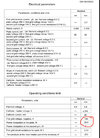
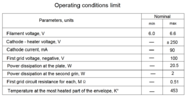
Screenshot 2022-11-30 at 08-44-17 5881 SV.pdf.png
Now the real 6L6 spec sheet...
And FYI: 5881 is identical in specs to 6L6. 5881 is a mil spec 6L6 designed for rough usage.

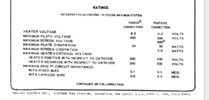
Screenshot 2022-11-30 at 08-46-07 6L6GC - 6L6GC.pdf.png

In other words:

The tubes you bought: were 6V6 tubes relabeled as"5881."
The tubes you bought were misrepresented.
There is NO way those tubes will work in a 100 watt amplifier.
Too much current.
6L6 is supposed to be a 30 WATT TUBE !

I think Sysco has a VERY valid point....:celebrate:

(you were hosed)

And
this is not the first time New Sensor has mislabeled tubes....
They also sell a Fake EL34....(which is a Tetrode)-----a real EL34 is a Pentode.
This EL34 Fake, mislabling has already caused damage and destruction to other amplifiers, such as Traynor or PV Windsor.

BUT
besides the wrong tubes, there could be other problems, soooo
you should still do all the testing, Just In Case.

In other words...
The bias was set 33% TOO HOT. No wonder they blow up.
 
Last edited:
Yes, the true 5881 is a "ruggedized" military spec version of the 6L6.
Here's a bit of a write-up on the two types. The Difference Between a 5881 and a 6L6GC Valve? | ampvalves.co.uk
If however, you are going with an "old production" 5881 (or 6L6 for that matter), it well may not be a 30 watt maximum plate dissipation rated tube. RCA, who first designed the 5881, did so as a 23 watt rated tube. Using the link below, you can scroll down to view the original RCA 5881 datasheet showing this. You can also see the Tung Sol USA datasheet showing the 5881 as a 23 watt rated tube.
Remember, the original 6L6 (metal envelope type) was only rated for 19 watts. With the (glass enveloped) 6L6G the maximum plate dissipation was increased, but it was only with the 6L6GC that it was rated for 30 watts. Cheers
 
So
were you setting bias based on a 30 watt tube?
Or was the bias set at 70% of 20.5 watts?

That might explain it...
But yes check the rest of it anyway.
 
So
were you setting bias based on a 30 watt tube?
Or was the bias set at 70% of 20.5 watts?

That might explain it...
But yes check the rest of it anyway.

Hold up.
The tube that failed each time at V7 is a Tung-Sol 6L6GC-STR - 30w tube.
If these are actually NOT a 30w tube, then that answers that, coincidentally the 3 failures were all at V7.

The stock tubes are the Sovtek branded 5881/6L6WGC - Russian 6P3S-E, the 20.5w tube.

This most recent failure, I biased the Tung-Sol pair at @60% (based on the current draw calculated by measuring the voltage drop and resistance across each half of the OT, multiplied by the plate voltage). Previous 2 failures were biased at @70%.

Previously, I had mistaken the Sovtek tube for 30w, biased it at 70% - based on 30w, and they have survived.
I know better now to bias them based on 20.5w.

Have not had more time with it to check the resistances between pins yet.
I stated above, I had it running for 3+ hours at idle and the bias was solid.
If the resistances check out, I will compare pin to pin voltages as well.
 
Last edited:
I metered the socket pins between each other, and compared V7 to V8; they are all about the same.

@Amp Mad Scientist asked about these specifically so:

Leaving the leads connected for several minutes until stable, the results:
pin 2-3: V7 .395MΩ, V8 .397MΩ.
pin 4-5: V7 .731MΩ, V8 719MΩ.

Is the 2k and 11k or so difference within normal or does this suggest carbon arcing?

I did the flex tests on the output jacks and speaker cable again, they are rock solid.
 
I metered the socket pins between each other, and compared V7 to V8; they are all about the same.

@Amp Mad Scientist asked about these specifically so:

Leaving the leads connected for several minutes until stable, the results:
pin 2-3: V7 .395MΩ, V8 .397MΩ.
pin 4-5: V7 .731MΩ, V8 719MΩ.

Is the 2k and 11k or so difference within normal or does this suggest carbon arcing?

I did the flex tests on the output jacks and speaker cable again, they are rock solid.
Seems OK no sign of arcing carbon.
Yes carbon burns would change the resistance.
But better to check for any problem............... before frying tubes accidentally.
Caution has it's rewards.
 
Hold up.
The tube that failed each time at V7 is a Tung-Sol 6L6GC-STR - 30w tube.
If these are actually NOT a 30w tube, then that answers that, coincidentally the 3 failures were all at V7.

The stock tubes are the Sovtek branded 5881/6L6WGC - Russian 6P3S-E, the 20.5w tube.

This most recent failure, I biased the Tung-Sol pair at @60% (based on the current draw calculated by measuring the voltage drop and resistance across each half of the OT, multiplied by the plate voltage). Previous 2 failures were biased at @70%.

Previously, I had mistaken the Sovtek tube for 30w, biased it at 70% - based on 30w, and they have survived.
I know better now to bias them based on 20.5w.

Have not had more time with it to check the resistances between pins yet.
I stated above, I had it running for 3+ hours at idle and the bias was solid.
If the resistances check out, I will compare pin to pin voltages as well.
I would change the PI coupling caps to 600 volt or 630 volt.
The caps between the PI Plates and the power tube grids.
These are the most stressed coupling caps.
There is B+ on one side, and negative bias voltage on the other side...and there is the full preamp AC voltage (audio) going through the cap...all at the same time.

Because of this arrangement, PI coupling caps tend to leak or break down faster, and when some leakage occurs, the bias will drift.
Normally people use 400V caps but I think that is under rated for the PI application.

The 400V PI caps in Boogies go bad all the time...although they were good caps the rating is too low to take the voltages for very long...they fail and the power tubes red plate.
 
I metered the socket pins between each other, and compared V7 to V8; they are all about the same.

@Amp Mad Scientist asked about these specifically so:

Leaving the leads connected for several minutes until stable, the results:
pin 2-3: V7 .395MΩ, V8 .397MΩ.
pin 4-5: V7 .731MΩ, V8 719MΩ.

Is the 2k and 11k or so difference within normal or does this suggest carbon arcing?

I did the flex tests on the output jacks and speaker cable again, they are rock solid.
Have you done the high voltage tests?

Standby turned to operate, tubes out.
DC Voltage on pin 3 of each output tube socket?
DC Voltage on pin 4 of each output tube socket?

Power disconnected, tubes out.
Resistance between pin 3 to pin three of both sockets?
(the resistance of the output transformer primary, pin 3 to pin 3?)

The resistance between pin 3 of one output tube socket, and the output transformer primary center tap?
Now, the other pin3 and center tap?
 
I kind of stalled - thanks for the specifics and staying with me on this.
I will swap those PI coupling caps out this weekend if I have them on hand - I think I do.

The resistance between each pin 3 and the center tap (B+) has always been 19.4-19.5Ω for both, with the tubes in, power off.
I will check it with tubes out; it should be the same I would think.
 
Back
Top