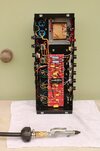
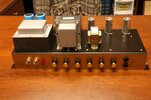
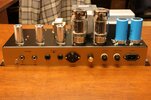
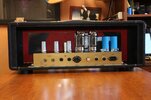
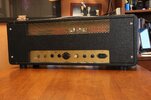
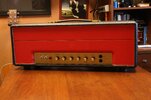
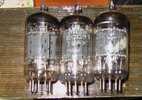
What I use from left to right V-1 Mullard V-2 Mullard V-3 Amperex Bugle Boy with a quad of Mullard XF-1 EL34
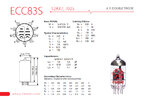
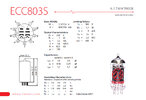
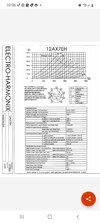
I don't know much about new production 12AX7 ECC83 but in my Marshall's see photo.
View attachment 85194
Good information. Thanks for posting this!!!
Since I tend to run things really hard, we intentionally avoided rare and NOS tubes, and instead sought robust, quiet replacements of modern manufacturing.
Originally, we chose a trio of brand new, CV4004's, but they were noisy in several amps, so
@syscokid began experiments to find tubes that produced a smooth gain structure and were quiet.
The noise was very clearly electrical in nature and not the typical "hiss" we expect from a high gain circuit. It was around 60Hz and so
@syscokid began investigating and swapping tubes into different amps.
Here's what he sent to me about his discovery:
"Good news...
It was the effen preamp tubes. I guess the Genelex CV4004/ECC83 highly discriminates against this circuit. Swapped out V1 with a Mesa STR-12AX7-A and the drop in hum-buzz was huge. Swapped out V2 with an old Sovtek 12AX7-LPS, and that reduced the hum-buzz even further...."
He's really like a scientist with these things. I've sat across from him and listened to him explain how and why he does things and it's knowledge and passion on an otherworldly level.
The power tubes are the 6550's that came as standard equipment in most of the early Marshall's delivered to North America.
For preamp tubes, here's what he sent me:
"V1: TAD 7025 Highgrade. Super quiet. Plenty of balls. Crunches nice. Amp must be cranked!
V2: That fricking Mesa STR again. It works real good in V1, but it got beat out by the TAD.
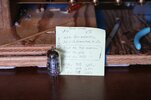
V3: One of the GGL CV4004's. Noise won't rear it's ugly head here. It's a robust tube on paper. Everything sounds real good so far! Voltage difference between both plates was 9v. The other two Gens were around 4v..."
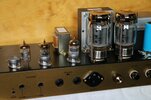
When the Metropoulos FX Loop (not a knock off) was installed, there was a slight voltage drop, so
@syscokid changed the drop resistors to bring the rail voltage back up to where it was before the loop went in.