chilipeppermaniac
Ambassador of Decibels

HEHE Robert,
I am pretty darn certain we will never catch you playing one of these.


I am pretty darn certain we will never catch you playing one of these.


HEHE Robert,
I am pretty darn certain we will never catch you playing one of these.
View attachment 84946
View attachment 84947


Beautiful one, Steve.I have 2 Fender guitars with D necks rare custom order D = 1 7/8" wide at the nut and 3 with C necks and 5 with B necks.
C = 1 3/4" B necks 1 5/8" standard A neck 1 1/2" My friend Scott owns a 1966 A neck Stratocaster only one I have ever seen.
My 1965 Gibson SG Standard is 1 15/16" at the nut.
I love playing Mandolin
View attachment 84950
View attachment 84951

I have 2 Fender guitars with D necks rare custom order D = 1 7/8" wide at the nut and 3 with C necks and 5 with B necks.
C = 1 3/4" B necks 1 5/8" standard A neck 1 1/2" My friend Scott owns a 1966 A neck Stratocaster only one I have ever seen.
My 1965 Gibson SG Standard is 1 15/16" at the nut.
I love playing Mandolin
View attachment 84950
View attachment 84951

I’m at the opposite end of the hand spectrum. I wear a medium glove. There are children with bigger hands than me. Neck size is important to me as well….. just for a different reason.For me its not only a big issue, it's an absolute deal breaker.
I wear a size 13 glove. That's XXL and I can cover a nickel with my middle finger tip. I find the neck on my 2021 Gibson Les Paul 50's Standard Gold Top - at 1.695" wide - difficult to play some open chords on. I cannot accurately play open "D" and "A" on the smaller necks.
The custom Warmoth 1.755" neck on my Stratocaster makes these chord shaoes .uch easier.

I wish I’d have thought of this. It’d be a direction my warped sense of humor should have taken me. Getting slow in my old age.Come to think of it...I don't think my Stratocaster volume knob has ever moved.
Every time I go to use it, it is still in the same place it's always been - conveniently located right next to the bridge pickup, ready for immediate, unobstructed access!
I don't think the volume knobs move around on my other guitars, either...at least, not that I've ever noticed.
Can you imagine how frustrating that would be - for the volume knobs to move on your guitars? Why, you'd never know where to find the darn things!
I wish I’d have thought of this. It’d be a direction my warped sense of humor should have taken me. Getting slow in my old age.
Oh yeah. Me too. Just ask my family. I’m also a bit twisted. It’s a dangerous combination.I'm far too literal to think in such terms.
Impossible for me
Umm, I am totally surprised no one mentioned how even Ritchie Blackmore had issues with his Strat volume knobs. His pissed him off so much he busted a few guitars before the song ever finished.


I've no answer regarding the mandolin, but maybe try a 6 string guinjo, aka bantar (banjo body, guitar neck).I have messed around with both, but it's tough with big fingers.
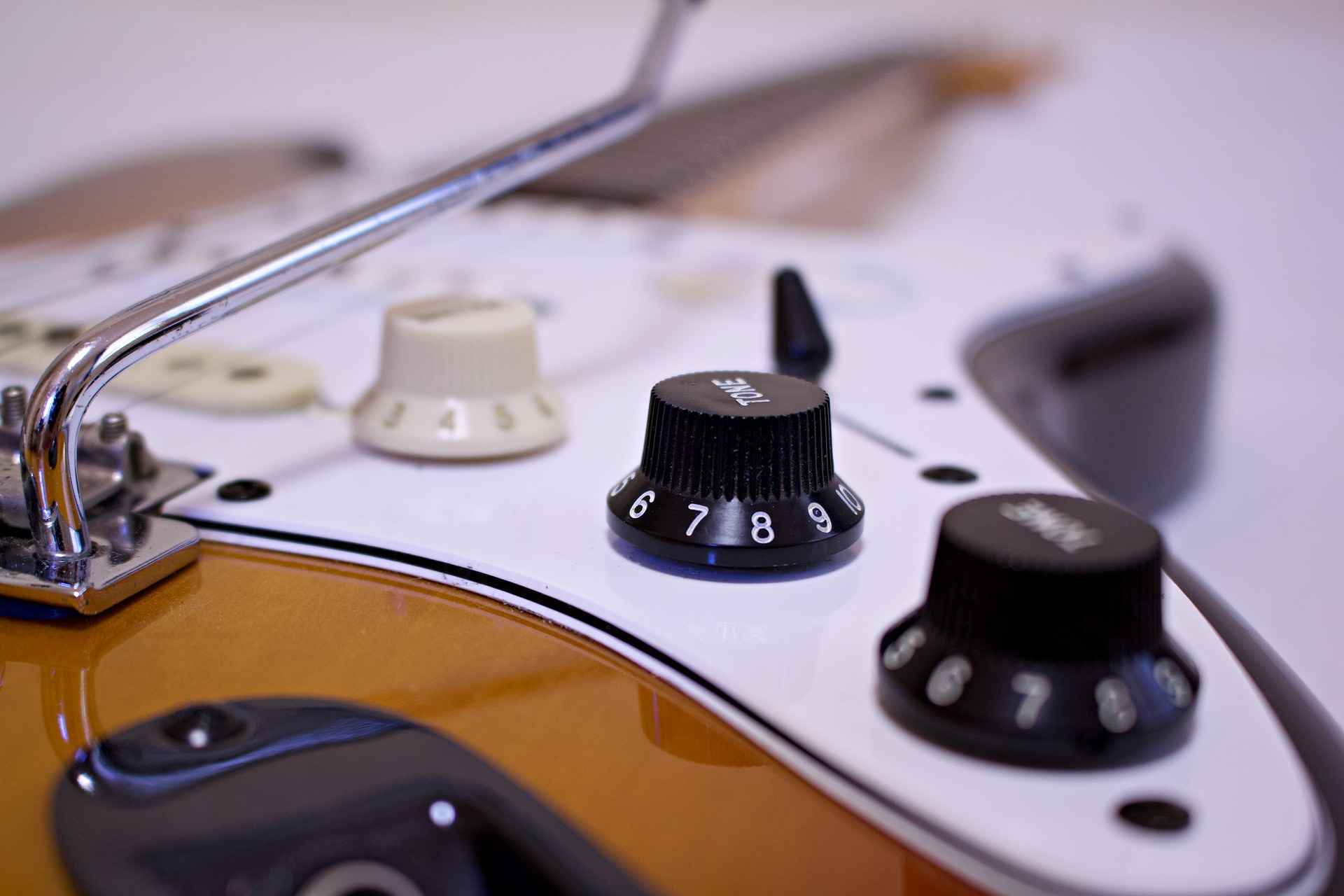
 prosoundhq.com
How to Use a Stratocaster's Controls: Complete Guide - Pro Sound HQ
Wondering how to actually use the controls and knobs on a Stratocaster? Here's a complete guide to using the Strat's controls to get the perfect tone.
Not sure I know what this means.
I am so turned around with all the options of Strats. Makes me wonder what those Jazzmasters or whatever Fender guitars had all those oddball switches on them do.