NGD content: The Waiting ----- according to Gball is the hardest part

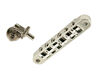
Philadelphia Luthier Tools
Been looking there.

They also engrave TRC's which I would love to find an original for my guitar, but I saw where another fella on My Les Paul with a modern version of my guitar who got a Les Paul KM badge made by Philly... for his.

I wish to find pre slotted ones as I don't want to muck up brand new ones.
 
I only use the roller Nashville's from Philadelphia Luthier Tools as a rule, unless a non-roller is requested.

No slotting, just drop on and go.

If I do 15-20 bridges in a day, the rollers save me a lot of time.
 
Maybe first do a dummy run (or two) if you do plan to notch the saddles
yourself.


AnyHarmlessCobra-max-1mb.gif
 
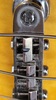
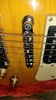
Mark this is my mint Les Paul and mint Explorer see how Gibson set up the saddles cut just deep enough so the strings don't move around.

View attachment 79918

View attachment 79920

Sometimes, you see old and even new Gibson's with hardly any slot at all. It's all based on how the tech did the setup on that particular guitar. I stick to the published specs. It takes all the personal preference out of the equation.

Gibson actually has a published specification sheet on this which includes the recommendations for slot dimensions at both nut and bridge.

In general, the slot dimensions are string gauge + .004/.006" so a .046" low 'E' string would receive a .050" saddle slot.

The purpose of the saddle slot is to provide a gentle radius for the string to rest in, without any sharp edges to cause string wear and breakage. It also provides an intonation point and helps to maintain the string radius at the bridge.

Here's a good video on the subject...


Again, everyone will have a personal opinion and will generally try to enforce and justify their preference as gospel, or base it on how some particular guitar is setup by the factory.

If the tech on the bench did it outside the specs, then you are following a bad example.

Some of the absolute worst setups I've seen are on vintage Gibsons from the 1950's and I know collectors who keep these guitars in a largely unplayable condition because "that's how it came from Kalamazoo. "

First and foremost, there's hardly any way to ensure that a 70 year old guitar still has the factory setup, just because you have the original, hand-written receipt in the case.

But this just goes to demonstrate how guys will try to justify a personal preference as a fact.

In cases like this, I go straight to Gibson custom shop and ask one of their Luthiers and/or refer to the published specs.
 
Last edited:
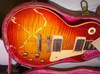
81 days of ownership thus far and the new Les Paul is still wearing its original .010" x .046" strings. I've been playing it daily since I brought it home on November 17, 2021.


Red pick dust from yesterday's rehearsal.

Note the bridge saddle depth:

20220205_140803.jpg

The only adjustments I made were to the pickup pole pieces to balance string to string volumes.

Every measurement on this guitar is consistent with Gibson's published specs, which I've used as a setup guide on everything that goes out of my shop.

Both Fender and Gibson published specs are very similar.

Neck relief is .010", first fret height is .022" and 12th fret action height is .070" respectively. (Same specs we use on the Fender and Jackson lines)

Gibson actually specifies checking action at the 17th fret with a capo on the first fret, but if you use this method and get the spec of 4/64" to 5/64", it will be .070" at the 12th unfretted, so you can check it either way.

Nut and saddle slots are also right on the money at + .004" above string gauge.

This guitar literally came right out of the case and onto the stage with zero modifications.
 
Last edited:
Here's an example of Les Paul neck to body angle being exactly on the specification of about 3.5° to 4° (measured) with 12th fret unfretted action @ .070" respectively.

My 2021 Gibson Les Paul 50's Standard shown in factory trim without adjustment:

20211118_050453.jpg

The steeper the neck angle (and I've seen Gibson's all the way out to 7°) the higher the bridge must be raised to reach the specified action height.
 
Last edited:
Back
Top