
You are using an out of date browser. It may not display this or other websites correctly.
You should upgrade or use an alternative browser.
You should upgrade or use an alternative browser.
So Anyway...
- Thread starter Sp8ctre
- Start date
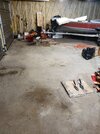


Sometime in 2022 or 2023.Don. If I show up on Monday, drink 3 bottles of wine a day, when will it be gone? Oh, and thanks for letting me stay.

Cadorman
Ambassador of the Catocaster
That works. For now.Sometime in 2022 or 2023.
Cadorman
Ambassador of the Catocaster
So anyway, I just want all of you to know how much I appreciate you. I pretty much wear my heart on my sleeve, so what you see/hear is really me. You are all fantastic. Yes, Adrian is included in this sobbing foray. Okay, Intercourse off, it's time for another beer.



Congratulations brother ChrisSo anyway, looks like I am going to dinner with the bike shop owner tomorrow evening. He said my references checked out. Must be going to offer me the bike shop manager position.
Cadorman
Ambassador of the Catocaster
Thanks Mitch! It will certainly be an interesting turn of events. Living up here full time and being a responsible adult again. Probably going to be more cats in the near future. I intend to bring Boo up and then I will have to get Boo and Too kittens to keep them entertained. I will be solo for a couple of years as there is two years to go on the lease in the cities.Congratulations brother Chris

SIx String Chef
Ambassador of Taste

And I can commission a kickass chef's knife for my kitchen!Now you just have to win Forged in Fire and become a judge.
SIx String Chef
Ambassador of Taste
We just harvested several fully-loaded frames from the hives and will be doing the honey extraction I believe this weekend. It's messy, but so satisfying when you start filling the big buckets and then the jars. From the plants you tell me you have, I think you'll be getting VERY flavourful honey if you decide to go that route.Actually, yes! And that's a great idea! I have lots of wildflowers and berries that need pollinating. Wild raspberries, blueberries, strawberries and cranberries. I'm pretty sure that's why I have bears and keep a .45-70 loaded by the door.
SIx String Chef
Ambassador of Taste
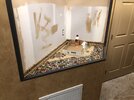
Looking good, Don! Send pics of the progress...So anyway, having fun working on a counter top area in the basement build out. This is in the “cellar” room (wine tasting). It is next to what will be a little kitchenette area which will have a sink (on top of that barrel), an under counter frig, microwave, toaster oven and a coffee maker.
I got the first 2 rows of corks glued. The cork walls will go all the way to the ceiling. The flat surface will be covered in a bottle cap mosaic and will then be covered with 3/4” clear epoxy resin (up to the level of the 1x2 frame/dam).
View attachment 72951
View attachment 72952
View attachment 72953
SIx String Chef
Ambassador of Taste
Aaaand... welcome to the "wonderful" world of home renovations and improvements!Thanks Norm. It’s been a labor of love. We get the flooring tile and carpet installed in November. It then becomes a very livable space. Turns out we are adding 1600 sq ft (carpet and tile measurements) to the house. Heck, that’s bigger than my first house of 1400 sq ft ! I told the wife it would take me about 6 months to finish the basement when we bought the place. I’m now going on month 18
Last edited:
Hah, this is my 4th home, and all but the first one, 1982, had gone through major improvements. That’s how I’ve come to own so many nice tools :dood:Aaaand... welcome to the world of home renovations and improvements!
OP

Sp8ctre
Ambassador of Steel
So anyway,
View attachment 72767
I just fell off the roof. I think I was out for about an hour. I can walk, but I don't remember when I got here.
That is some scary $hit! Hope you are okay, I missed this earlier...
Cadorman
Ambassador of the Catocaster
I'm almost totally recovered. Nothing to see here! Move along.That is some scary $hit! Hope you are okay, I missed this earlier...
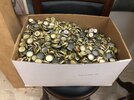
Well started to go through the 2 computer paper boxes of bottle caps. Got another 2 rows of corks glued. Can only do about 2 rows a day, need for the glue to dry. Ordered the 3 gallons of epoxy resin today too.Looking good, Don! Send pics of the progress...
Cadorman
Ambassador of the Catocaster
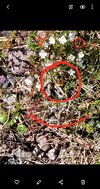
So anyway, can you just put hives out and collect indigenous bees?Has Boo ever thought about a beehive or two? They're fun!
SIx String Chef
Ambassador of Taste
Simple answer: NO. If you do that, the most likely bugs you'll get as tenants in there are all sorts of wasps, hornets, wax moths, etc.
Explanation: Native bees are usually what is called "solitaries", meaning they do not congregate in hives of thousands upon thousands. They usually go about their business finding food for themselves and their brood, have their own nests, some in thick bushes, some others burrow holes underground or in lumber, etc. And even though they feed on nectar and pollen, they do not produce/store honey in their nests. The only bee variety to produce and store honey in amounts useful to humans (or other beasties) is the honeybee, commonly the european variety. The native bees' most notable benefit to humans is their incredible pollinating capacity. And the easiest (and most natural) way to get a
 -truck-intercourse load of pollinators for your fields is to make pollinator-friendly spaces around your field(s). That means, plant (or allow to grow wild) a variety of flowers, tall grasses, weeds, milkweeds, etc. and as possible, try to plant or let grow native, non-invasive plant and flower varieties. Native to your region, that is. We have done that in our backyard Right in the middle of the city) and you'd be amazed at the amount of native bees, bumbles, butterflies and other pollinators you can find in it on any day.
The only way you could (stress on could) get honeybees from the "wild" is by catching a "swarm" of honeybees (which includes their queen) that have just and left a domestic hive and gone feral. This usually is a long, complicated and many times unsuccessful, process... I have gone through quite a few myself, but that's a story for another day. Another way is by hunting for a "wild hive", those you see in the TV shows that have built their hive inside the walls of a house or the trunk of a hollow tree. And then you have to retrieve them and put them in a hive box to start a colony, assuming you were able to find one to begin with. In either case those feral honeybees you may find will almost always trace their origins back to a nearby domestic hive that swarmed and was never caught and re-hived.
Bottomline, these avenues most always end up being infinitely more complicated and fruitless than just buying a domestic starter colony, queen and all.
If, however, you are inclined to having bees that actually produce honey, (and by extension pollinate everything around them), wax and other goodies, the best way I could recommend is to contact a beekeeping association locally and asking them if they or any of their members can sell / trade / donate to you a nuc (pronounced "nuke")/starter colony, which should include a Queen. VERY IMPORTANT: wait until the end of winter to actually get the bees. Right now is harvest time and prepping the hives for overwintering is only a few weeks away. Once they finish stocking up on pollen and honey/nectar to feed from over the winter and the hive is closed/wrapped, all they will do is hunker down, ball around their queen and keep her and the hive warm and alive until the snow thaws the following spring and she starts laying again.
Starting a colony as soon as favorable weather allows in spring is the best way to make sure it gets established properly and has the best prospects for a healthy lifespan. And unless you have some experienced beekeeper at your beck and call 24/7 to care for the hives, get started with JUST ONE hive. You'll see what I'm talking about when the time comes. Anyway, If you decide to go that way and / or the pollinator-friendly spaces, give me a holler and I'll be more than happy to try and help you through the process and all the prep / installation / maintenance details.
Last edited:
Cadorman
Ambassador of the Catocaster
Cool. I will wait until spring then.Simple answer: NO. If you do that, the most likely bugs you'll get as tenants in there are all sorts of wasps, hornets, wax moths, etc.
Explanation: Native bees are usually what is called "solitaries", meaning they do not congregate in hives of thousands upon thousands. They usually go about their business finding food for themselves and their brood, have their own nests, some in thick bushes, some others burrow holes underground or in lumber, etc. And even though they feed on nectar and pollen, they do not produce/store honey in their nests. The only bee variety to produce and store honey in amounts useful to humans (or other beasties) is the honeybee, commonly the european variety. The native bees' most notable benefit to humans is their incredible pollinating capacity. And the easiest (and most natural) way to get a
The only way you could (stress on could) get honeybees from the "wild" is by catching a "swarm" of honeybees (which includes their queen) that have just and left a domestic hive and gone feral. This usually is a long, complicated and many times unsuccessful, process... I have gone through quite a few myself, but that's a story for another day. Another way is by hunting for a "wild hive", those you see in the TV shows that have built their hive inside the walls of a house or the trunk of a hollow tree. And then you have to retrieve them and put them in a hive box to start a colony, assuming you were able to find one to begin with. In either case those feral honeybees you may find will almost always trace their origins back to a nearby domestic hive that swarmed and was never caught and re-hived.
Bottomline, these avenues most always end up being infinitely more complicated and fruitless than just buying a domestic starter colony, queen and all.
If, however, you are inclined to having bees that actually produce honey, (and by extension pollinate everything around them), wax and other goodies, the best way I could recommend is to contact a beekeeping association locally and asking them if they or any of their members can sell / trade / donate to you a nuc (pronounced "nuke")/starter colony, which should include a Queen. VERY IMPORTANT: wait until the end of winter to actually get the bees. Right now is harvest time and prepping the hives for overwintering is only a few weeks away. Once they finish stocking up on pollen and honey/nectar to feed from over the winter and the hive is closed/wrapped, all they will do is hunker down, ball around their queen and keep her and the hive warm and alive until the snow thaws the following spring and she starts laying again.
Starting a colony as soon as favorable weather allows in spring is the best way to make sure it gets established properly and has the best prospects for a healthy lifespan. And unless you have some experienced beekeeper at your beck and call 24/7 to care for the hives, get started with JUST ONE hive. You'll see what I'm talking about when the time comes. Anyway, If you decide to go that way and / or the pollinator-friendly spaces, give me a holler and I'll be more than happy to try and help you through the process and all the prep / installation / maintenance details.
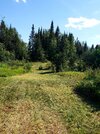
I have no lack of stuff to pollinate on my 20 acres. I have a hard time just beating back a little bit of the forest. Maybe I can scam some equipment from one of my uncles this winter. They have had bees since I was a kid.