Starting To Use Amp Sims In Session:

Inspector #20

Ambassador of Tone
Fallen Star
Country flag
So, after using more and more amp simulators in the studio, I'm starting to warm up to this.

Blue Cat Destructor has been the prolific amp simulation in the pro studios I work in, along with Avid Eleven Mk II and Soft Tube Amp Room getting honorable mention.

During the pandemic, a lot of guys that I work with started messing with amp simulators...guys who had always been die hard tube amp and mic'd cabinet guys.

Of those Gents, there seems to be a lot of interest in Positive Grid Bias Amp 2 and Overloud TH3.

I pay attention to trends. I don't rush out and buy the newest thing, but I do pay attention and gather information. The overwhelming switch that I saw to simulators prompted me to try it.

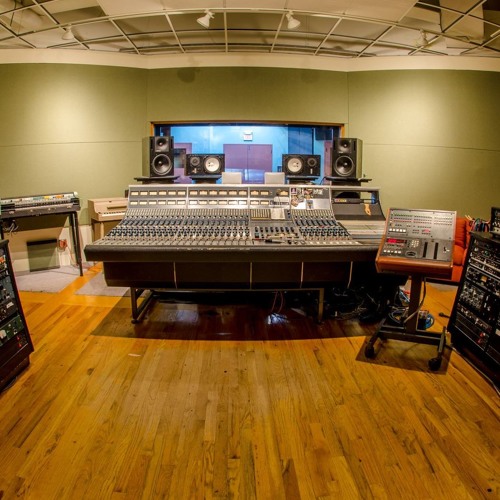
In our main studio, we have been recording with a modded JCM800 2204 and a rolling, 600 pound isolation cabinet that has a bungee suspended, 2x12 Celestion box. Inside is a combination of AKG C414B-ULS, MD421 and a Shure SM57 in a tight three mic configuration. Our engineer likes to sample and blend the different microphone voicings. This studio has vintage Echoplex's and even Neumann M50's, so there is no shortage of high end gear.

The isolation cabinet gave us a portable room that we could move around and helped contain a screaming tube amp, which has been super useful on a lot of hard rock recordings.

Now, we recently did a major DAW upgrade and as part of that, we got the latest version of Cubase Pro and it has a lot of extras.

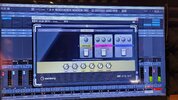
This past week, I spent some time with this program, an amp/FX simulation by Steinberg.
20210731_201955.jpg

20210731_201542.jpg

After messing with it for about 30 minutes, we recorded some noodling and compared the tone to previously recorded tracks played through tube amps, with a variety of close proximity and ambient microphones.

What floored me was that in less time than it takes to set up the cabinet and start adjusting amps and FX, we had a better sound on a recording than we have been getting with super trick gear.

Faster setup time also equals more efficiently and faster project completion time, so this was a big eye opener for all of us.

I still play though an amp and pedals live and that is likely to continue, but I'm starting to move away from the amp for studio recordings...
 
So, after using more and more amp simulators in the studio, I'm starting to warm up to this.

Blue Cat Destructor has been the prolific amp simulation in the pro studios I work in, along with Avid Eleven Mk II and Soft Tube Amp Room getting honorable mention.

During the pandemic, a lot of guys that I work with started messing with amp simulators...guys who had always been die hard tube amp and mic'd cabinet guys.

Of those Gents, there seems to be a lot of interest in Positive Grid Bias Amp 2 and Overloud TH3.

I pay attention to trends. I don't rush out and buy the newest thing, but I do pay attention and gather information. The overwhelming switch that I saw to simulators prompted me to try it.

In our main studio, we have been recording with a modded JCM800 2204 and a rolling, 600 pound isolation cabinet that has a bungee suspended, 2x12 Celestion box. Inside is a combination of AKG C414B-ULS, MD421 and a Shure SM57 in a tight three mic configuration. Our engineer likes to sample and blend the different microphone voicings. This studio has vintage Echoplex's and even Neumann M50's, so there is no shortage of high end gear.

The isolation cabinet gave us a portable room that we could move around and helped contain a screaming tube amp, which has been super useful on a lot of hard rock recordings.

Now, we recently did a major DAW upgrade and as part of that, we got the latest version of Cubase Pro and it has a lot of extras.

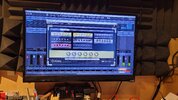
This past week, I spent some time with this program, an amp/FX simulation by Steinberg.
View attachment 71790

View attachment 71791

After messing with it for about 30 minutes, we recorded some noodling and compared the tone to previously recorded tracks played through tube amps, with a variety of close proximity and ambient microphones.

What floored me was that in less time than it takes to set up the cabinet and start adjusting amps and FX, we had a better sound on a recording than we have been getting with super trick gear.

Faster setup time also equals more efficiently and faster project completion time, so this was a big eye opener for all of us.

I still play though an amp and pedals live and that is likely to continue, but I'm starting to move away from the amp for studio recordings...
Yeah man. Use what works. My studio guy profiled my gear & IR the cabs..next time in for follow up CD, might be a head & 1x12 for extra flavor.

Walk out after a session without all the hiss & carry the gear in 1 trip is such a plus..but us old heads..hard to change.
 
As an amateur at recording I’m amazed at how easy it is to use amp sims and how good they sound. Another advantage is once you have the raw track recorded it is very easy to massage the sound to suit the song. An example is a recording I recently did that used a simulated tremolo pedal. I played the recording for a friend and he commented the tremolo speed was too fast. I went into the track and adjusted the tremolo. Didn’t have re-record the track. That was a huge time saver. I had recorded that track over a month earlier. It would have taken a while to relearn then duplicate it.
 
Last edited:
Yeah man. Use what works. My studio guy profiled my gear & IR the cabs..next time in for follow up CD, might be a head & 1x12 for extra flavor.

Walk out after a session without all the hiss & carry the gear in 1 trip is such a plus..but us old heads..hard to change.

Right you are, Good Sir!!!!

I still use and love my amp/cab for teaching and for live performances, buy walk in with just a guitar has its advantages!!!!

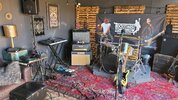
20210731_111820.jpg
 
As an amateur at recording I’m amazed at easy it is to use amp sims and how good they sound. Another advantage is once you have the raw track recorded it is very easy to massage the sound to suit the song. An example is a recording I recently did that used a simulated tremolo pedal. I played the recording for a friend and he commented the tremolo speed was too fast. I went into the track and adjusted the tremolo. Didn’t have re-record the track. That was a huge time saver. I had recorded that track over a month earlier. It would have taken a while to relearn then duplicate it.

Yes, Sir....

I'm currently creating a wet/dry amp/cab "signature sound" that we can save and call up at a moments notice.

The saed sim is called "Lazy Rob Tone."
 
So, after using more and more amp simulators in the studio, I'm starting to warm up to this.

Blue Cat Destructor has been the prolific amp simulation in the pro studios I work in, along with Avid Eleven Mk II and Soft Tube Amp Room getting honorable mention.

During the pandemic, a lot of guys that I work with started messing with amp simulators...guys who had always been die hard tube amp and mic'd cabinet guys.

Of those Gents, there seems to be a lot of interest in Positive Grid Bias Amp 2 and Overloud TH3.

I pay attention to trends. I don't rush out and buy the newest thing, but I do pay attention and gather information. The overwhelming switch that I saw to simulators prompted me to try it.

In our main studio, we have been recording with a modded JCM800 2204 and a rolling, 600 pound isolation cabinet that has a bungee suspended, 2x12 Celestion box. Inside is a combination of AKG C414B-ULS, MD421 and a Shure SM57 in a tight three mic configuration. Our engineer likes to sample and blend the different microphone voicings. This studio has vintage Echoplex's and even Neumann M50's, so there is no shortage of high end gear.

The isolation cabinet gave us a portable room that we could move around and helped contain a screaming tube amp, which has been super useful on a lot of hard rock recordings.

Now, we recently did a major DAW upgrade and as part of that, we got the latest version of Cubase Pro and it has a lot of extras.

This past week, I spent some time with this program, an amp/FX simulation by Steinberg.

View attachment 71790

View attachment 71791

After messing with it for about 30 minutes, we recorded some noodling and compared the tone to previously recorded tracks played through tube amps, with a variety of close proximity and ambient microphones.

What floored me was that in less time than it takes to set up the cabinet and start adjusting amps and FX, we had a better sound on a recording than we have been getting with super trick gear.

Faster setup time also equals more efficiently and faster project completion time, so this was a big eye opener for all of us.

I still play though an amp and pedals live and that is likely to continue, but I'm starting to move away from the amp for studio recordings...

What interface is being used to get your guitar into the DAW? Or, are you just plugging into the board and the board is handling it?
 
@smitty_p - The studio recently did a huge upgrade and they sold their API 2448 24-Channel Recording & Mixing Console, which funded the upgrade with $$$ to spare, so we are no longer using a console at all at Rat's Nest Studios.

(NOTE: That's almost $100,000 worth of console on the used market)

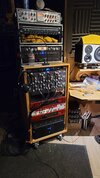
I'm going into the Avalon direct out to the DAW with Cubase Pro. The top unit is the Avalon.

20210717_195956.jpg

Seven Dollar Studios (private) in Burbank still has a vintage Neve BCM-10 Console, but fewer and fewer artists are requesting vintage gear.

Only a handful of people still want to go full analog. Down here in Los Angeles, if you want to book a full analog studio, you would go with either ES in Glendale or East West Studios on Sunset Boulevard.

If you are in Nor-Cal, then Prarie Sun in Cotati, California is your one-stop shop for vintage gear...
 
Last edited:
I'm going into the Avalon direct out to the DAW with Cubase Pro. The top unit is the Avalon.

Interesting.

So, you plug into the Avalon and the Avalon plugs into the computer.

What are you actually hearing in your headphones when recording a track? Are you hearing the completely dry, guitar-only signal with no effects or simulation applied? Or, are you hearing a live out of the DAW, with effects applied?
 
Yes, Sir....

I'm currently creating a wet/dry amp/cab "signature sound" that we can save and call up at a moments notice.

The saed sim is called "Lazy Rob Tone."
I’m slowly building a library with names like “clean acoustic”, “Vox top boost with delay and reverb”, “creamy drive with tremolo”. I’m guessing because of copyright issues they can’t use real amp and pedal names. I find their names confusing. Some I name by the tone and some by the amp and effects.
 
I’m slowly building a library with names like “clean acoustic”, “Vox top boost with delay and reverb”, “creamy drive with tremolo”. I’m guessing because of copyright issues they can’t use real amp and pedal names. I find their names confusing. Some I name by the tone and some by the amp and effects.

Excellent!!!!
 
Interesting.

So, you plug into the Avalon and the Avalon plugs into the computer.

What are you actually hearing in your headphones when recording a track? Are you hearing the completely dry, guitar-only signal with no effects or simulation applied? Or, are you hearing a live out of the DAW, with effects applied?

Post FX in the headphones. I want to hear what's gonna be on the recording.
 
That’s what I was thinking.

What’s being recorded - the dry signal, or the signal post FX?

We are setup to record only the post FX signal. I want to hear that in my phones and on "the tape" so to speak.

That's my big gripe with in ear monitoring...you only get a facsimile of what's going out FOH and I avoid using them whenever possible.

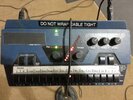
Aviom.jpg
 
We are setup to record only the post FX signal. I want to hear that in my phones and on "the tape" so to speak.

Thanks for the good info, Robert.

The reason I’m so curious is that several years ago I was at a graduation party for a family friend and I got to talking to another guest who composes his own music entirely on his computer. I forget what program he was using. All the parts are virtual - drums, bass, guitars, keys - all of it.

Anyway, as we were talking he was telling me of another of his acquaintances who composes songs, but likes to have instrumentalists come in and lay down completely dry tracks. Then, this person adds all effects in post production. So, using the guitar as an example, the idea is that the guitarist would play and the dry guitar signal is all that is recorded. Later, all other distortion, delay, reverb, chorus, amp sims, etc. would be applied as desired.

So, I was just wondering if that is the scenario you were moving into.
 
Thanks for the good info, Robert.

The reason I’m so curious is that several years ago I was at a graduation party for a family friend and I got to talking to another guest who composes his own music entirely on his computer. I forget what program he was using. All the parts are virtual - drums, bass, guitars, keys - all of it.

Anyway, as we were talking he was telling me of another of his acquaintances who composes songs, but likes to have instrumentalists come in and lay down completely dry tracks. Then, this person adds all effects in post production. So, using the guitar as an example, the idea is that the guitarist would play and the dry guitar signal is all that is recorded. Later, all other distortion, delay, reverb, chorus, etc. would be applied as desired.

So, I was just wondering if that is the scenario you were moving into.

Dry tracks might be good for a violinist. But for guitar, where pick attack and harmonics are desired, the result would be quite sterile, IMHO.

Just as an example, let me share this recording. While the playing may indeed be average, the pinch harmonics, ghost tones, harmonic sweeps and inversions could never be created with a dry signal...

Listen to Road To Hell - Rory Gallagher Cover - 02/25/2019 by Von Herndon on #SoundCloud
 
Back
Top