chilipeppermaniac
Ambassador of Decibels

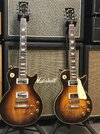
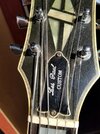
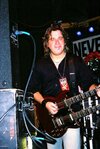
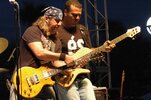
I know this is no closet queen guitar, BUT in the hands of 1. The owner, 2. Any accomplished guitar player, 3. Even cork sniffing "Norlin's suck" players, THIS, my friends is a Rock n Roll machine.
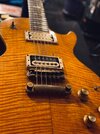



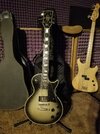
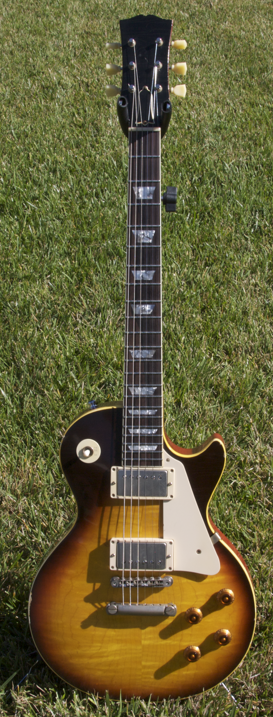
It’s got the funk…for sure. Looks familiar, but I can’t place it.BTW what do you guys make of that Bridge and Tail piece setup?
It’s got the funk…for sure. Looks familiar, but I can’t place it.

BTW what do you guys make of that Bridge and Tail piece setup?

 reverb.com
 guitargear.org
I get old guitars - including vintage Gibson's - brought to me all the time that have parts on them from drum kits, lamps, old furniture hardware, and basically whatever some music store had laying around "back in the day" that would fit.
The common collapsing zinc bridge would be a likely cause of replacing it with a channel style bridge, but this mismatch of parts is actually super common.
In fact, we've seen a trend towards using incorrect and/or mismatched hardware, tuning keys, screws, etc., in an effort to make a modern relic look more authentic.
Seems like everyone wants a "1959 Les Paul Replica" and there are at least two luthier's that I know personally here in SoCal that specialize in building them.


Hey, Chili... that is one odd-looking briodge/tailpiece combo for sure, but seems like Robert has it ID'd already. What puzzles me is the saddle intonation pattern... really weird if it is indeed functional.BTW what do you guys make of that Bridge and Tail piece setup?

this has created a strong underground market forreplicascounterfeits.
 reverb.com
Fixed it for ya
Hey, Chili... that is one odd-looking briodge/tailpiece combo for sure, but seems like Robert has it ID'd already. What puzzles me is the saddle intonation pattern... really weird if it is indeed functional.
Well, Robert, I am pretty sure I can get the low down on Ron's intonation and how his LP got to wearing these particular choices of Stop Bar and Bridge and Saddles. I was waiting on you to comment on intonation, so I saw it coming.
Since Ron not only records in his own studio and plays professionally and has done so for over 40 years, I am sure his intonation is possibly better than can be ascertained through visual observation.
I love the controversy. I'd rather have an excellent counterfeit than a poorly maintained and weathered original.

It looks like an Ibanez bridge and tailpiece from an earlier Artist model...or an Ibanez "lawsuit" Les Paul.BTW what do you guys make of that Bridge and Tail piece setup?