Got a brand new Toy!

There has been some good advice posted here by both AMS & Thatbastarddon. Yes, the valve socket should be changed out. The carbon is like a resistor placed between the two pins.
I have also had the stereo/mono switch on a 1960AV cab fail in that it was giving weird resistance readings without being switched. The complete board was removed & now the cab is hardwired for 16 ohms.
Often, when we talk about output transformers, we kind of imply that the primary load impedance is a feature of the OT, when this is not the case at all. The OT (among other duties) merely "transforms" the speaker's low impedance load into the high impedance load that the output valves want to see (primary/secondary windings turns ratio). As such, any inconsistency in the connections between the OT secondary & the speakers is thus transformed into a much larger inconsistency in the load impedance that the valves "see". Of all the things that can take out output valves, this is a big one. The integrity of the connection between the OT secondary & speakers is an often overlooked part of amp maintenance.
Now I'll go back & read through yesterday's & last night's posts properly, see if I've missed anything. Cheers
 
Hope you get this sorted; lots of great info here, thanks for sharing.
Confirming the output side of things is solid is certainly in order.

MIke, you mentioned early on of a failed bridge rectifier, or other components.
Seems the culprit is drawing excessive current and running the amp full on brought out more failures, before this set of power tubes was installed.
Possibly the culprit is found as discussed above.

Would the arcing tube socket be a cause, or a symptom?
Or could it be either - 1. a bad socket connection causes arcing, becomes conductive, drawing excessive current or
2. an over current running tube causes the arcing, which then proceeds as in scenario 1?

Or could the whole event have been caused by a failing power tube going way over current?
Are you sure the bias was set correctly?

Which is the horse and which is the cart?

IF Mike cant definitively find the cause, or if it was a power tube failure related to the tube itself and not the amp or output impedance load, what do you do?

Can the amp be run hard for (how long?) while observing for red-plating; if all seems ok is that peace of mind to call it good?
 
Hope you get this sorted; lots of great info here, thanks for sharing.
Confirming the output side of things is solid is certainly in order.

MIke, you mentioned early on of a failed bridge rectifier, or other components.
Seems the culprit is drawing excessive current and running the amp full on brought out more failures, before this set of power tubes was installed.
Possibly the culprit is found as discussed above.

Would the arcing tube socket be a cause, or a symptom?
Or could it be either - 1. a bad socket connection causes arcing, becomes conductive, drawing excessive current or
2. an over current running tube causes the arcing, which then proceeds as in scenario 1?

Or could the whole event have been caused by a failing power tube going way over current?
Are you sure the bias was set correctly?

Which is the horse and which is the cart?

IF Mike cant definitively find the cause, or if it was a power tube failure related to the tube itself and not the amp or output impedance load, what do you do?

Can the amp be run hard for (how long?) while observing for red-plating; if all seems ok is that peace of mind to call it good?
I used a bias tester on one meter and a plate voltage tester on another meter at the same time, took the readings and factored the EL34s plate current rating with the plate voltage and adjusted it dead on the money. But that doesnt mean a thing honestly lol this evening im gonna take my cabinet down and measure the resistance and do a cable test. The cables are brand new but again that doesnt mean anything on paper from reality lol gonna check the impedance switch on the amp too.

As for the socket, im gonna go ahead and replace both power tube bases and go from there. We shall see!
 
A. You plug a good speaker cable into the cabinet.
B. You connect the ohm meter to the end of the speaker cable.
C. For a 16 ohm cabinet, the meter should read 12.6 ohms approximately.

FLEX test DO THIS

with the meter connected as above, move the cable plug up and down, left and right.
Wiggle the plug around where it is connected into the cabinet. Flex the cable around in different directions.
The ohm reading should stay steady. Very little variations.

If the ohm reading jumps around wildly when the cable or plug is flexed:

Replace the cabinet jack, or whatever you need to do to obtain a steady solid reading.
The ohm reading MUST remain solid steady - no matter how much the cable or plug is flexed.

This is called a "flex test."
This is an industry standard test to verify reliability of a connector or cable.
Every cable or connector that is manufactured - is subjected to this test.
And, this is an extremely important test.
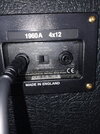
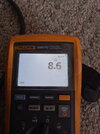
Heres the readings. Something seems screwed up. 4ohm mono inputs

20210212_141218.jpg20210212_141252_HDR.jpg

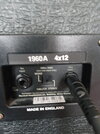
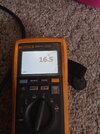
16ohm mono input
20210212_141327.jpg20210212_141332_HDR.jpg


I did the jack test and tested each speaker. Under shaking and duress, it only moved 0.2 ohms. But the 4ohm mono is reading the same as the 8ohm stereo inputs on either side.

Bad jack plate?
 
Last edited:
Blowing fuses is frequently speaker related...or bias related.
Inspect the tube sockets for burn marks, very closely.
Test screen resistors, cathode path, test bias resistors, test bias voltage.
Before the tubes are installed.
This will be tested with the standby set to "warm-up."
Test PI coupling caps, this is done with standby turned to "operate."
Before the tubes are installed.

Test speaker wiring, speaker jacks, speaker cables, measure speaker cab resistance.

Make all the tests before installing the tubes.
Correct any problems first. Install the tubes last.

Test Procedure:

If you need test procedures we will write them for you.
If you would mind writing the procedures down? Id forever be in your debt here my friend. I changed the tube socket and removed all tubes, plugged into another speaker cab and turned on the power, it held, as it did in standby. But i dont know to go from here
 
If you would mind writing the procedures down? Id forever be in your debt here my friend. I changed the tube socket and removed all tubes, plugged into another speaker cab and turned on the power, it held, as it did in standby. But i dont know to go from here

Do you know which resistors are the screen resistors?
Can you test them with the power turned off / power disconnected from mains?

Heres the readings. Something seems screwed up. 4ohm mono inputs

View attachment 58713View attachment 58714

16ohm mono input
View attachment 58715View attachment 58716


I did the jack test and tested each speaker. Under shaking and duress, it only moved 0.2 ohms. But the 4ohm mono is reading the same as the 8ohm stereo inputs on either side.

Bad jack plate?
It seems like the speakers may be wired incorrectly...
take the back off the speaker cabinet.

The 4 ohm jack should read about 3.2 ohms I am pretty certain.

I think maybe 1 speaker is blown or something else is wrong.

Can you find pin 5 of the output tube socket?
The numbers are usually printed on the socket somehow.
 
Heres the readings. Something seems screwed up. 4ohm mono inputs

View attachment 58713View attachment 58714

16ohm mono input
View attachment 58715View attachment 58716


I did the jack test and tested each speaker. Under shaking and duress, it only moved 0.2 ohms. But the 4ohm mono is reading the same as the 8ohm stereo inputs on either side.

Bad jack plate?
Those readings don’t look right. I agree with @Amp Mad Scientist in that the readings with a meter are normally lower. Like 16 Ohm should read around 12.X, and 4 Ohm should read around 3.X...your readings seem high. High isn’t really a bad thing necessarily...Mesa outlines a higher impedance number as a “safe mismatch” scenario...but high in this case seems “not right” somehow. Nice meter, by the way :cheers:
 
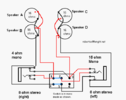
The blue lines on the schematic are the switch contacts (inside the switch).
You do not actually attach wires where the blue lines are shown.

1613173493373.png

And so
the connections depend on switches which are part of the jacks.
If the switch inside the jack stops working, the ohms will be wrong.
The switches can malfunction because of oxide corrosion which forms on the switch contact surfaces.
 
1. Remove the faston connectors from the speaker.
UN-screw the speaker and take it out of the cabinet.

2. Move the speaker in / out by hand, and make sure the speaker does not scrape when it moves.
The speaker should be totally free to move in/out without any interference.

3. Test the speaker terminals with an ohm meter.
16 ohm speaker should be about 12.6 ohms.

4. Touch a 9 volt battery to the speaker terminals and make sure the speaker makes a loud pop, and moves in/out.

5. repeat the same test for all speakers one at a time, and replace it / reconnect the wires when you finish the test.

 
1. Remove the faston connectors from the speaker.
UN-screw the speaker and take it out of the cabinet.

2. Move the speaker in / out by hand, and make sure the speaker does not scrape when it moves.
The speaker should be totally free to move in/out without any interference.

3. Test the speaker terminals with an ohm meter.
16 ohm speaker should be about 12.6 ohms.

4. Touch a 9 volt battery to the speaker terminals and make sure the speaker makes a loud pop, and moves in/out.

5. repeat the same test for all speakers one at a time, and replace it / reconnect the wires when you finish the test.

I will definitely try this all out in the morning! As far as independent speaker measurements, i did disconnect each speaker and tested directly with my meter, average around 16.7 to 16.9 ohms each initially. I assumed immediately there is an issue in the switch since it didnt give a different value from stereo 8 ohms and 4 ohms mono, so i ordered a new plate for that.

As for the SLX head, the screen resistors, if im right on the schematics? Should be the ones directly before the EL34s in the line diagram?
 
I will definitely try this all out in the morning! As far as independent speaker measurements, i did disconnect each speaker and tested directly with my meter, average around 16.7 to 16.9 ohms each initially. I assumed immediately there is an issue in the switch since it didnt give a different value from stereo 8 ohms and 4 ohms mono, so i ordered a new plate for that.

As for the SLX head, the screen resistors, if im right on the schematics? Should be the ones directly before the EL34s in the line diagram?

Set meter for ohms, touch the probes together, what is the display reading?
There may be something going on with the meter, the readings seem to be off by about 4 ohms somewhere.
 
Last edited:
Set meter for ohms, touch the probes together, what is the display reading?
There may be something going on with the meter, the readings seem to be off by about 4 ohms somewhere.
My meter reads 2.1 ohms when crossing leads. It holds 16 ohms on the Fluke. I have a greenlee meter that hits at 17ohms

Fluke is like 4 years old and never gets used. Possibly miscalibrated though very unlikely

I did remove each speaker, vacuumed around the cone gently and performed the touch tests as well as the 9v battery trick. They move freely, no scratching sounds to the touch or pushed with a battery either. The readings today on each speaker after all of this was 15.4 to 15.6 ohms a piece, all very close to each other
 
Last edited:
My meter reads 2.1 ohms when crossing leads. It holds 16 ohms on the Fluke. I have a greenlee meter that hits at 17ohms

Fluke is like 4 years old and never gets used. Possibly miscalibrated though very unlikely

I did remove each speaker, vacuumed around the cone gently and performed the touch tests as well as the 9v battery trick. They move freely, no scratching sounds to the touch or pushed with a battery either. The readings today on each speaker after all of this was 15.4 to 15.6 ohms a piece, all very close to each other
The meter should read 0.2 ohms max when leads are crossed.
You can try replacing the batteries.
In a Fluke meter the fuse can be partially bad, and cause erroneous readings.
Anyway, somewhere there is about 3-4 ohms being added to the actual reading.
 
The meter should read 0.2 ohms max when leads are crossed.
You can try replacing the batteries.
In a Fluke meter the fuse can be partially bad, and cause erroneous readings.
Anyway, somewhere there is about 3-4 ohms being added to the actual reading.
Yeah i agree, it shouldnt be reading much above zero, by no more than a few 10ths of an Ohm. Its possible it has a wonky fuse. Batteries are new but i know if a meter's been in the cold, it gets messed up readings as well until its warmed up.

This is one of the ones I use at work whenever i take panel readings but honestly, not as often as its way better than the other Greenlee meter and i try to not to screw this one up lol
 
There's a couple of things that can cause a meter to give erroneous (high) resistance readings, aside from the fuse or a low battery, like switch contacts or the lead/meter connections. Any resistance in these will result in high readings, & this type thing is not uncommon if the meter isn't periodically maintained.
Ascertaining valve socket pin numbering is easy, even if the socket pins aren't numbered. When viewing from the socket underside (inside of chassis side), the pins are numbered in a clockwise direction from the guide pin slot with octals (8 pin), or from the gap in the pins with Noval's (9 pin).
Alternately, if viewing from the socket's top side the pins are numbered in an anti-clockwise direction.
After biasing the power tubes I usually check the screen grid current drawn by each tube. To do this, first (with the amp off & properly drained) accurately measure & note (write down) the resistance in ohms of each screen grid redistor. Next, with the amp on, warmed up & stabilised, measure & note the voltage drop across each screen grid resistor (red voltmeter lead to power supply side of screen grid redistor, black voltmeter lead to valve socket side of screen grid resistor). If the screen grid resistors are mounted on the valve sockets, the red lead goes to pin 6 & the black lead goes to pin 4. Now divide the voltage drop across each screen grid resistor by that resistors actual resistance in ohms to give you the (quiescent) screen grid current drawn in Amps. Cheers
 
Last edited:
Back
Top